[Korea Market Close] KOSPI Closes at 7,051: Why Institutions Kept Buying for a Fifth Straight Day As Foreign Investors Pulled Out
The KOSPI closed at 7,051.64 on September 9, 2026, gaining 97.12 points, or 1.40%, from the prior session. This marks the first close above 7,000 since July 23. The rally came after 33 trading days away from that level.
The investor flows, however, paint an unusual picture. Foreign investors sold 427.2 billion KRW—their first net-selling day in five sessions. Retail investors also retreated, dumping 2.28 trillion KRW for a fifth straight day. Yet the index rose. Institutional investors absorbed the sellers, purchasing 942 billion KRW. They have now been net buyers for five consecutive sessions, filling the void left by the foreign exodus.
Index rallied in the morning, gave back gains in afternoon
The KOSPI opened at 6,972.87. By late morning, it had climbed to 7,112.48—the day's high—representing a 2.27% advance. The afternoon saw those gains fade. The index fell to 7,010 before staging a late-session rebound to 7,051.64. The day's range was wide, though the final close sat below morning strength.
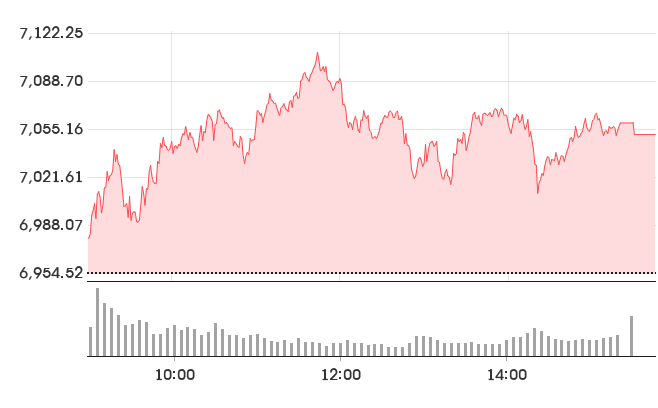
KOSPI daily chart, recent sessions (Naver Finance; red=up, blue=down)
The KOSDAQ outperformed, closing at 830.37 for a 2.28% gain. Foreign investors showed up there, posting a second consecutive day of net buying worth 226.9 billion KRW, propelling the index higher. The composition of flows on both indices tells the story: on the KOSPI, foreign investors sold while retail and institutions split roles. On the KOSDAQ, foreigners were the marginal buyer while retail and institutions sold. The same market, same country, opposite flows—a marked inversion.
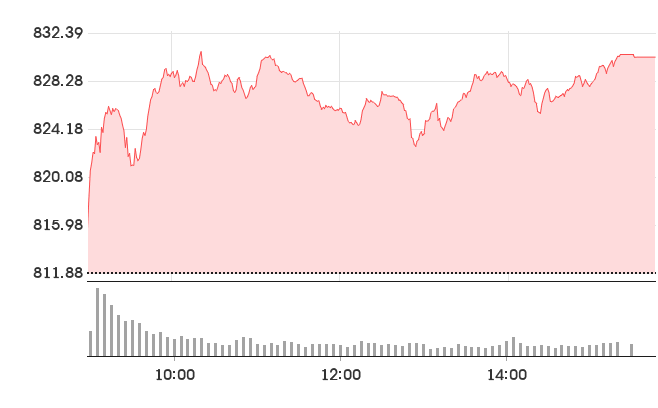
KOSDAQ daily chart, recent sessions (Naver Finance; red=up, blue=down)
U.S. markets fell overnight—why did Korean stocks rise?
Overnight, Wall Street declined amid surging oil prices on Middle East escalation fears and U.S.-Canada tariff tensions. By usual correlation, Seoul should have followed lower. Instead, the Philadelphia Semiconductor Index gained 1.30%, standing alone amid broader weakness. Two catalysts converged: Intel announced additional CPU price increases, and Qualcomm and Amazon disclosed a joint venture for AI data center semiconductors.
The broad U.S. market fell; semiconductors alone surged. An anomalous night. Seoul's opening rally inherited that semiconductor signal, decoupling from the broader U.S. index move.
Today's gainers—semiconductors, battery makers, and chemicals led the advance
SK Hynix (+3.51%) and Hanmi Semiconductor (+2.45%) were semiconductor standouts. Samsung Electronics told a different story: strong during the session, it surrendered gains to close flat. The sector showed internal divergence.
Battery makers surged hard. The narrative was singular: the U.S. is moving to exclude Chinese companies from battery energy storage systems (BESS). Yet the momentum was unmistakable. Samsung SDI climbed 8.30%, SK Innovation 11.23%, and LG Energy Solution 6.46%. On KOSDAQ, EcoPro BM jumped 9.64%.
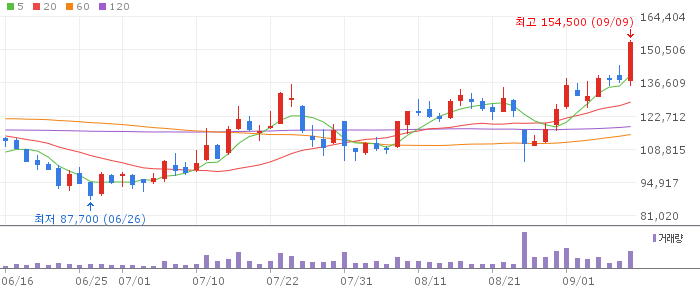
SK Innovation daily chart, recent sessions (Naver Finance)
Chemicals rode the oil rally. Lotte Chemical posted +18.12%, landing among the day's biggest gainers. Korea Petrochemical Industries added 13.59%. Rising feedstock costs and refined-product pricing expectations were cited as drivers. One caveat: if crude retreats, so do these gains. The tailwind is conditional.
Five stocks hit the daily limit-up. The Codi drew support from convertible bond issuance and controlling-shareholder expectations. Mercury rose on optical communications momentum. Penitrium Bio climbed on Phase trial results for its oncology asset. Sammi Metal and Wooree benefited from nuclear and shipyard-supply themes, plus quantum computing angle. Each had distinct event-driven merit, separate from the index rally itself.
Today's decliners—financials, telecom, and internet stocks lagged
While the broad index rose, entire sectors retreated. Banks took the hardest blow: Shinhan (-2.30%), Hana Financial (-2.05%). Insurers fell in tandem—Hyundai Marine & Fire (-2.58%), Hanwha Q LIFE (-3.19%). Internet names succumbed: NAVER (-2.10%), Kakao (-0.99%). Telecom stocks mirrored weakness: KT (-2.21%), SK Telecom (-1.19%).
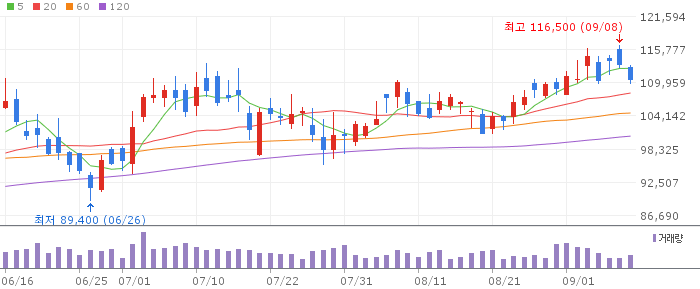
Shinhan Financial daily chart, recent sessions (Naver Finance)
Aviation stocks faltered. Rising crude means higher fuel costs for carriers—a structural headwind. Jin Air, Air Busan, Jeju Air, and Korean Air all fell. The very news that lifted chemical names acted as an anchor on airlines. The same headline, inverted consequences. Sector nuance mattered entirely.
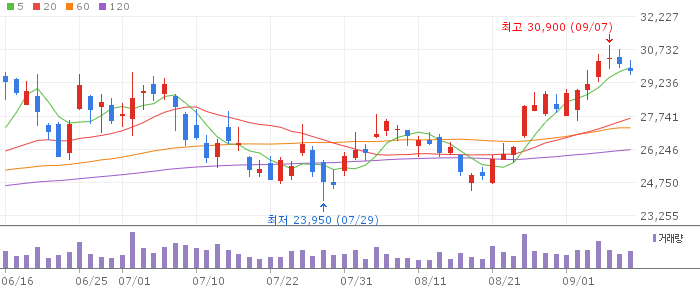
Korean Air daily chart, recent sessions (Naver Finance)
By flows, today belonged to the institutions
Tallying the net flows: Institutional investors bought 942 billion KRW; retail investors sold 2.288 trillion KRW. Foreign investors sold 427.2 billion KRW. Other entities (likely corporate treasuries and funds) were net buyers of 1.78 trillion KRW. Institutions and other entities together absorbed the retail and foreign selling, lifting the index.
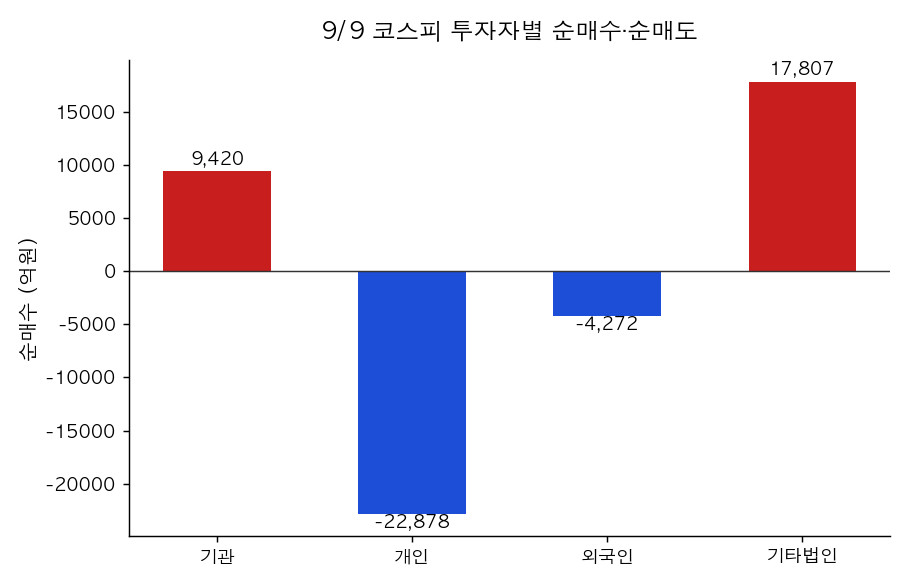
Compiled and charted in-house
Retail selling for five straight days merits attention. Loss of confidence in the rebound? Profit-taking? During index strength, sustained retail outflows signal one of two dynamics. Confirmation awaits. The coming sessions will reveal whether retail selling continues or reverses.
The bond market diverged. The 3-year government bond yield climbed 0.9bp to 3.910%; the 10-year held at 4.401%. In futures, foreign investors sold both tenors. Foreigners retreated in equities and did the same in fixed income—though magnitude was modest. Too early to call a trend shift.
A similar picture unfolded last week
Last week, there was a session where retail, foreign, and institutional investors all sold, yet the index held steady—propped up by other entities (likely corporates or structured players) that bought 8 trillion KRW. (Related: Who Was Buying 8 Trillion Won When Everyone Else Sold?) That day, non-institutional buyers were the sole pillar. Today, institutions took the role. The supporting cast rotates. But a common thread persists: there is always a buyer when retail falters. As individuals step back, others consistently step in.
Yesterday's close note observed that when retail sold for four days straight, the index crumbled. (Related: As Retail Sold for Four Straight Days, the Index Finally Broke) Today is different. Retail sold for a fifth consecutive day, yet the index rallied. Premature conclusions are unwise. Single flows alone do not dictate directional outcomes. Two sessions in succession have now illustrated this point.
Summary
Today in one line: institutions filled the void left by foreign outflows. The KOSPI recovered above 7,000 for the first time in 33 trading days. Semiconductors, battery makers, and chemicals led. Financials, telecom, and aviation were left behind. Two questions warrant watching. Is the foreign net selling a one-day lapse or the start of a sustained reversal? And when—if at all—does retail's five-day selling streak end?
This article is for informational purposes and does not constitute investment advice or a recommendation to buy or sell any security. Investment decisions and their outcomes are the reader's sole responsibility.
#KOSPIClose #KOSPIIndex #KOSDAQIndex #KoreaMarket #MarketSummary #ForeignSelling #InstitutionalBuying #RetailSelling #Semiconductors #BatteryMakers #SKInnovation #LotteChemical #ShinhanFinancial #KoreanAir #KOSPIOutlook #KoreanStockMarket #EquityMarket #InvestorFlows #DailyLimit #TopGainers #EcoPro #SamsungSDI #LGEnergySolution #KoreaPetrochemical #PhiladelphiaSemiconductor #CrudePrices #GovernmentBondYields #MiddleEastRisk #KOSPI7000 #ClosingBell
댓글
댓글 쓰기