[Korea Market Close] KOSPI Closes at 7,051—Institutions Buy for Fifth Straight Day as Foreign Investors Sell
The KOSPI closed at 7,051.64 on September 9, 2026, up 97.12 points or 1.40% from the prior close. It marked the index's first close above 7,000 since July 23—the first time in 33 trading days.
Investor flows painted an unusual picture. Foreign investors sold 427.2 billion won, marking their first net sell day in five trading sessions. Retail investors also sold, dumping 2,287.8 billion won—their fifth consecutive sell day. Yet the index climbed. Institutional investors stepped in with 942 billion won in net buying, also their fifth straight day of support. Institutions filled the vacuum left by foreign sellers.
The Index Rose in Morning, Then Gave Back Gains
The KOSPI opened higher at 6,972.87. In late morning, it reached an intraday high of 7,112.48, up 2.27% from the open. Afternoon weakness pulled it back—it dipped near 7,010 at one point. Late-session buying lifted it to close at 7,051.64, down slightly from the peak but reflecting wide intraday swings.
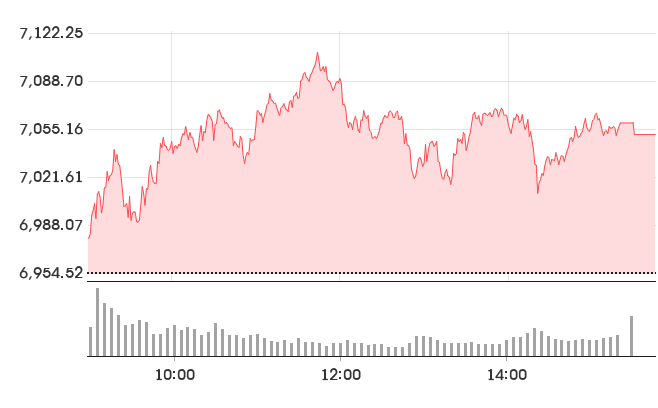
KOSPI Daily Chart (Naver Finance; red = up, blue = down)
KOSDAQ surged more decisively. It closed at 830.37, up 2.28%. Foreign investors led with their second consecutive buy day, accumulating 226.9 billion won and driving the move higher—the opposite of the KOSPI. On the same day in the same market, buyer and seller roles flipped entirely. Retail and institutional investors sold in KOSDAQ while foreigners bought.
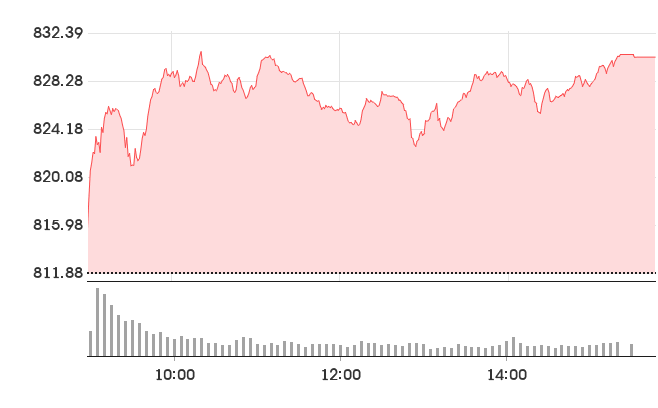
KOSDAQ Daily Chart (Naver Finance; red = up, blue = down)
U.S. Stocks Fell, Yet KOSPI Rose—Why
Overnight, U.S. stocks declined on Middle East escalation concerns that spiked crude prices and U.S.-Canada tariff friction. The KOSPI should have followed suit. Instead, the Philadelphia Semiconductor Index gained 1.30% in isolation. Two developments converged: Intel's announcement of additional CPU price hikes and a Qualcomm-Amazon deal to co-develop AI data-center semiconductors.
While the broader U.S. market declined, semiconductors surged alone—an unusual night. The KOSPI picked up that semiconductor signal and opened higher. U.S. index weakness and domestic semiconductor strength parted ways for the day.
Today's Winners—Semiconductors, Batteries, Chemicals Led
SK Hynix (+3.51%) and Korea Semiconductor Finance (+2.45%) led the chip sector. Samsung Electronics, however, ended flat despite strong intraday action—it gave back all gains by close. Even within semiconductors, the performance gap was wide.
Battery stocks soared on a single narrative: the U.S. excluding Chinese firms from battery energy-storage systems (BESS) markets. Samsung SDI jumped 8.30%, SK Innovation surged 11.23%, and LG Energy Solution gained 6.46%. On KOSDAQ, Ecopro BM rose 9.64%.
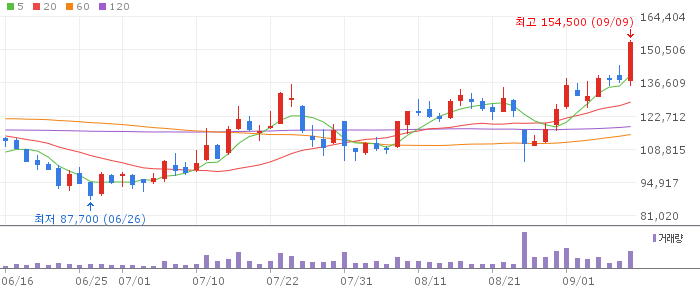
SK Innovation Daily Chart (Naver Finance)
Chemical stocks rode crude's strength. Lotte Chemical climbed +18.12%, ranking among the day's top gainers on the KOSPI, while S-Oil advanced 13.59%. Both bet on higher refining and petrochemical prices. One caveat: these gains depend entirely on crude staying elevated. Any pullback in oil prices could reverse them just as quickly.
Five stocks hit the daily limit-up. The Codi (private-placement convertible talk), Mercury (fiber optics), and Penitrium Bio (cancer-drug trial readout) led the way, alongside Sammi Metal (nuclear/shipbuilding inputs) and Woori Tech (5G/quantum computing). Each had idiosyncratic catalysts—event-driven rallies independent of broader index movement.
Today's Losers—Financials, Telecom, Internet Stocks Faded
Financial stocks suffered despite the broader rally. Shinhan Financial (-2.30%) and Hana Financial Group (-2.05%) led the decline, as did insurers Hyundai Marine & Fire (-2.58%) and Hanwha Insurance (-3.19%). NAVER (-2.10%) and Kakao (-0.99%) fell in internet. Telecom also slipped: KT (-2.21%) and SK Telecom (-1.19%) both retreated.
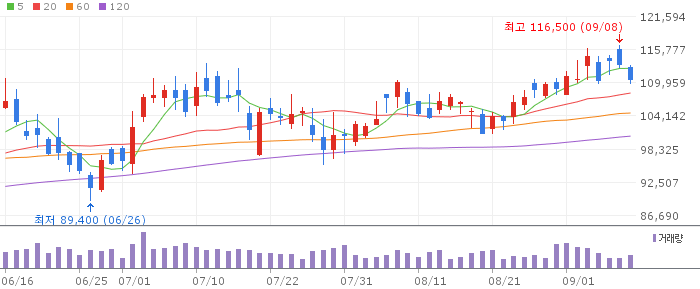
Shinhan Financial Daily Chart (Naver Finance)
Airlines weakened as well. Higher crude means higher fuel costs. Jin Air, Air Busan, Jeju Air, and Korean Air all fell. The same crude-price tailwind that lifted chemical stocks became a headwind for carriers—same headline, opposite impact. The market read the day through an industry-specific lens.
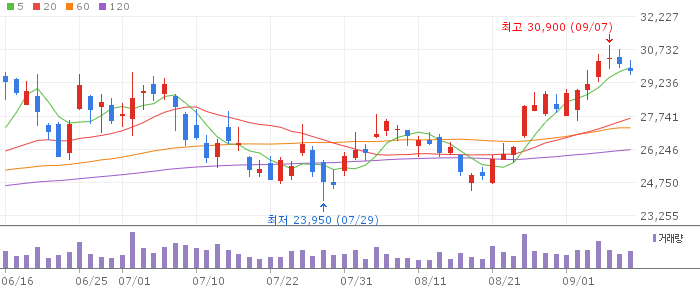
Korean Air Daily Chart (Naver Finance)
By Investor Flows, Today Belonged to Institutions
Institutional investors bought 942 billion won net, while retail sold 2,287.8 billion won. Foreign investors sold 427.2 billion won, and other corporates bought 1,780.7 billion won. Institutions and other corporate buyers together absorbed the selling from retail and foreign investors. That absorption powered the index higher.
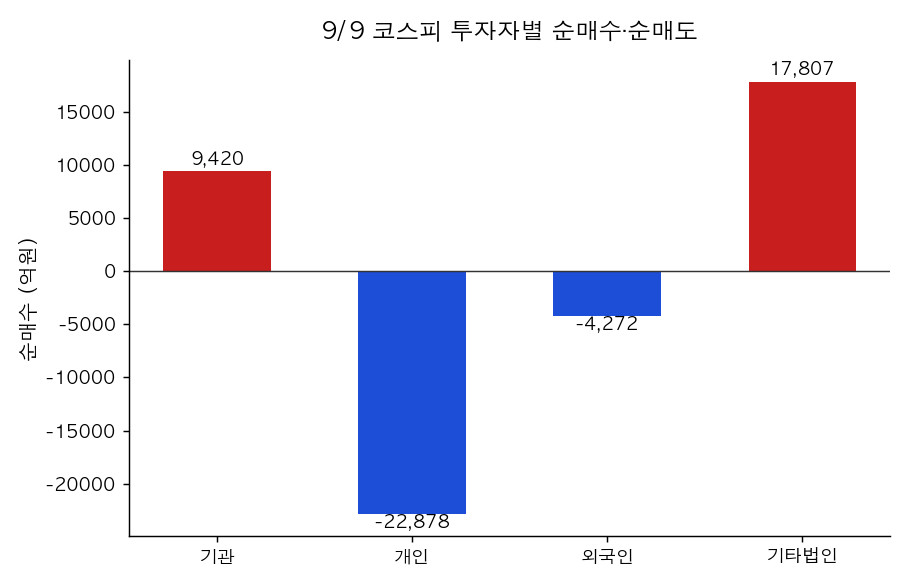
Compiled and charted in-house
Retail investors' fifth consecutive sell day warrants attention. Are they skeptical of the rebound, or locking in gains? Sustained retail selling during an index rally signals one of two things—but confirmation is premature. Watch the next few trading days for whether retail sustains this pattern or reverses.
Bond markets moved independently. The three-year government bond yield rose 0.9bp to 3.910%, while the 10-year held at 4.401%. Foreign investors sold both three- and 10-year futures—consistent with their equity selling. Still, moves were modest. Too early to call a shift in longer-term direction.
A Similar Pattern Emerged Last Week
Last week showed a similar dynamic: while retail, foreign, and institutional investors all sold, other corporate buyers stepped in with 8 trillion won, propping up the index. That day, other corporates alone absorbed the selling. Today, it was institutions' turn. The buyer-of-last-resort rotates, but a pattern holds: some entity always appears to support the index when retail steps back. While retail exits, somebody consistently enters.
Yesterday's close noted that retail selling on the fourth consecutive day dragged the index lower. Today flipped that script: retail sold for a fifth straight day, yet the index gained. Premature to call a turning point—retail selling alone does not determine direction. But back-to-back contrasting days illustrate the complexity.
Takeaway
In a line: institutions filled the gap left by foreign selling. The KOSPI reclaimed the 7,000 level for the first time in 33 trading days. Semiconductors, battery stocks, and chemicals drove the advance. Financials, telecom, and aviation lagged. Two questions merit watching: whether foreign selling marks a one-day blip or the start of a broader shift, and whether retail's fifth consecutive sell day reverses soon.
This article is for informational purposes and does not constitute a recommendation to buy or sell any security. Investment decisions and their consequences are yours alone.
#KOSPI #KOSPIClose #KOSDAQ #MarketClose #MarketUpdate #ForeignSelling #InstitutionalBuying #RetailSelling #Semiconductors #SKHynix #KoreaSemiconductor #Batteries #SKInnovation #LGEnergySolution #LotteChemical #SOil #FinancialStocks #ShinhanFinancial #HanaFinancial #Insurance #NAVER #Kakao #Telecom #KT #SKTelecom #Airlines #KoreanAir #PhiladelphiaSemiconductorIndex #OilPrice #GovernmentBonds #BESS #TermsOfTrade #EquityMarkets #KoreanMarket
댓글
댓글 쓰기