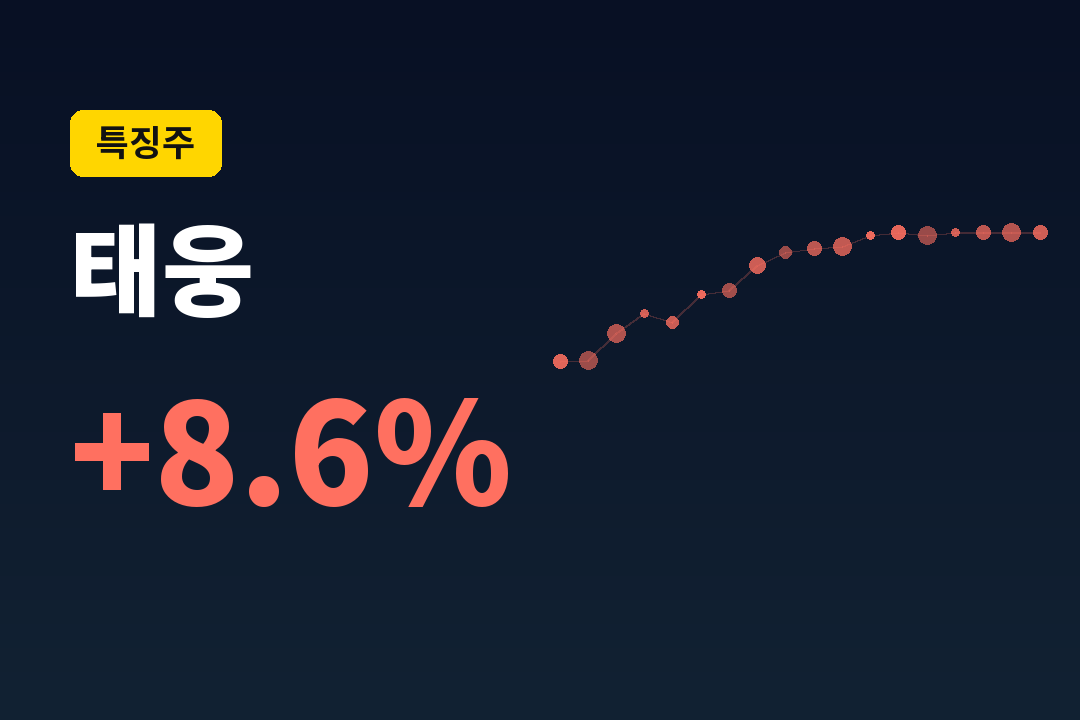
On the morning of September 2, Taewung shares traded near 36,200 won, up 8.55% from the prior close on an intraday basis. A sharp rally.
The KOSDAQ index breached the 800 level, falling 2.25% at the same time. The contrast was stark. While the broader market declined, this single stock climbed. The explanation is straightforward: this was not a market-wide movement but a single-stock story.
What is Taewung?
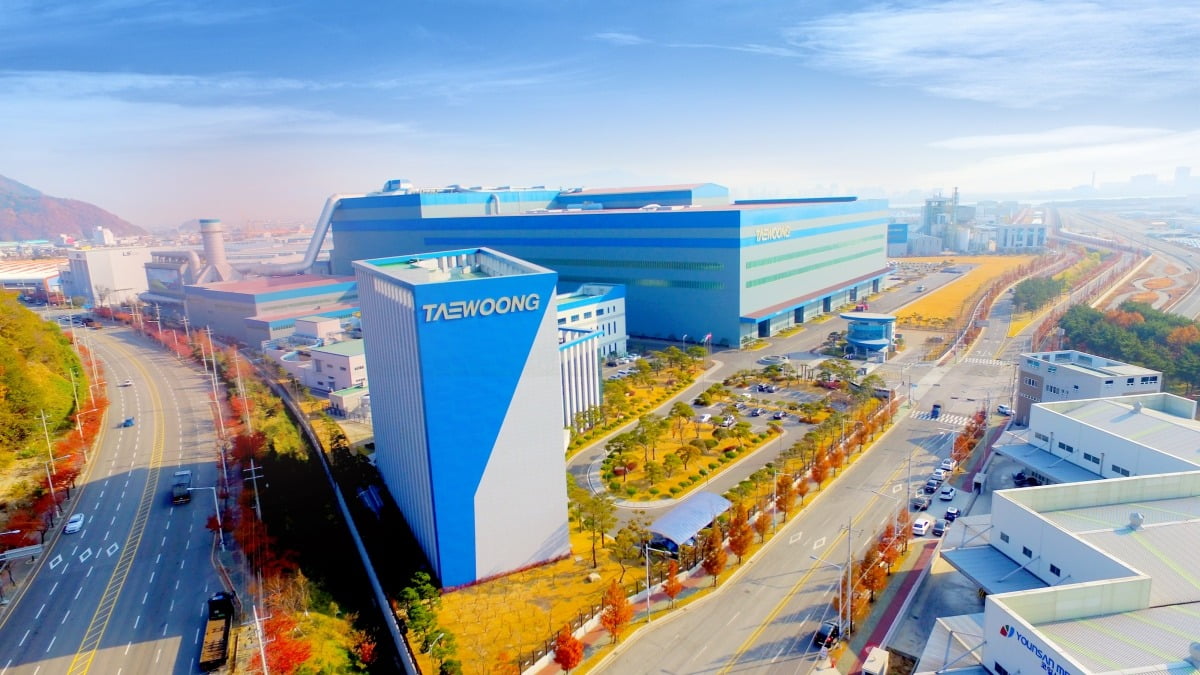
Founded in 1981 and based in Busan's Gangseo district, Taewung operates as a forging company. Its specialty is free forging—the process of shaping steel through mechanical force to reach precise specifications. The customer base spans industries: wind turbines, shipbuilding, power generation, plant services, and industrial machinery. In order of significance: main shafts and bearings for wind turbines, propeller shafts for shipbuilders, and forged components for nuclear power plants.
2025 proved challenging. Revenue totaled KRW 349.7 billion, down 9.5% year-over-year. Operating profit fell 78% to KRW 5 billion from KRW 22.8 billion. Weakness in wind, shipbuilding, and plant markets drove the decline. It marked the bottom of the cycle.
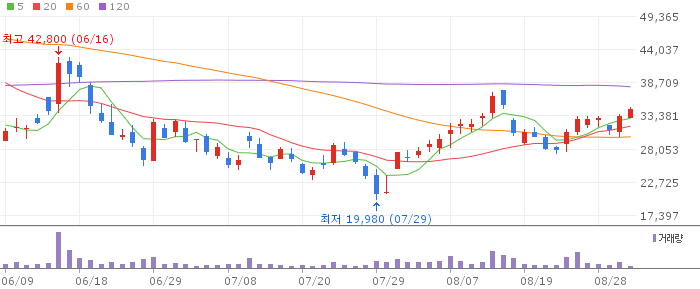
Momentum shifted in the past two quarters
Q1 results showed revenue of KRW 353.1 billion and operating profit of KRW 11.2 billion (3.16% margin). Q2 posted revenue of KRW 211 billion and operating profit of KRW 6.4 billion (3.03% margin). Scale contracted sequentially. Yet the two-quarter cumulative operating profit already exceeded the full-year 2025 total of KRW 5 billion.
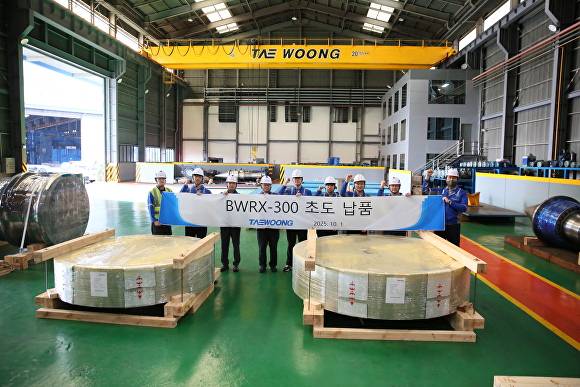
One contract drives this momentum: Taewung's supply deal for 92 flanges destined for the Norfolk Vanguard West offshore wind farm began contributing to Q2 revenue, aligning with the improved trajectory. Analysts foresee a turnaround, with 2026 operating profit expected to expand several-fold from the prior year. These are projections, however. Actual results will emerge in second-half data.
Today's surge: the nuclear-power story
In June, Taewung won an order from TerraPower, a U.S. small modular reactor (SMR) developer, to supply the rotating plug—a critical component for TerraPower's first-generation molten salt reactor. It is a large component with a defined function: mounted atop the reactor vessel, it facilitates fuel loading and access to internal systems.
According to company guidance, Taewung expects to secure additional orders for TerraPower's second unit in September. TerraPower has eight units in development. Should the pipeline continue, follow-on orders could accrue. The timing—a surge on September's first trading day—suggests the market refocused on this near-term expectation. However, no formal disclosure has yet emerged on unit 2's timing or terms; this remains an expectation.
Nuclear exposure extends beyond this contract
In March, Taewung secured a supply contract with Czech utility Skoda JS to provide cask materials (body shells and lids) for spent fuel storage at the Temelin and Dukovany nuclear plants. This marked a notable milestone: a Korean company supplying such cask components for export. Taewung already supplies Holtec International in the U.S. on a long-term basis.
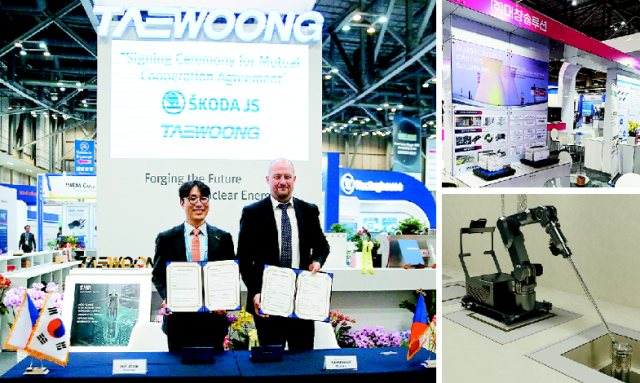
In April, at the Korea Nuclear Industry Expo in Busan, Taewung signed a business cooperation agreement with Skoda JS. The shift is unmistakable. The company is pivoting from a wind-power supplier to a nuclear-component manufacturer. Beyond nuclear, Taewung is co-developing gas turbine rotor shafts with Mitsubishi Heavy Industries, broadening its power generation portfolio.
Is the stock expensive now?
The official exchange-listed P/E stands near 27x, likely calculated on 2024 earnings. Recalculated on 2025 results—when net profit contracted sharply—the multiple exceeds 100x. The elevated multiple reflects the compressed earnings base from 2025. Should 2026 earnings deliver the projected turnaround, the multiple would compress. For now, it does not appear inexpensive on current-earnings basis; order expectations are being priced ahead of near-term results.
What are the risks?
Valuation is stretched. With a recalculated P/E exceeding 100x, downside risk could be material if expectations disappoint.
Q2 revenue and profit declined from Q1, reflecting a lumpy business structure. Quarterly trends will require ongoing scrutiny.
The SMR market remains pre-commercial; industry consensus points to meaningful scale-up post-2030. Current orders are primarily reference-building in character; material contribution to near-term results is unlikely.
Volatility is elevated, driven by single-stock momentum independent of index moves. Reversals can occur quickly if sentiment shifts.
Analyst price targets could not be confirmed from multiple reliable sources; this remains unverified.
Where does Taewung stand?
Earnings have bottomed in 2025 and recovered for two consecutive quarters. Layered onto this trajectory is a fresh growth narrative around SMR and nuclear components. Today's surge reflects renewed focus on expectations for September's unit 2 order announcement.
Two data points will matter: whether TerraPower's unit 2 order materializes as formal disclosure in September, and whether Q3 results exceed Q2 performance. Should either expectation fall short, today's run-up could unwind accordingly.
This article is for informational purposes and does not constitute a recommendation to buy or sell any security.
#Taewung #044490 #SMR #TerraPower #NuclearComponents #NuclearPower #SkodaJS #KOSDAQ #Forging #OffshoreWind #NorfolkVanguard #EarningsTurnaround #StockInFocus
댓글
댓글 쓰기