When wages are withheld, most people assume reporting the employer means getting them prosecuted. But reporting to the Ministry of Employment and Labor splits into two distinct channels with different outcomes. Which one you choose determines whether you recover money, face the employer, or just leave a prosecution on record.
There's also a more urgent issue: withheld wages have a deadline, and it's not your termination date. The clock restarts for each month's pay. Here's how the system actually works, based on the Labor Standards Act and Labor Ministry guidance.
Two paths: Petition for recovery vs. criminal complaint
The Labor Ministry distinguishes between them clearly. Filing a petition means asking the employer to pay back the withheld wages. Filing a criminal complaint means asking for the employer to be prosecuted for violating the Labor Standards Act.
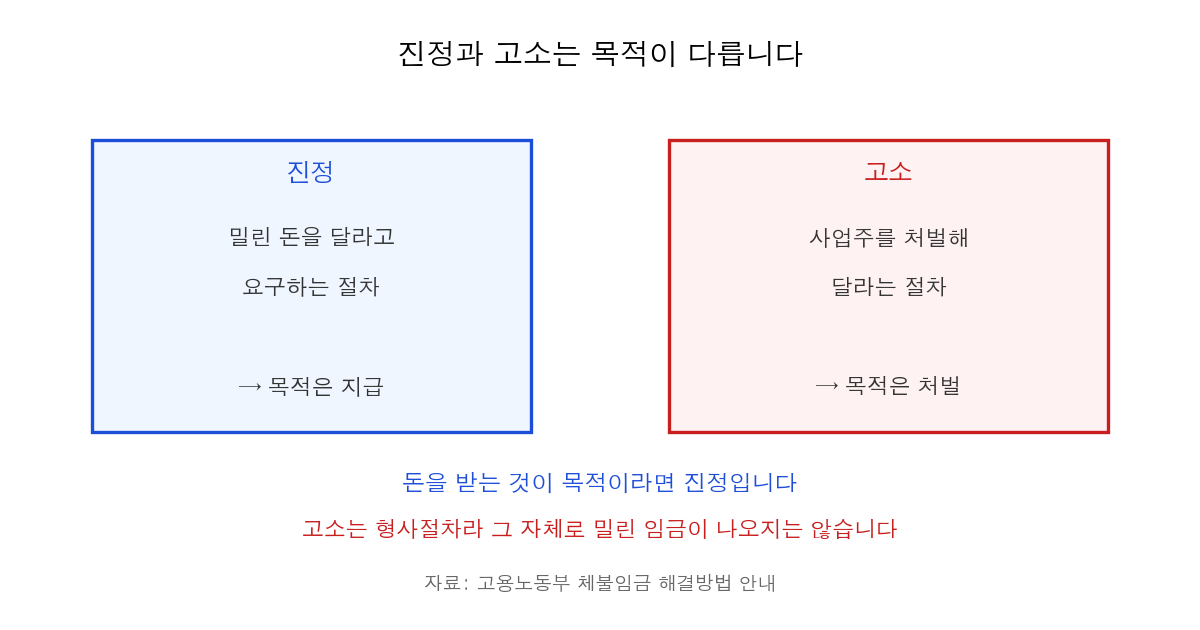
Compiled and created from Labor Ministry guidance
The confusion arises here: a criminal complaint is a separate legal proceeding. The employer may face punishment. But that process alone does not put money into your account. If recovery is your goal, starting with a petition is standard practice.
When you file a petition, a labor inspector verifies the amount owed and directs the employer to pay. If the employer refuses, the case moves to criminal prosecution—but that step comes afterward. The path to enforcement does not dead-end without prosecution.
Standard processing takes 25 business days. The case can be extended twice. The labor inspector can decide the first extension on their own. The second requires your agreement. Recovery within a month is unlikely.
Three-year deadline: it expires per pay period, not per termination
The Labor Standards Act states that wage claims expire after three years of non-collection. Many people know this. The critical detail most miss: when the three-year clock starts for each payment.
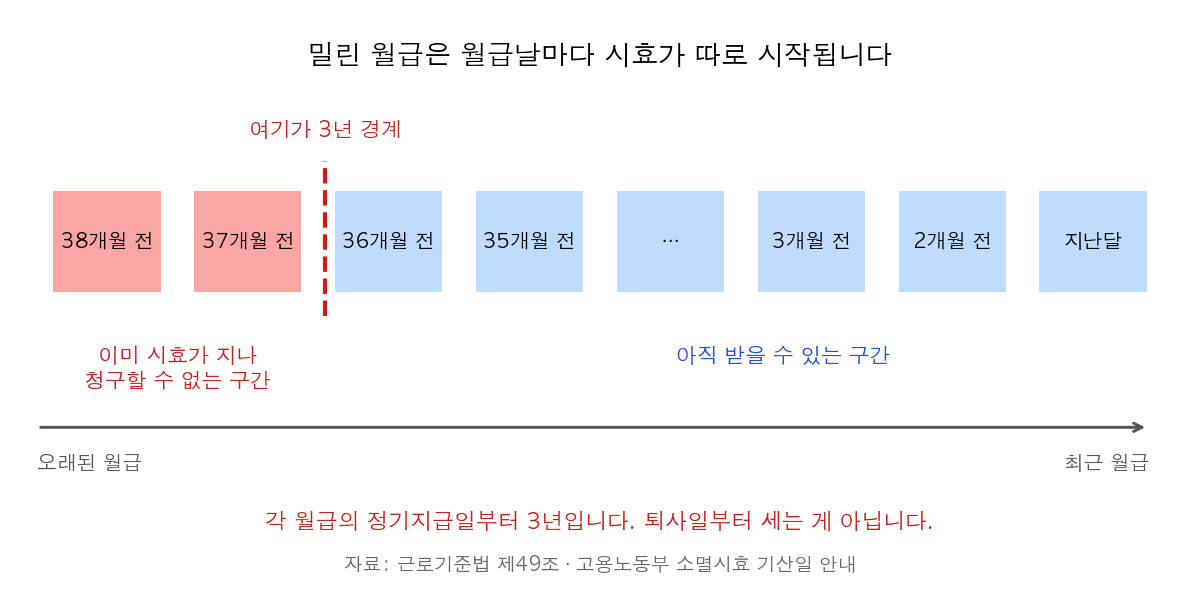
Compiled and created based on Labor Standards Act Article 49
The deadline is not your termination date. It is the scheduled pay date for each month. So if you're owed multiple months of wages, you cannot recover them all in one claim if three years have passed since the oldest one was due. The oldest months expire first.
If you delay action while multiple months accumulate, each older month reaches expiration in sequence. An employer can simply wait out the clock. The older months disappear while you negotiate for recent ones. Delay works in the employer's favor.
Terminated employees earn 20% annual interest on late wages
This rule favors the employee. The Labor Standards Act requires employers to pay all wages and severance within 14 days of termination.
Miss that deadline and 20% annual interest accrues from day 15 until actual payment. No standard savings account offers that rate. But this applies only to terminated workers—not to wage delays for current employees.
The employer also faces penalties: up to three years' imprisonment or fines up to 30 million won.
What if the employer has no money?
This is the hardest scenario. Even if you win your case, you cannot recover from an employer with no funds. A dedicated system exists for this: the wage payment guarantee fund.
You file a claim with the Korea Workers' Compensation and Welfare Service, and the state pays on the employer's behalf. Coverage extends to both terminated and current employees. Specific requirements and limits apply, so you won't recover 100%. But when a company shuts down, this often becomes the only available recovery route.
Still employed? There's an anonymous reporting option
The biggest barrier for current employees is fear of retaliation. Many worry that reporting will make their job unsustainable. So they wait. Three years pass, and the money is gone.
The Labor Ministry portal has a separate channel: the anonymous reporting center for current employees. You report the violation without identifying yourself. This is not a direct path to recovering your own withheld wages. Rather, it triggers a labor inspection that may compel compliance.
Recovering your own wage claim and reporting a workplace violation are separate processes with different mechanics. Your situation determines which is appropriate. Don't decide alone—get a consultation first.
What to do now
Most urgent: time is working against you. The oldest months hit the three-year expiration first. Delay shrinks your potential recovery. Calculate your deadline now.
Second priority: documentation. You need records showing the promised wage and when it was due. Employment contracts, pay stubs, time cards, bank deposit history, text messages, and messaging records all qualify as evidence.
File two ways: online through the Labor Ministry portal, or visit your local Labor Office, consult with a specialist, and file in person.
This explanation covers how the system works. Whether your situation qualifies for a wage recovery petition, a criminal complaint, or both depends on the facts. Labor classification, contract type, and employer size change the answer. Questions about your specific case need review. Call the Labor Ministry consultation line at 1350, or consult a labor attorney or legal aid organization (Korean Legal Aid Corporation) if cost is an issue.
Sources: Ministry of Employment and Labor "How to Resolve Wage Disputes" guidance; Ministry of Employment and Labor guidance on wage statute of limitations calculation; Labor Standards Act Articles 36, 37, and 49, and implementing rules (law.go.kr); Korea Workers' Compensation and Welfare Service wage guarantee fund guidance. Regulations change; verify current rules before filing.
This article conveys information about the system and is not legal counsel for any individual case.
댓글
댓글 쓰기