Monday morning, September 28, 2026. U.S. stock markets closed last week with Treasury yields climbing above 5%—a level that typically weighs on equities. Yet the Dow, S&P 500, and Nasdaq all advanced. This time was different. Semiconductors drove the difference.
AMD's price target jumped $100 in a single day. Micron is set to report quarterly results Thursday morning, Seoul time. The KOSPI index is not immune to this shift. Here's what to watch in Korean markets today.
U.S. Equity Gains Despite 5% Yields
On Friday, September 25, all three U.S. major indexes closed higher. The Dow climbed 478.64 points, or 0.93%, to 51,828.62. The S&P 500 rose 0.51% to 7,743.41. The Nasdaq gained 0.48% to 27,068.72.
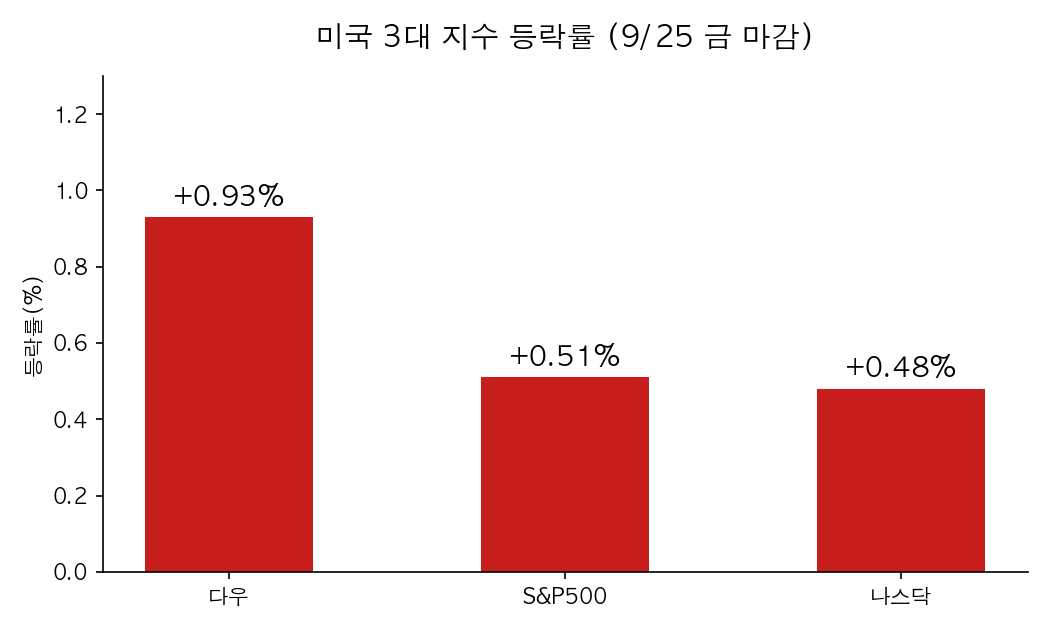
U.S. Major Indexes, Friday, September 25
The Dow had fallen for three straight weeks before bouncing this week. Treasury yields spiked throughout the five-day period. Yet all three indexes posted weekly gains. Rates and equities moved in opposite directions—a rare week.
Philadelphia Semiconductor Index (SOX) — AMD's Price Target Jumps $100
This is the critical watch for Korean investors. Semiconductor names—Nvidia, AMD, Broadcom—opened strong in Friday's premarket. Bank of America raised its AMD price target from $620 to $720. That's a $100 jump in a single day.
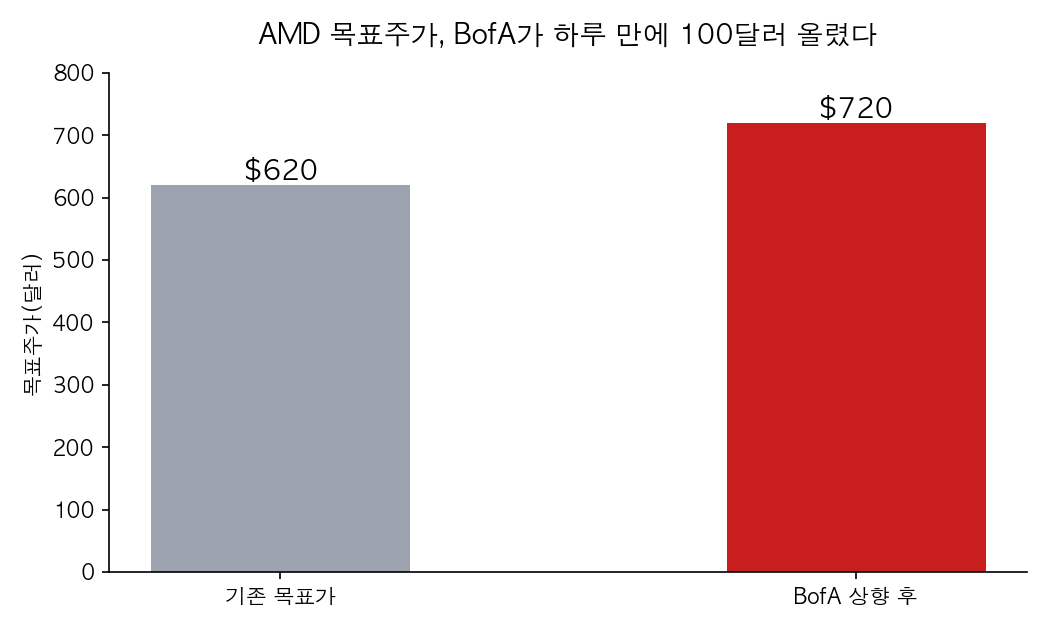
AMD Price Target Raised $100 by Bank of America in One Day
The bigger catalyst is this week. Micron reports fourth-quarter earnings Thursday, Seoul time, with tight DRAM and NAND supply, robust AI demand, and a planned $10 billion new fab in Syracuse all in focus. Market expectations are high. Micron's results are not just about Micron—they set the benchmark for valuing SK Hynix and Samsung Electronics' memory operations.
The semiconductor sector has gained nearly 90% so far in 2026. But it has pulled back nearly 29% from June's high. This sector hasn't been a straight ride up. This week's move could be just another leg in that volatility.
Rates, Currency, Oil — Treasury Yields Spike 23 Basis Points in Four Days
The bond market story this week was all about U.S. Treasury yields. The 10-year yield rose 23 basis points over four days, reaching 5.20%. It pulled back slightly to 5.17% by Friday's close.
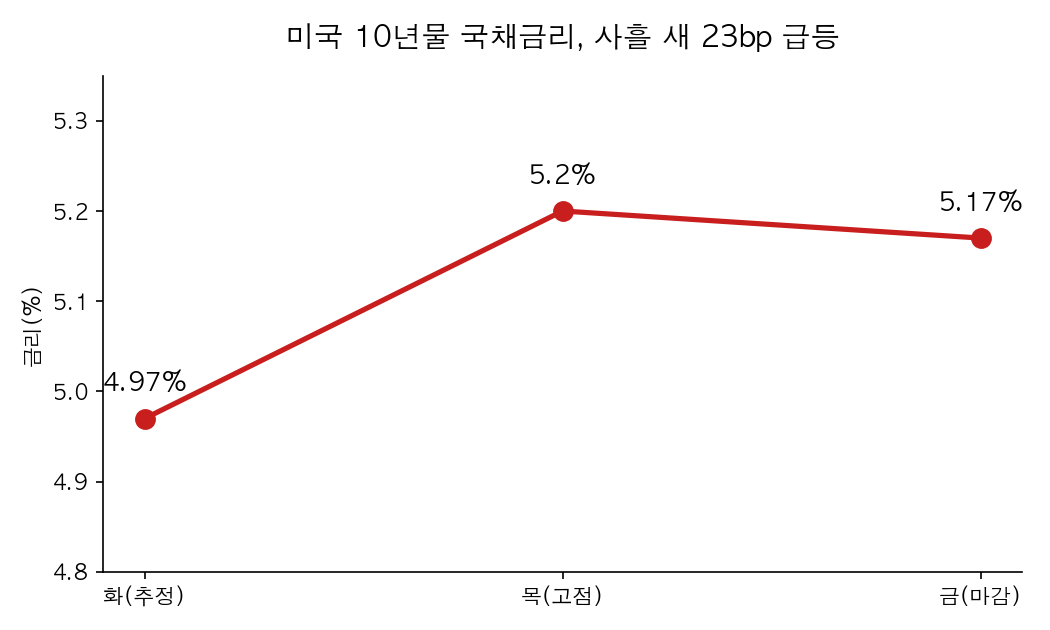
U.S. 10-Year Treasury Yield: Sharp 23bp Spike in Four Days, Slight Stabilization by Friday
Oil moved the opposite way. Reports emerged that U.S. and Iranian negotiators are pursuing phased agreements on reopening the Strait of Hormuz. The prospect sent crude prices lower. For bonds, that was a relief, easing inflation pressure.
If Treasury yields stay elevated, dollar strength could persist. That pressures the won. The Seoul FX opening will be worth watching today.
Asia Markets Friday — Nikkei Alone as China, Taiwan Observe Mid-Autumn Festival
Only half of Asia traded Friday. Shanghai and Taiwan exchanges were closed for the Mid-Autumn Festival. Only Japan's Nikkei 225 was in action. The Nikkei advanced 850.21 points, or 1.30%, to 66,364.20.
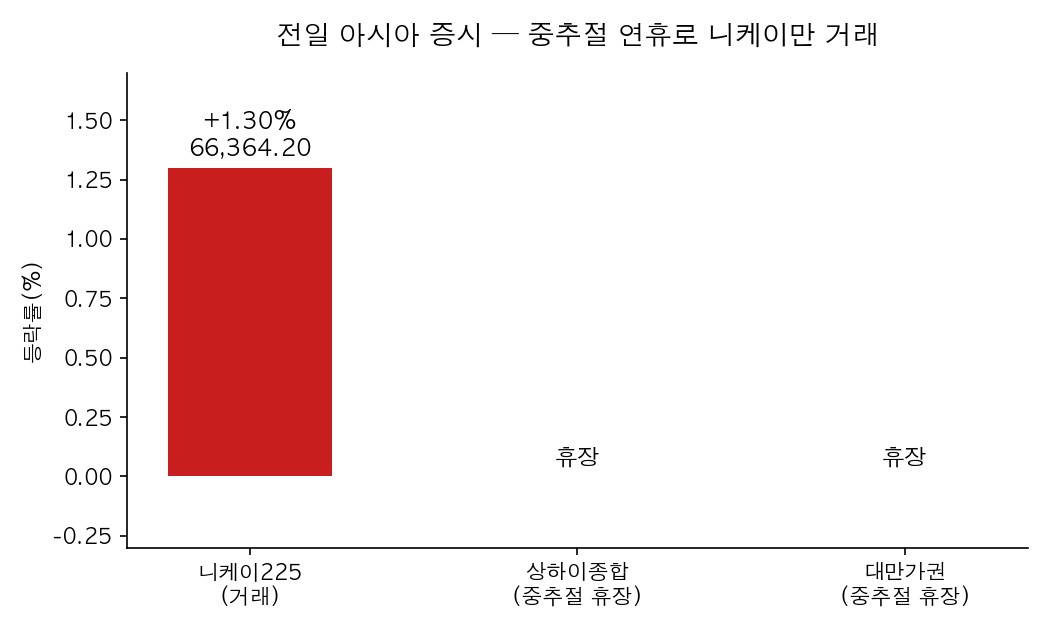
Asia Markets Friday — Limited Trading Due to Mid-Autumn Festival
Shanghai and Taiwan reopen today. There's a backlog of news from the long weekend. Whether they follow semiconductor strength from Wall Street will be key. For KOSPI watchers, TSMC's opening gap will signal how far the chip rally extends.
| Metric | Level | Change |
|---|---|---|
| Dow Jones | 51,828.62 | +0.93% |
| S&P 500 | 7,743.41 | +0.51% |
| Nasdaq | 27,068.72 | +0.48% |
| U.S. 10-Year Yield | 5.17% | Four days, +23bp |
| Nikkei 225 | 66,364.20 | +1.30% |
What to Watch in Korean Markets Today: Five Key Points
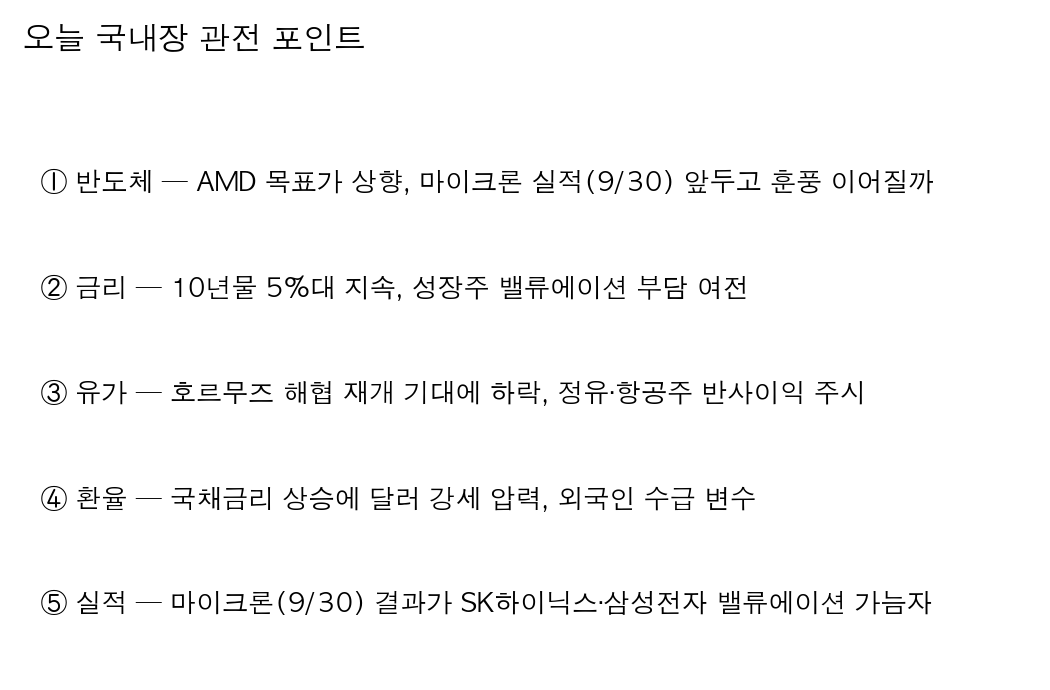
Five Things to Watch in Korean Markets Today
First: semiconductors. Bank of America's AMD upgrade and Micron earnings expectations hinge on whether that translates to Korean chip leaders like Samsung Electronics and SK Hynix. Both have tracked U.S. semiconductor momentum closely. Early trading flows today will tell the story.
Second: rates. With the 10-year Treasury at 5%, valuation pressure on growth stocks won't ease soon—especially for names trading on hope rather than earnings. Third: oil. If Strait of Hormuz talks progress, crude could fall further, which would split reactions: headwinds for refiners and airlines, risks for chemicals.
Fourth: currency. Continued rate strength means sustained dollar pressure, which shapes foreign investor flows. Fifth: earnings. Micron reports Thursday morning, Seoul time. Until then, it's a wait-and-see market. Korean memory makers will trade on those expectations.
Below is Friday's U.S. market heat map. Sector divergence is visible at a glance. It suggests where Korean investor flows might head.
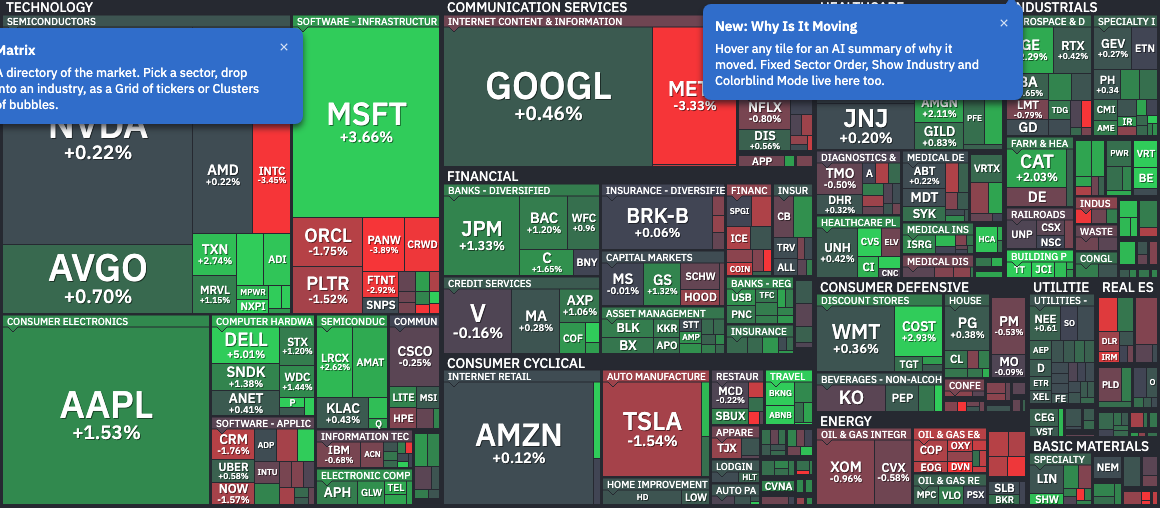
U.S. Market Heat Map (S&P 500), Friday, September 25 — Green: Gains, Red: Losses (Source: Finviz)
The Bottom Line
Rates rose and stocks rose—an unusual pairing. On the surface, it seems contradictory. One variable bridged the gap: semiconductors. Today, KOSPI may follow the semiconductor lead or succumb to rate pressure. The opening move in Korean chip leaders will set the tone. Micron earnings is two days away. Expect a market split between watchers and traders until then.
This article is for informational purposes only and does not constitute investment advice or a recommendation to buy or sell any security. Investment decisions and their consequences are the reader's sole responsibility.
#U.S.Markets #KOSPI #MarketClose #Nasdaq #DowJones #SP500 #TreasuryYields #Semiconductors #AMD #Micron #Earnings #KoreanChips #Crude #Nikkei #Dollar #ForeignInvestors #Samsung #SKHynix #KoreanStocks #MarketOutlook #USYield #SemiconductorIndex #NYSE #AsiaMarkets #MarketBrief #Stocks #TradingWatch #InvestmentNews #MarketAnalysis #StraitofHormuz
댓글
댓글 쓰기