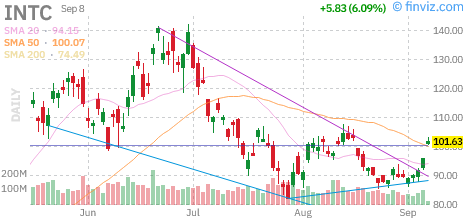
During U.S. trading on September 8, Intel shares surged 5.08% to trade near $100. While the broader semiconductor sector remained quiet, Intel stood alone. The reason is straightforward: Intel plans to raise PC CPU prices again next month.
According to foreign media citing supply-chain sources, Intel is preparing to raise PC CPU prices by approximately 10% around October 5. This marks the third stage of consecutive increases that began in late 2025—one in Q1, another in July, and now a third round.
Why raise prices again?
Industry sources say the move aims to protect margins rather than gain share. Intel's server CPUs are selling so well that supply is constrained. The calculus is that the market cannot absorb more supply anyway, so prices can rise without losing customers.
The same day, Northland Securities upgraded Intel two notches to Outperform from Market Perform and set a $120 price target. The firm cited turnaround progress, tight server CPU supply, and Intel's participation in Elon Musk's Terafab AI chip manufacturing project.
Intel joined Terafab in April this year, a $25 billion AI chip manufacturing facility built jointly with SpaceX, Tesla, and xAI. Photos from the announcement showing Intel CEO Pat Gelsinger and Musk shaking hands on campus have resurfaced in recent market discussion.
Intel posted Q2 revenue of $16.1 billion, up 25% year-over-year. The company called it the strongest growth rate in 15 years. The standout was data center and AI, which posted $6.3 billion in revenue, up 59% from a year earlier.

Is the company actually profitable?
The foundry segment also grew 31% in revenue, though it remains unprofitable. After years of being treated as a cash drain, the unit is now beginning to demonstrate viability. In August, Intel raised $20 billion at $95 per share, replenishing ammunition for capital-intensive manufacturing buildout.
Year to date, the stock has climbed more than 140%. Consider that shares stalled for over six months after Gelsinger took the helm last March—the company looks fundamentally transformed.

But is everything rosy?
CPU price increases are not always bullish. To consumers, they simply mean costlier computers, and PC manufacturers' willingness to absorb the increases remains uncertain. On the same day Northland raised its target, Mizuho lowered Intel's to $92 from $109. Analysts reading the same data diverge sharply.
The year-to-date rally has raised valuation concerns, though today's jump owes more to specific events than valuation pressure alone. The move reflects concrete catalysts: the announced price increase and the analyst upgrade.
| Metric | Value |
|---|---|
| Current price (intraday) | ~$100.67 |
| Change (intraday) | +5.08% |
| Q2 revenue | $16.1 billion (+25%) |
| Northland target | $120 (Outperform) |
| Mizuho target | $92 (Hold, downgrade) |
Where Intel stands now
Intel today tells a completely different story from the bankruptcy-watch narrative of a year ago. It is now constrained enough on server CPU supply to raise prices. Data center revenue has jumped nearly 60% in a year. A recovery narrative appears warranted.
The next key date is October 5. Whether the price increase materializes as planned and how broadly PC makers accept it will determine the next phase.
Analyst targets range from $92 to $120. The mere fact that the same numbers yield such different interpretations suggests Intel's turnaround has not yet been fully proven.
This article covers a U.S.-listed security and presents factual analysis, not investment advice. Investment decisions and their outcomes are the reader's sole responsibility.
#Intel #INTC #US Stocks #Semiconductors #Intel Stock #CPU Price Hike #Data Centers #AI Chips #Foundry #Pat Gelsinger #Terafab #Elon Musk #US Markets #Nasdaq #Server CPUs #Price Target #Northland #Mizuho #Panther Lake #18A Process #Analyst Report
댓글
댓글 쓰기