[U.S. Market Brief] Four-Day Decline Continues; SK Hynix ADR Surges 7% as Memory Chip Outlook Brightens
On September 9 (New York time), the Dow Jones Industrial Average, S&P 500, and Nasdaq Composite all closed lower, marking the fourth consecutive decline. Crude oil broke through $101 per barrel. Treasury yields rose. Yet SK Hynix ADR jumped 7.05% the same day. While the broader market retreated, semiconductor stocks advanced—a divergence worth examining.
Three major indices down for four straight days
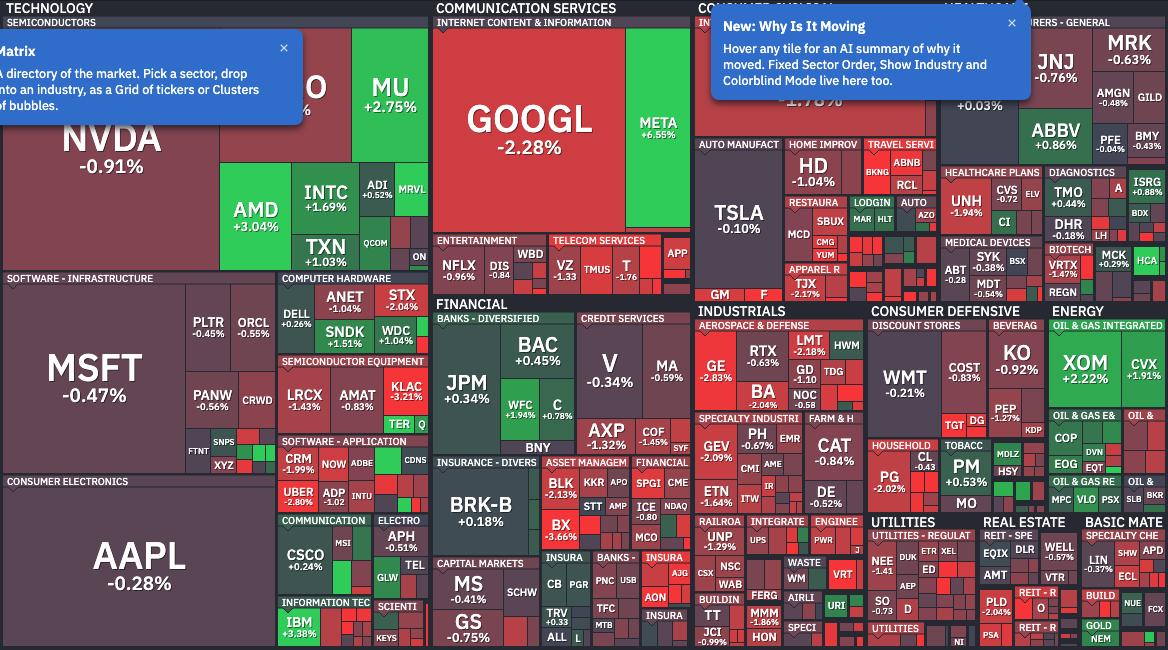
U.S. market heat map as of last night (S&P 500 performance map) · Green=gainers/Red=decliners (finviz)
The Dow Jones Industrial Average fell 405.41 points, or 0.77%, closing at 52,380.66. The S&P 500 declined 37.16 points, or 0.48%, to 7,636.36. The Nasdaq Composite dropped 168.07 points, or 0.64%, to 26,253.34. All three benchmarks closed in the red.
This marks the third consecutive down day, extending a slide that began September 4. Rising crude prices and Treasury yields pressured sentiment. Yet the magnitude remained modest—the Dow never declined more than 1%.
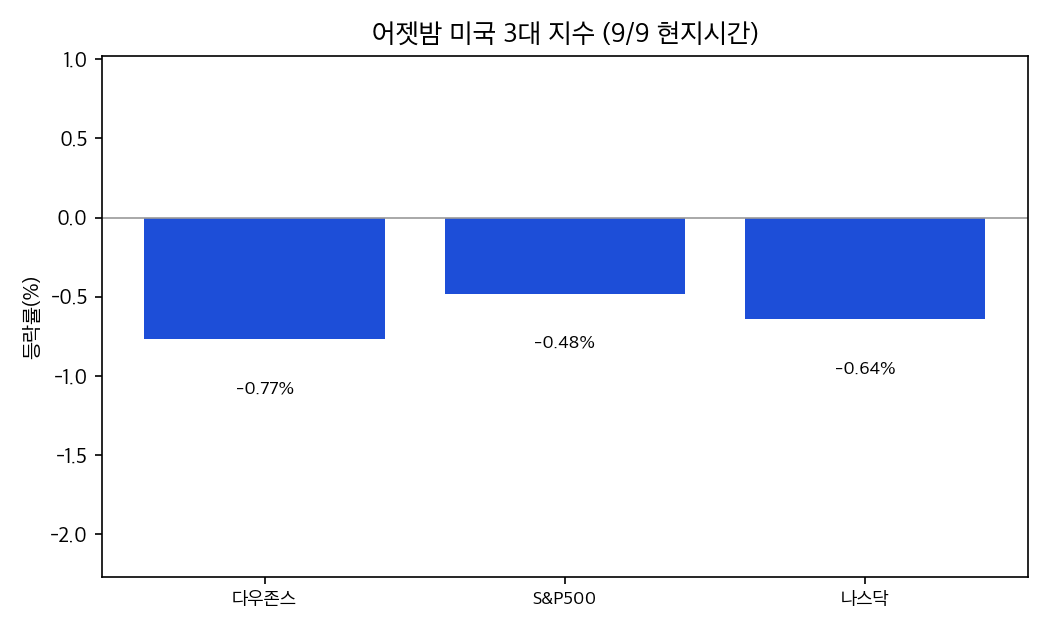
Dow, S&P 500, and Nasdaq all lower, though losses stayed below 1 percent
Individual stocks painted a more complex picture. Apple fell 0.28% after unveiling its new Duo foldable phone, as investors worried about pricing higher than anticipated. Meta, by contrast, surged 6.55% following the announcement of its new Muse AI agent. The same corporate event—a product launch—drew sharply opposite reactions.
Semiconductors moved independently
While the broader market retreated, memory and semiconductor names diverged sharply to the upside. Micron rose 2.75%. SK Hynix ADR jumped 7.05%. Nvidia was the exception, falling 0.91%. The strength in memory stocks reflects NAND flash pricing momentum. Global NAND revenue in Q2 surged 70% year-over-year, signaling a memory chip recovery gathering pace. That improvement is being priced into SK Hynix and other memory suppliers.
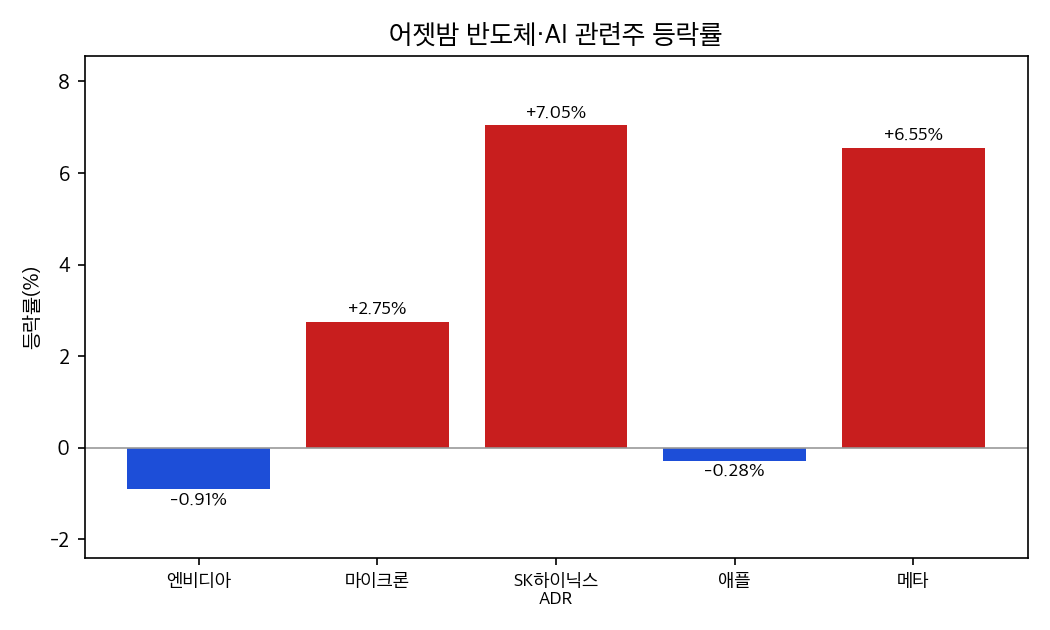
Micron and SK Hynix rally while Nvidia softens—semiconductors diverge
For domestic semiconductor and memory investors, this distinction matters. A down U.S. market does not automatically pull down Korean chip stocks, particularly when memory fundamentals are firming. Korean semiconductor names warrant fresh attention at today's market open.
Why oil and rates both rose
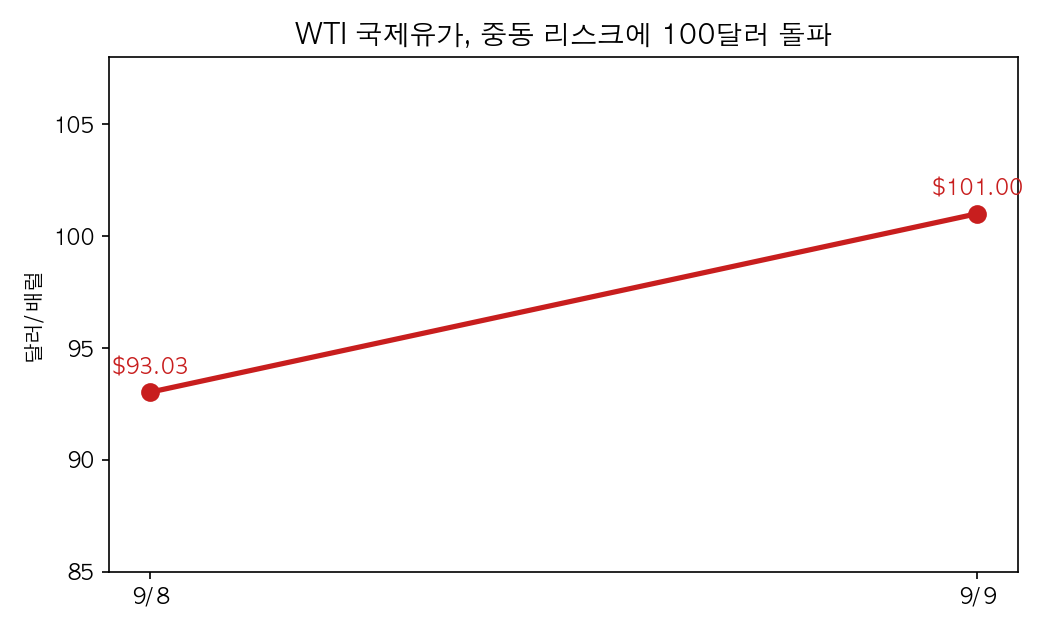
WTI crude has jumped from the low $90s to above $101 in two days
Crude oil reached $101 per barrel, driven by intensifying Middle East tensions. Tanker strikes near the Strait of Hormuz and the Red Sea, along with retaliatory military action, have raised concerns about potential disruption to crude transport. That geopolitical risk combined with inflation worries—crude strength often signals rising prices for consumers, which sparks Treasury selling and higher yields. DoubleLine Capital CEO Jeff Gundlach, a prominent bond strategist, has suggested the U.S. needs a 50 basis-point rate increase, while the Bank of Japan is flagged as a potential rate hiker starting this month. The focus is shifting to how aggressively central banks move next.
Asian markets show mixed signals
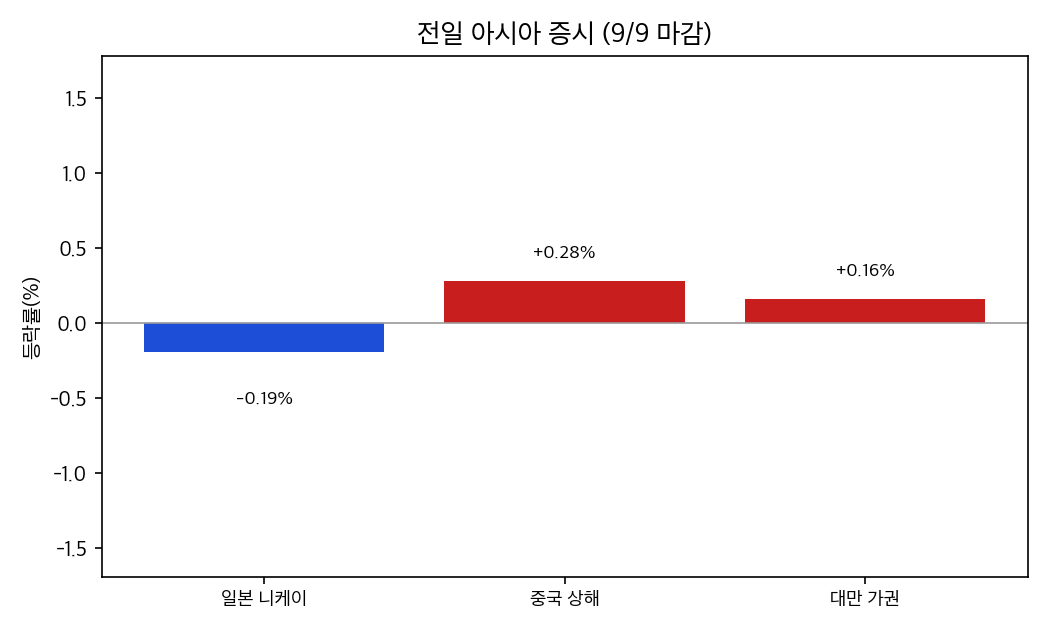
Japan weaker, China and Taiwan firmer on September 9 in Asian equities
Japan's Nikkei fell 0.19%, held back by Middle East risk and caution over Bank of Japan policy. China's Shanghai Composite rose 0.28% on expectations for stimulus. Taiwan's weighted index gained 0.16%, lifted by strength in U.S. semiconductor stocks.
Korean equities showed strength. KOSPI gained 97.12 points, or 1.40%, to close at 7,051.64—the first close above 7,000 in 33 trading days. KOSDAQ advanced 18.49 points, or 2.28%, to 830.37. Institutional investors led the buying, posting net purchases for five consecutive days. Foreign investors bought for two consecutive days. Retail investors, however, sold for five straight days. The composition of that buying matters: yesterday's rally rested entirely on institutional accumulation while foreign investors and retail names distributed shares.
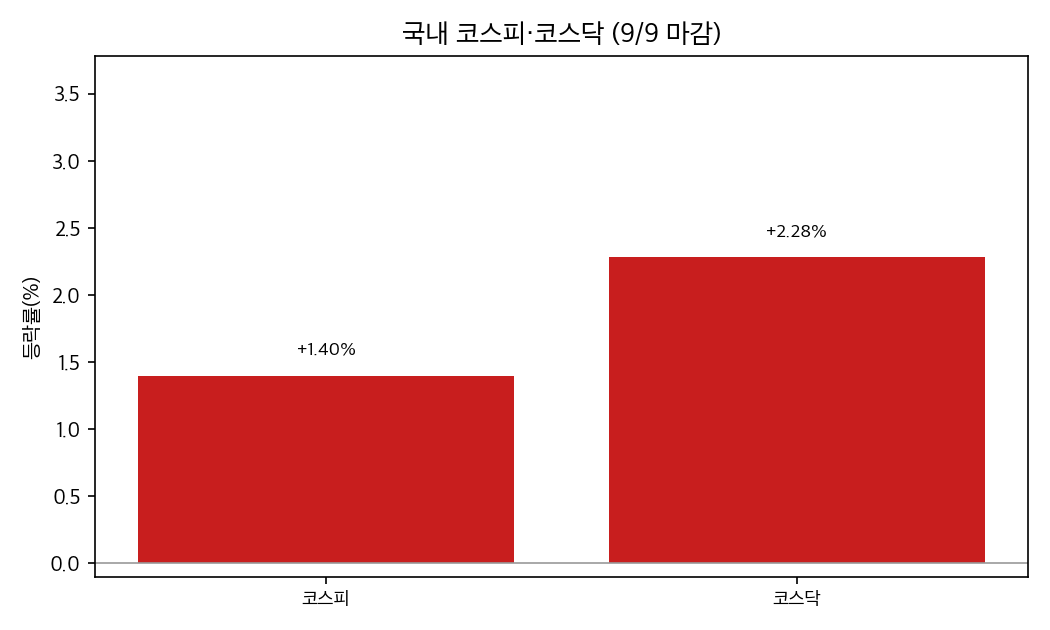
KOSPI reclaims 7,000; KOSDAQ closes up more than 2 percent
The investor flow composition suggests caution. Institutions stepped in with conviction for five days while foreign investors shifted to net selling and individuals continued liquidating. Whether this institutional buying persists, and whether foreign investors return to accumulation, will determine the durability of today's level.
What to watch in today's session
Last night's U.S. market offered three separate signals for today's Korean session, and not all point in the same direction.
First: semiconductor follow-through. U.S. memory stocks and Micron rallied despite broad index weakness. Whether SK Hynix and Samsung memory extend that strength—or revert to index correlation—will test the conviction behind yesterday's NAND recovery narrative.
Second: oil price persistence. If WTI remains above $101, it creates a sector split. Energy and refining names benefit while transportation and aviation suffer. More importantly, persistent crude strength reignites inflation concerns, potentially shifting expectations for another Bank of Korea rate increase in October.
Third: investor flows. Yesterday's rally was institutional-driven. Foreign investors switched to net selling; retail has sold five consecutive days. Whether foreign money returns to accumulation—and whether institutions extend their streak—will determine whether 7,000 settles as support or remains a temporary bounce.
The USD/KRW exchange rate is also worth monitoring. At 1,336 won per dollar, it sits at its weakest level since October 2024, pressured by semiconductor export conversion flows. Rising oil prices, however, are cushioning further weakness. How that balance resolves will reflect whether export strength or macro risk sentiment dominates.
Summary
U.S. indices fell for the fourth straight day, but losses were contained below 1%. Semiconductor stocks diverged sharply to the upside—Micron and SK Hynix soared while Nvidia softened. NAND flash recovery is real. Oil has breached $101 on Middle East risk. Interest rates have risen accordingly. A single headline number cannot capture today's market complexity. Watch semiconductors, oil, and investor flows separately; each tells its own story.
This article is for informational purposes and summarizes market conditions. Investment decisions and their outcomes rest with the reader.
#NYSEClose #KOSPI #USMarkets #SemiconductorStocks #SKHynix #Micron #Nvidia #Crude Oil #WTI #USDKRWExchange #KOSDAQ #Nasdaq #DowJones #TreasuryYields #MiddleEastRisk #MemoryChips #MarketClose
댓글
댓글 쓰기