On September 7, 2026, KOSPI closed at 6,995.39, up 4.61%. The index posted its third consecutive gain with 7,000 within reach. Yet during this three-day stretch, retail investors continued selling. Today alone, they disposed of KRW 6.8374 trillion in holdings. The divergence is striking: while the index climbed, retail investors systematically exited.
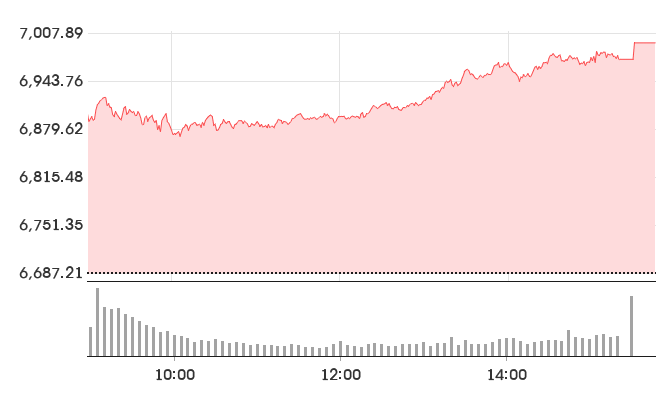
KOSPI daily chart, closing at 6,995.39. On a closing-basis, the index approaches record highs.
Today's market and flows — index rallies as retail steps aside
The buying pressure was present from the open. Starting near 6,910, the index dipped to 6,867 during the morning session before accelerating in the afternoon to reach its intraday high of 6,995.40 and hold it through the close. Intraday volatility exceeded 300 points.
Investor flows tell a clear story. Foreign investors net-bought KRW 2.5862 trillion, while institutional investors net-bought KRW 2.6497 trillion—combined buying power exceeding KRW 5 trillion. Retail investors, by contrast, net-sold KRW 6.8374 trillion. Corporate entities net-bought KRW 1.6352 trillion. Buyers and sellers split completely along participant lines.
This pattern persists. Foreign and institutional investors have posted net purchases for three consecutive days. Retail investors have posted net sales for three consecutive days running. The directional opposition has held steady for four trading sessions, yet the result is index gains. Unclear whether retail took profits early or forfeited gains at the rally's start remains an open question.
OpenAI provided the spark. The company unveiled its Astra model last week, broadening expectations for high-capacity memory demand. Though U.S. equities fell last weekend on a stronger-than-expected August jobs report and renewed rate-hike concerns, the Philadelphia Semiconductor Index surged 3.37%. SanDisk jumped 11.90%, while SK Hynix ADR gained 8.14%. This momentum flowed directly into Korean semiconductor names.
Sectors in focus — semiconductors and power generation led gains
Samsung Electronics rose 5.68%, SK Hynix climbed 8.26%. Given these two names' market-cap weight, their gains alone account for a meaningful portion of the index advance. SK Square (+8.07%), Samsung Electro-Mechanics (+3.78%), and Hanmi Semiconductor (+4.57%) all posted substantial gains.
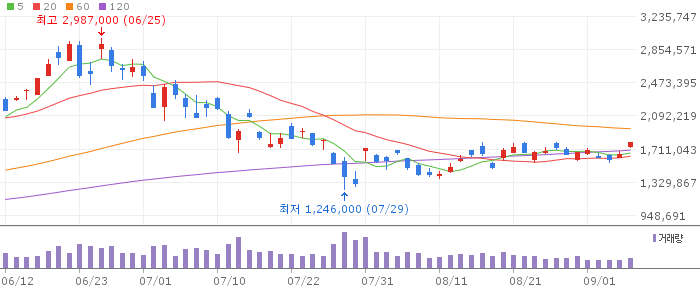
SK Hynix, up 8.26% today. The stock most directly reflected memory-price upside expectations.
The second pillar: power generation and electrical equipment. News that a proposed investment program with the U.S. will include eight nuclear plants coincided with reports that xAI, Elon Musk's AI venture, is backing a large combined-cycle power plant in Memphis, Tennessee using Doosan Enerbility equipment. Doosan Enerbility climbed 10.98%, Doosan parent gained 11.30%, and Sammi Metal, a gas-turbine components supplier, surged 22.16% near its daily limit. Korea Electric Power Technology (+13.66%), SNT Energy (+14.98%), and Gaon Electric Wire (+10.61%) also advanced together.
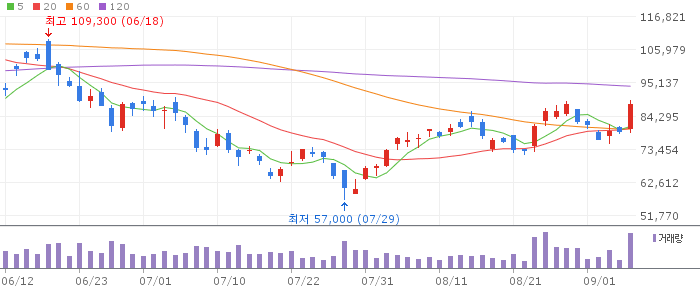
Doosan Enerbility, up 10.98% today. The xAI power-plant project served as a catalyst.
Goldman Sachs maintained its KOSPI target of 12,000 points in a report released today. The firm cited expectations for deepening memory-chip supply constraints as data-center investment expands, reasoning that Korean semiconductor earnings are undervalued at current multiples. The gap between today's index level (6,995) and that target leaves more than 70% upside remaining.
Stocks lagging — pressure points in a rising market
KOSDAQ advanced far less than KOSPI, closing at 822.19, up 1.07%. The semiconductor theme strengthened here as well (Jusung Engineering +4.99%, HPSP +4.92%), yet the index itself struggled. The culprit was investor flows. On KOSDAQ, retail investors net-bought KRW 190.6 billion while foreign investors net-sold KRW 72.2 billion and institutional investors net-sold KRW 131 billion—the exact inverse of KOSPI flows.
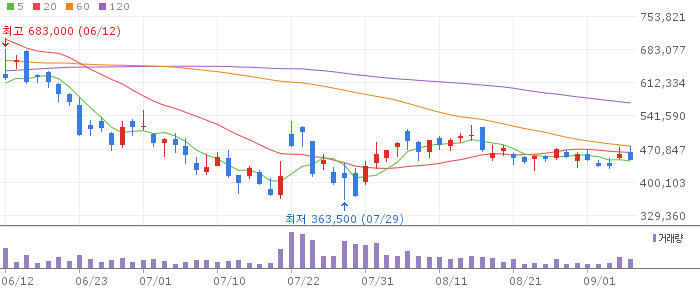
Rainbow Robotics, down 2.40% today. The broader robotics theme rallied, yet individual names diverged sharply.
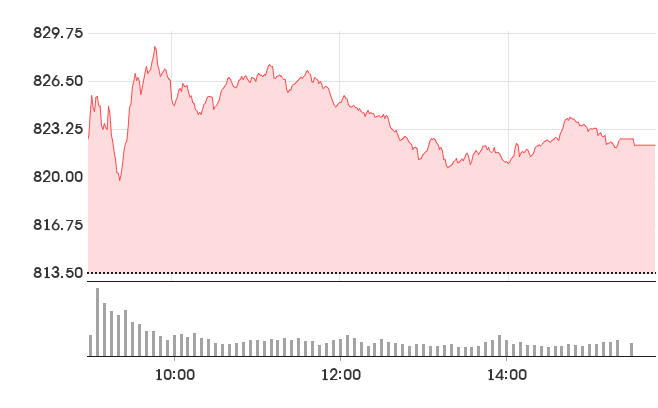
KOSDAQ daily chart, closing at 822.19, up 1.07%.
Within the robotics sector, winners and losers emerged side by side. Rainbow Robotics fell 2.40%. LG Electronics is pursuing a Nasdaq listing for robotics startup Bear Robotics and supplying robot joint actuators to major technology firms. The robotics theme rallied broadly, yet individual selectivity within the same thematic bucket proved decisive. PharmaResearch (-2.59%) and HLB (-2.37%) similarly declined despite strength in pharma and biotech overall.
Historical context from twelve years of data — why tomorrow matters
We examined every daily close for KOSPI from 2016 to today. Days with 4%+ single-day gains total 26 instances. These occurrences cluster around the post-COVID rebound window and—significantly—the current domestic rally period from February 2026 forward.
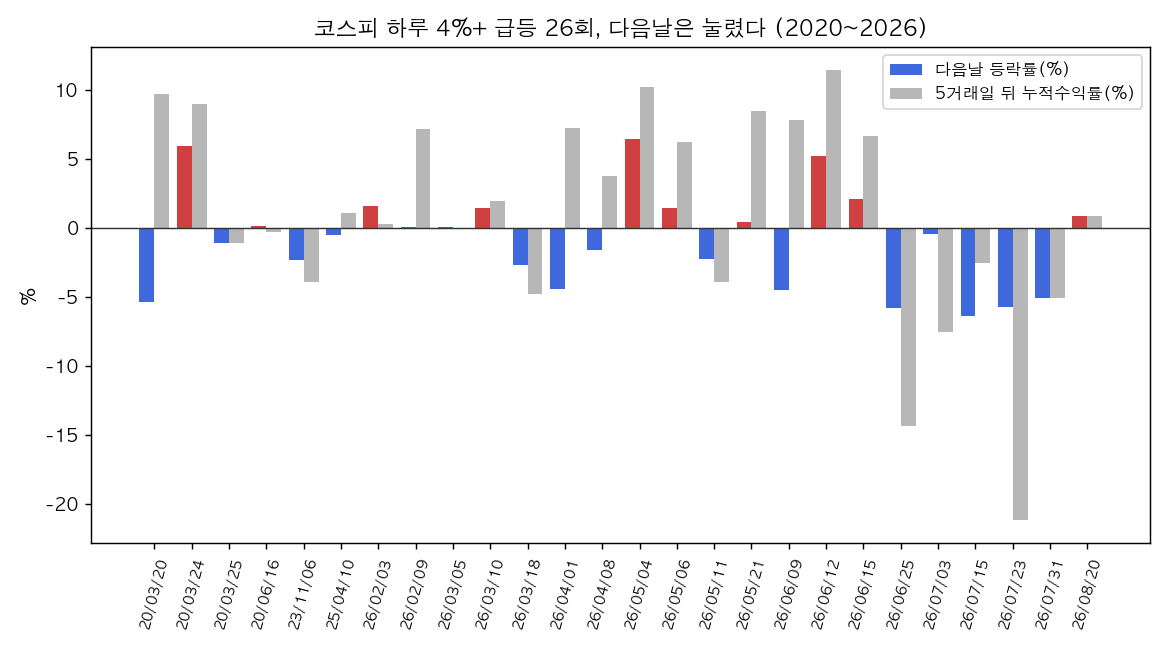
Twenty-six instances of 4%+ KOSPI daily surges: next-day returns (red/blue bars) and cumulative five-day-forward returns (gray bars), from full daily history since 2016.
The pattern proves counterintuitive. Of 26 instances, the following day saw gains 12 times and declines 14 times. The next-day mean return was -0.88%; the median was -0.48%. This means a slightly better than even chance the index pulled back the day after a 4%+ surge.
Extending the horizon to five trading days produces a different picture. The mean cumulative return five days later was +1.03%, with a median of +0.95%. Even after a single-day pullback, the index typically finished slightly higher by the following week. That said, dispersion was substantial. One instance in late June saw a five-day drawdown to -14.36%, while a late-July surge was followed by a -21.18% five-day drop. Four-percent daily surges do not guarantee consistent outcomes.
Today marks the third consecutive day of gains, with the daily advance widening each session. Prior samples show this breadth and acceleration pattern is uncommon. Watch whether foreign and institutional net buying extends into a fourth day, and when retail selling pressure finally relents. Related: our prior analysis of investor-flow reversal patterns and sector divergence under similar geopolitical catalysts offers additional perspective. (See: KOSPI 6,687 Surge: Why Robots Hit Limits While Banks and Insurers Collapsed)
The pattern of identical geopolitical news driving opposite outcomes between KOSPI and KOSDAQ is not unprecedented. (See: KOSPI 6,562 Plunge: Same Geopolitical Story Crushed Semiconductors But Lifted Korean-Peninsula Plays)
Today's key figures
| Metric | Level |
|---|---|
| KOSPI | 6,995.39 (+4.61%) |
| KOSDAQ | 822.19 (+1.07%) |
| Foreign investors net-bought (KOSPI) | KRW 2.5862 trillion |
| Institutional investors net-bought (KOSPI) | KRW 2.6497 trillion |
| Retail investors net-sold (KOSPI) | KRW 6.8374 trillion |
| USD/KRW | 1,340.5 (-9.6) |
Takeaway
Today's index push rested on two pillars: semiconductors and power-generation equipment, propelled by three consecutive days of foreign and institutional net purchases. Retail investors exited throughout the same period. Whether this directional split continues into a fourth session—or whether the typical pullback following a 4%+ surge reasserts itself—becomes the next critical question to monitor.
Investment decisions and outcomes are each investor's own responsibility.
#KOSPI #KOSPI-index #KOSDAQ #Korea-Market-Close #market-close #foreign-investor-flows #institutional-buying #retail-selling #semiconductor-stocks #SK-Hynix #Samsung-Electronics #Doosan-Enerbility #OpenAI #memory-semiconductors #nuclear-theme #power-generation #Goldman-Sachs #market-outlook #limit-up #Korea-stocks #market-close #investment-analysis #stock-trading #price-forecast #KOSPI-7000 #semiconductor-supercycle #flow-analysis #market-analysis #investment-education
댓글
댓글 쓰기