U.S. markets reversed course yesterday (September 23, local time), with all three major indices closing lower. The trigger was a sharp spike in Treasury yields. The U.S. 10-year yield surged to 5.13%, its highest level since 2007, marking a significant move in the fixed-income market. The Dow Jones, S&P 500, and Nasdaq Composite each gave back gains, erasing bullish momentum from the day before.
The contrast was stark. Just one day earlier, on September 22, the Nasdaq closed at a record high following reports of a planned U.S.-Iran diplomatic meeting. That optimism evaporated overnight. Today, a U.S.-China summit is scheduled in Washington. The Korean market finds itself caught between these two pivotal geopolitical events.
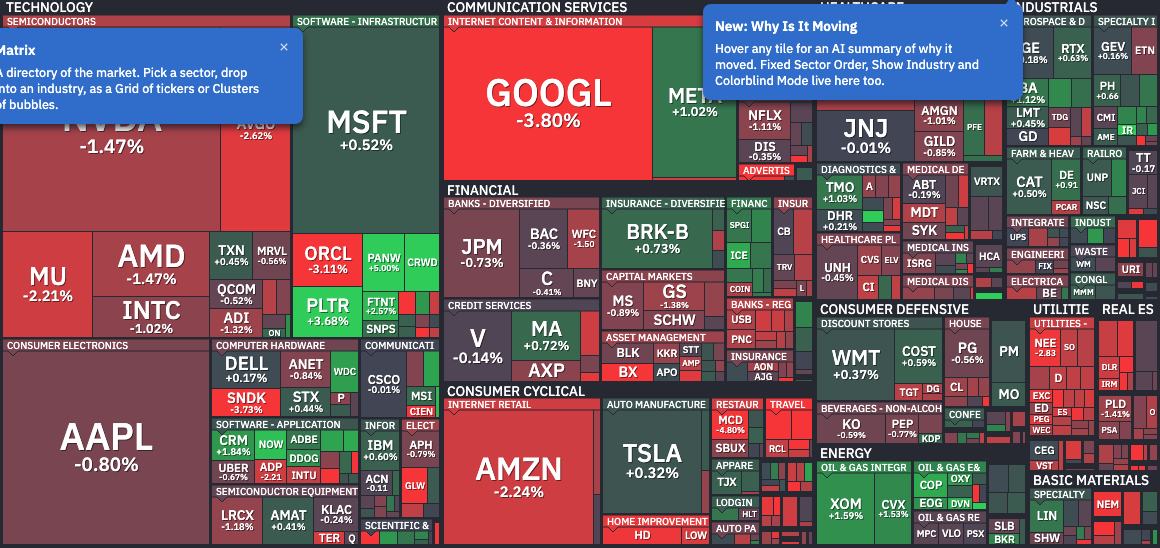
September 23 U.S. market heat map (S&P 500) · Green=gainers / Red=decliners (Finviz convention)
Why Did All Three Major Indices Fall?
The Dow Jones Industrial Average closed at 51,511.59 on September 23, down 352.10 points or 0.7%. The S&P 500 ended at 7,706.03, off 58.61 points (-0.8%). The Nasdaq Composite finished at 26,936.04, down 308.24 points or 1.1%. Broad-based selling across all three benchmarks marked a rare occurrence in recent sessions.
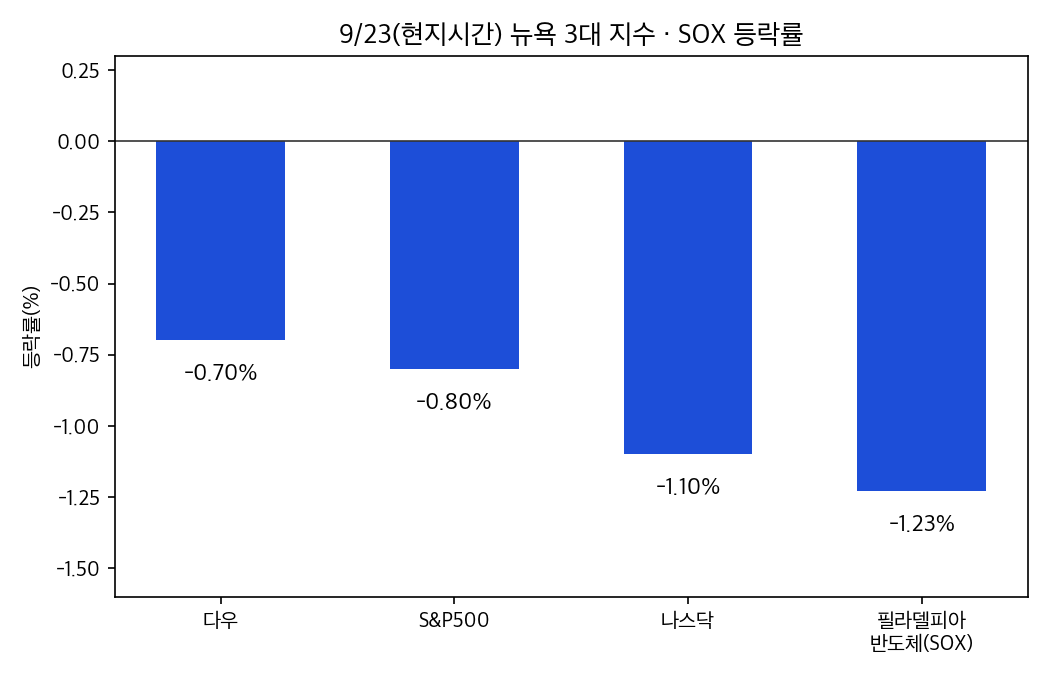
September 23 (local time): Performance of U.S. major indices and Philadelphia Semiconductor Index (SOX)
Ten of the S&P 500's eleven sectors closed in the red. Only energy advanced, buoyed by a rise in crude prices. Every other sector retreated, creating a day marked by one-directional selling pressure across the market.
Several factors converged to drive the decline. Crude oil prices rebounded, reigniting inflation concerns. U.S. business activity, measured by the PMI, surprised to the upside, signaling an economy running hot. Comments from Federal Reserve officials took on a hawkish tone, suggesting the Fed may need to keep rates higher for longer. Taken together, these developments shifted market expectations toward the possibility of further rate hikes. Adding to the pressure: weak demand at a recent Treasury auction. Fewer buyers at the table means lower prices for existing bonds and higher yields across the curve.
How High Did Treasury Yields Go?
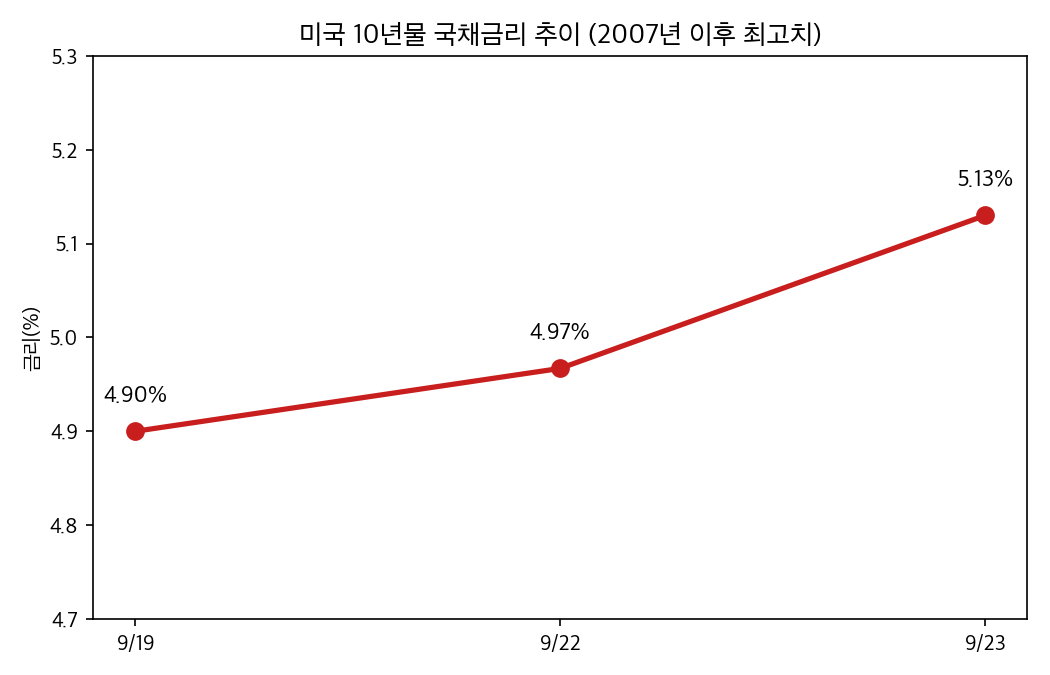
U.S. 10-year Treasury yield trend. Reached 5.13% on 9/23, highest since 2007
| Metric | September 22 | September 23 |
|---|---|---|
| U.S. 10-Year Yield | 4.967% | 5.13% |
| Nasdaq Composite | 27,244.28 (+0.45%) | 26,936.04 (-1.1%) |
| Philadelphia Semiconductor (SOX) | 12,689.8 (+2.06%) | 12,534.3 (-1.23%) |
The numbers tell the story. In a single day, the 10-year yield jumped from the mid-4.9% range to 5.13%. For bond markets, a move of this magnitude is significant. When Treasury yields rise, the valuation math becomes harder for equities—especially growth stocks. The discount rate used to calculate the present value of future earnings increases, making future cash flows worth less in today's dollars. This explains why the Nasdaq, heavy with technology and high-growth names, fell more than the broad market.
Philadelphia Semiconductor Index (SOX): A Pause After Five Days of Gains
The Philadelphia Semiconductor Index closed at 12,534.3 on September 23, down 1.23%. The day before told a different story: SOX gained 2.06%, led by strength in Micron (+5.00%) and TSMC (+1.54%).
However, today's pullback should be kept in context. The semiconductor index had surged more than 14% over the previous five trading sessions. A 1.23% dip represents only a modest fraction of those gains being unwound. Recent analysis suggests that half of the Nasdaq 100's weekly advance came from just four stocks: Nvidia, AMD, Micron, and Intel. Semiconductors have become so influential that their moves often drive the entire index. The reverse holds true as well: when chips slip, the broader market often stumbles.
A notable development also emerged. Wells Fargo lowered its price target on Micron from $1,525 to $1,400 per share, while maintaining its investment rating unchanged. The firm did not reverse its thesis; rather, it appears to have trimmed expectations slightly following the stock's sharp run-up.
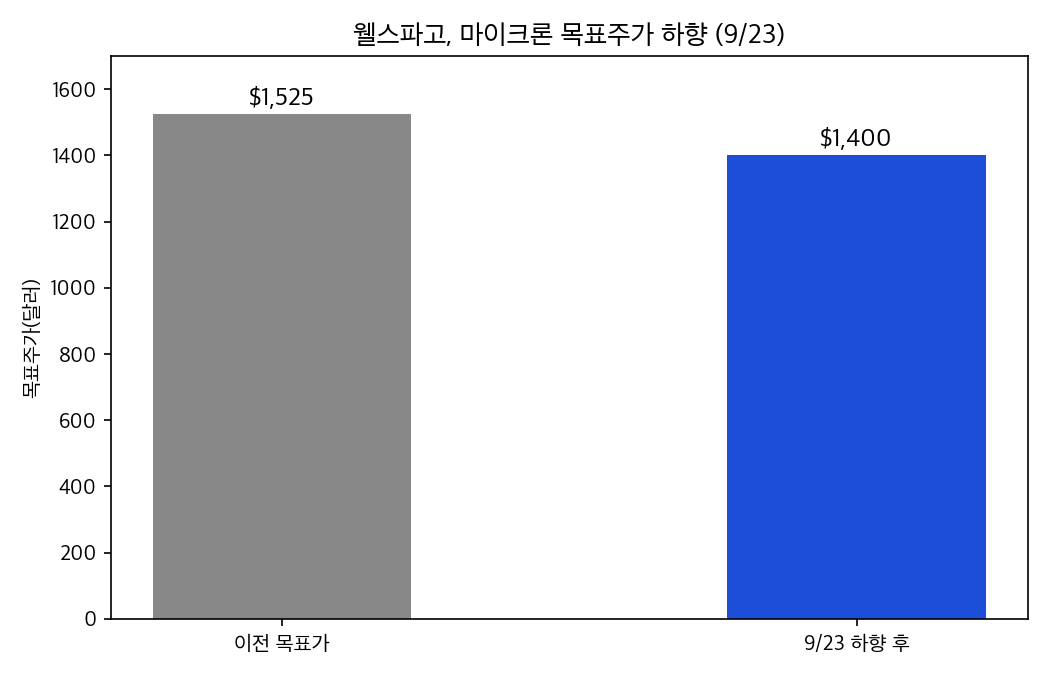
Wells Fargo lowers Micron price target from $1,525 to $1,400 (September 23)
This dynamic directly affects Korean semiconductor investors. Korean chipmakers like SK Hynix and Samsung Electronics—often tracked through their American Depositary Receipts (ADRs)—tend to move in tandem with the Philadelphia Semiconductor Index. Yesterday's pause in SOX may signal that domestic chip stocks could also take a breather from their recent uptrend today.
How U.S. Yields, Currencies, and Oil Feed Into Korean Markets
International crude prices have oscillated in recent days. Brent crude hovered near $98 per barrel on September 23, with WTI around $92. A sustained rise in oil prices transmits to Korean equities through two channels. The first is upward pressure on inflation expectations, which in turn lifts Treasury yields and weighs on equity valuations. The second is increased input costs for Korean companies that rely on imported commodities.
Currency movements also matter. The Korean won-to-dollar exchange rate reached 1,358.4 on September 23 during Seoul trading hours. If U.S. yields continue to rise, a stronger dollar and weaker won could follow, shifting foreign investor flows into Korean stocks.
Asia Markets Yesterday: Taiwan Gains; China Awaits Clarity
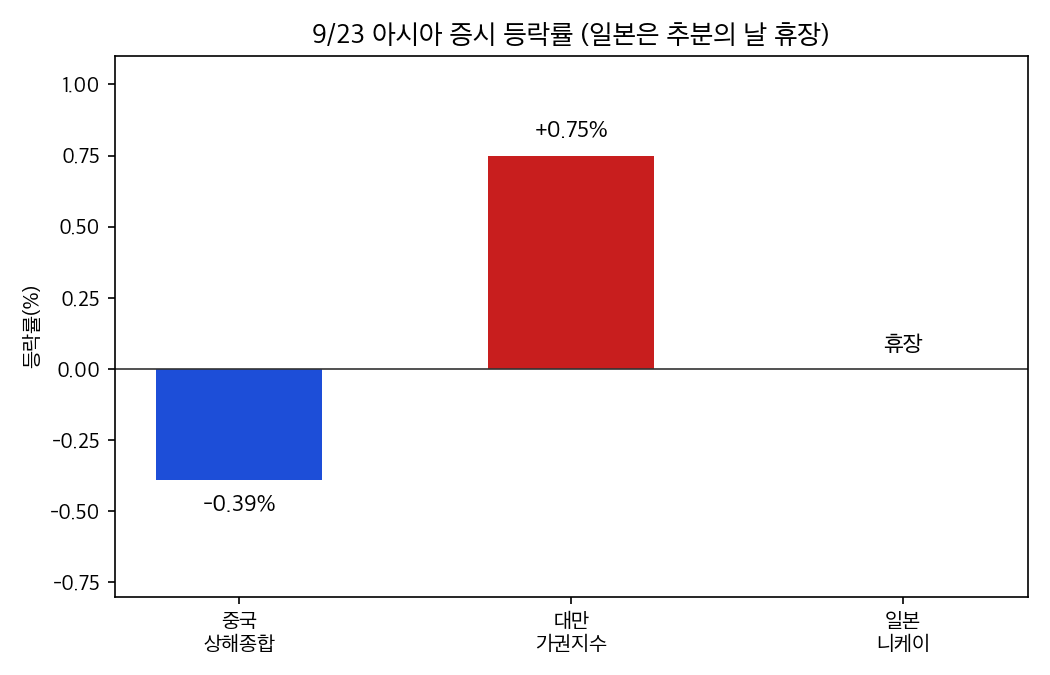
September 23 Asia market performance. Japan closed for holiday
China's Shanghai Composite finished September 23 at 3,936.52, down 0.39%. Caution prevailed ahead of today's U.S.-China summit. Taiwan's market told a different story. The Taiwan Weighted Index closed at 48,157.29, up 0.75%, buoyed by strength in semiconductor-related names. TSMC rose 1.63%. Additional support came from data showing Taiwan's August export orders exceeded $100 billion for the first time on record. Japan was closed for a national holiday.
Both Taiwan and Korea benefit from the semiconductor tailwind, yet their market structures differ materially. Taiwan's index is dominated by TSMC, making broad index moves dependent on a single stock's performance. Korea's indices reflect not only Samsung Electronics and SK Hynix but also broader exposure to memory-chip industry cycles. This structural difference can create divergent trading patterns even when the underlying industry story is the same.
Korea's Market Close: Resilience Despite Headwinds
KOSPI closed at 7,080.92 on September 23, up 63.01 points or 0.90%. The index posted its fourth consecutive day of gains. KOSDAQ ended at 844.48, advancing 10.10 points (+1.21%).
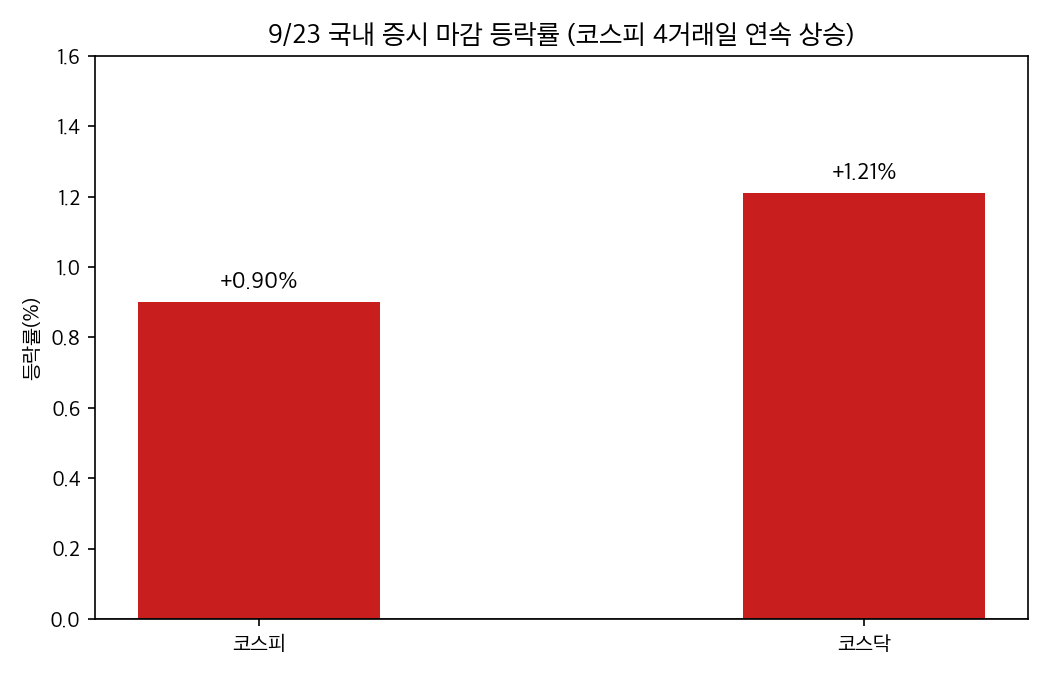
September 23 Korean market close performance
What to Watch Today
The first headline to monitor is the U.S.-China summit scheduled for today in Washington. At stake is renewal of last year's trade truce. Critical agenda items include restrictions on rare-earth mineral exports, artificial intelligence policy, and the status of Taiwan. A constructive outcome could lift sentiment for semiconductor exporters and multinational Korean firms. An impasse or fresh tensions would weigh on equities.
Second is the trajectory of U.S. Treasury yields overnight. The question is whether the 10-year yield, which closed at 5.13%, will extend higher or stabilize. Continued yield increases could pressure Korean growth stocks and semiconductor valuations, translating weakness across the region.
Third is whether the semiconductor sector consolidates after its rapid five-day climb. The Philadelphia Semiconductor Index took a breather yesterday. Korean chip names could see similar profit-taking. That said, Wells Fargo's decision to maintain its rating on Micron suggests the industry thesis remains intact—any pullback may be tactical rather than strategic in nature.
The Bottom Line
Wall Street stumbled yesterday in the wake of a Treasury-yield surge. The 10-year yield's climb to 5.13%—driven by oil-price strength, inflation concerns, and hawkish Fed commentary—triggered declines across all three major indices: Dow -0.7%, S&P 500 -0.8%, Nasdaq -1.1%. Semiconductors paused after a five-day rally, with SOX down 1.23%. The Korean market, by contrast, posted gains, supported by resilience in chip stocks and steady buying interest. Today adds another complication: the U.S.-China summit. Whether Korea's indices can decouple from U.S. weakness, or whether Treasury yields continue to weigh on sentiment, will become clearer as the session progresses.
This article is provided for informational purposes and does not constitute investment advice or a recommendation to buy or sell any security. All investment decisions and outcomes are the responsibility of the individual investor.
#KOSPI #USStockMarket #DowJones #SP500 #Nasdaq #TreasuryYields #Semiconductors #SOX #Micron #TSMC #SamsungElectronics #SKHynix #KOSDAQ #FederalReserve #OilPrices #TaiwanWeightedIndex #ShanghaiComposite #MarketClose #InvestmentNews #GeopoliticalRisk #USChinaSummit #TechStocks #GlobalMarkets #WallStreet #KoreanStocks #MarketAnalysis
댓글
댓글 쓰기