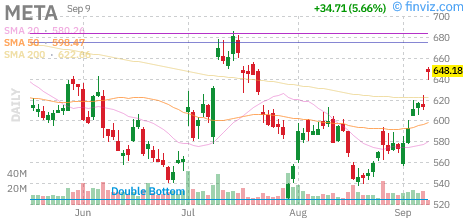
Meta stock jumped 5.59% in U.S. trading on September 9, reaching around $647.75 after the company officially launched Muse, a new AI personal assistant with paid subscription options. The move comes after the assistant was announced the prior evening.
The stock had already gained 3.6% in premarket trading, then continued higher to the high 5% range during the regular session. The 52-week high stands at $790.80, with today's price below that level.
What sets Muse apart
Muse is not a conventional chatbot. It handles tasks on behalf of users—booking travel, sending emails, filling web forms, and processing payments. According to Meta, the assistant operates by opening browsers and handling negotiations directly.
The system runs on a dedicated virtual machine that isolates user data and the agent from external systems. The service is initially available to U.S. users 18 and older via a standalone app or WhatsApp access.
The critical element is the pricing structure. Beyond a free tier, Meta is offering $20-per-month and $100-per-month plans. This represents the first direct monetization of Meta's substantial AI investments—a signal that the company is moving to convert research spending into revenue.
Why this moves the stock today
Meta has invested tens of billions in AI over the past several years. While the advertising business remains lucrative, whether AI itself can generate revenue has remained an open question.
Attaching subscription fees to Muse signals that Meta is beginning to invoice for AI capabilities. For investors, this marks the first visible shift from pure spending to paid revenue streams. Muse Spark 1.3, a higher-tier model released on September 2, has been assessed as competitive with systems from Anthropic and OpenAI.


The legal headwind clears
Meta has faced a recent drag from litigation. A coalition of 29 states sued, alleging that Facebook and Instagram were intentionally designed to addict teenage users.
That case has been settled for $1.668 billion. Teen accounts will face a combined two-hour daily limit across Facebook and Instagram and will be barred from use during nighttime hours. Meta stated in court filings that it does not admit wrongdoing.
With one source of legal uncertainty removed and a new growth narrative in place with Muse, today's reaction reflects convergence of positive catalysts.
Key metrics
| Metric | Value |
|---|---|
| Current Price | ~$647.75 |
| Daily Change | +5.59% |
| 52-Week High | $790.80 |
| Muse Pricing Tiers | Free / $20/month / $100/month |
| Settlement Amount | $1.668 billion |
What could go wrong
An announced subscription model does not immediately convert to revenue. How many users will actually pay $20 or $100 monthly remains unknown. An AI agent handling payments and emails introduces privacy and security concerns that regulators may scrutinize. Meta's AI spending is substantial; whether paid-subscription revenue can meaningfully offset that outlay will only become clear in future quarterly results.

The bottom line
Meta is transitioning from a company that spends heavily on AI research to one that is beginning to monetize AI directly. Today's jump reflects the market's acknowledgment of this inflection point.
The next inflection point will come when paid subscriber numbers for Muse are first disclosed. That figure will determine whether today's rally rests on substance or expectation alone.
One certainty remains: when subscriber metrics are released, the stock will move significantly again.
Meta is a U.S.-listed company. This article is factual analysis, not a recommendation to buy or sell. Investment decisions and outcomes rest with the reader.
#Meta #META #Muse #AI #ArtificialIntelligence #AIAgent #Nasdaq #TechStock #BigTech #Subscription #Silicon Valley #U.S. Market #Technology Stocks #Facebook #Instagram #Stock Market #Investment
댓글
댓글 쓰기