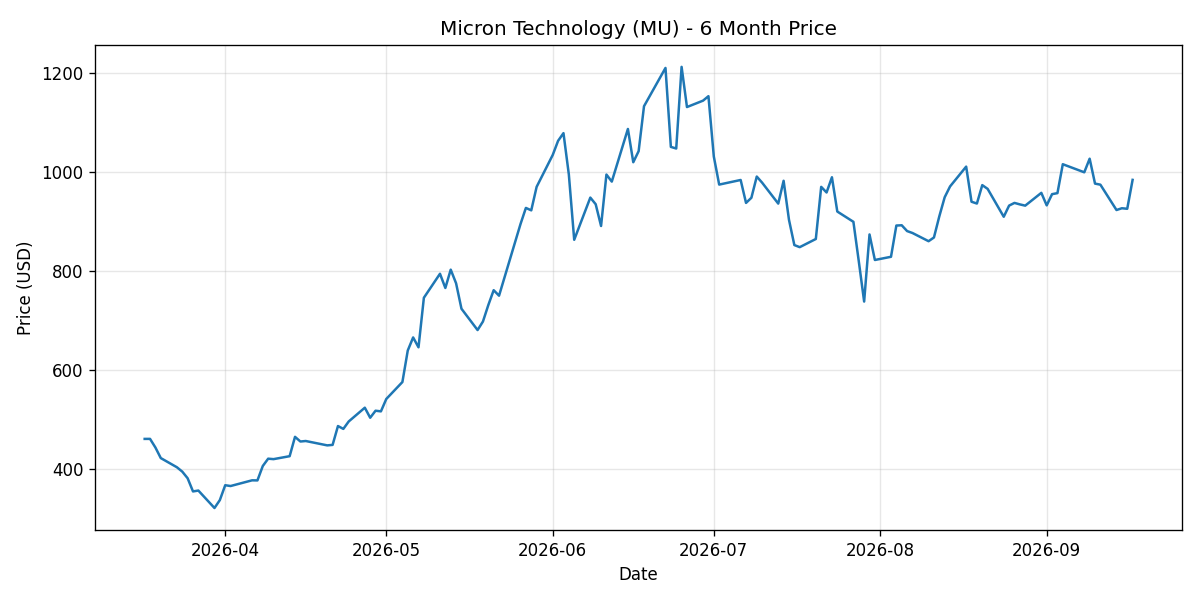
Micron Technology (MU) gained roughly 5.5% on Sept. 17 to trade near $980, compared with the prior close of $926.55. The stock touched an intraday high of $985. At these levels, the market cap stands around $1.1 trillion, with a P/E ratio near 21x—not expensive by semiconductor-leader standards.
The natural question: why the rally now, when Q4 fiscal 2026 earnings don't arrive until Sept. 30—still nearly two weeks out?
DRAM and NAND prices have already told the story
The short answer is that both DRAM and NAND prices hit all-time highs in August. By the time earnings are reported, investors expect confirmation rather than surprise. On Sept. 14, Motley Fool noted that the earnings should verify "that the memory shortage remains intact." Analysts are already forecasting PC DRAM prices could climb 18–23% in the next quarter alone.
The revenue swings illustrate the magnitude. DRAM revenue in the prior quarter reached $31.3 billion compared with $7.1 billion a year ago—a 4.4x increase. NAND grew from $2.2 billion to $9.9 billion year-over-year.
Wall Street has raised its sights
The consensus price target from 49 analysts stands at $1,513—roughly 50% above current levels. The most bullish call reaches $2,200.
The reasoning is uniform across the Street: hyperscale cloud operators are not pulling back on AI server spending, and the high-bandwidth memory (HBM) required for those servers is consuming DRAM production capacity faster than new supply can come online. SK Hynix has stated it expects this supply shortfall to intensify through 2027 and persist until before 2030. When a competitor signals a years-long supply crunch publicly, you can assume the entire sector sees the same trajectory.
Is the 512GB DDR5 module just a headline?
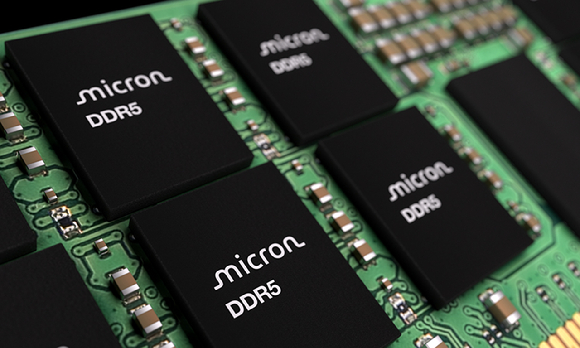
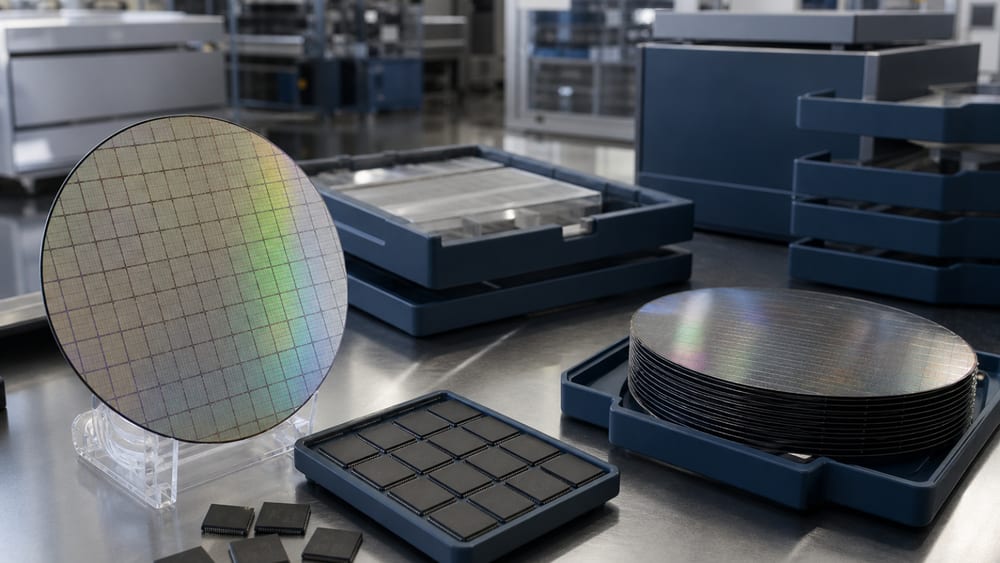
This week, Micron unveiled a 512GB DDR5 module for servers—a first for the company. A single server can accept 24 of these modules to reach 12TB total capacity. Micron claims power consumption is over 60% lower than using four 128GB modules by comparison.
Still, this should be read as a signal of ongoing leadership against Samsung and SK Hynix in memory technology, not as the catalyst for today's move. Production is slated for the second half of 2027, meaning material revenue contribution is still many quarters away.
What are the risks?
Micron is up over 200% year-to-date. Even solid earnings can disappoint if they fail to beat the expectations already embedded in the price. A consensus target 50% above the current level suggests either deep undervaluation or that nearly all upside depends on guidance coming in as hot as Wall Street assumes. Memory semiconductors are cyclical by nature. If the supply shortage thesis softens after 2027, or if AI server capex moderates sooner than expected, the entire narrative shifts.
The market has moved on faith before the earnings report arrives. The DRAM and NAND price data points are cross-verified. The next hard check comes Sept. 30, when management guidance will either validate or undercut what analysts are already pricing in.
| Metric | Figure |
|---|---|
| Current price (intraday) | ~$980 (+5.5%) |
| Prior close | $926.55 |
| Market cap | ~$1.1 trillion |
| P/E ratio | ~21x |
| Earnings release date | Sept. 30 |
Micron is a U.S.-listed security. This article is factual reporting, not a buy or sell recommendation. Investment decisions and results remain the sole responsibility of the individual reader.
#Micron #MU #Semiconductors #DRAM #NAND #ServerMemory #Earnings #MemoryPrices #TechStock #AIServers #DDR5 #HBM #HighBandwidthMemory #Earnings Preview #WallStreet #USMarkets
댓글
댓글 쓰기