September 18, 2026: The KOSPI closed at 6,894.23, gaining 178.82 points, or 2.66% in a single session. But the move appears counterintuitive. The night before, the Federal Reserve raised its benchmark rate. Typically, a rate increase makes equity markets flinch. Today was different.
The reason is straightforward. The market was not afraid of whether the Fed would act; it was afraid of not knowing what comes next. Once the Fed committed to its decision, that uncertainty evaporated. U.S. Treasury yields and international crude prices both fell, while semiconductor stocks ignited the rally.
Index and investor flows — Foreign investors return to net buying after 8 trading days
The KOSPI opened with a gap-up to the 6,885 level. Morning trading saw momentum fade, pulling back to 6,830. Afternoon buying returned, pushing the index to a high of 6,914 before settling at 6,894.23. The KOSDAQ ended at 827.12, up 0.60%—a fourth straight session of gains.
By the numbers: foreign investors posted net purchases of KRW 432.8 billion, institutions bought KRW 1.51 trillion, and retail investors sold KRW 3.59 trillion. Foreign investors returned to net buying after eight trading days of outflows. Retail investors flipped to selling in a single session. The index rarely gains this much on retail-selling days—a signal that institutions absorbed nearly half of retail sales.
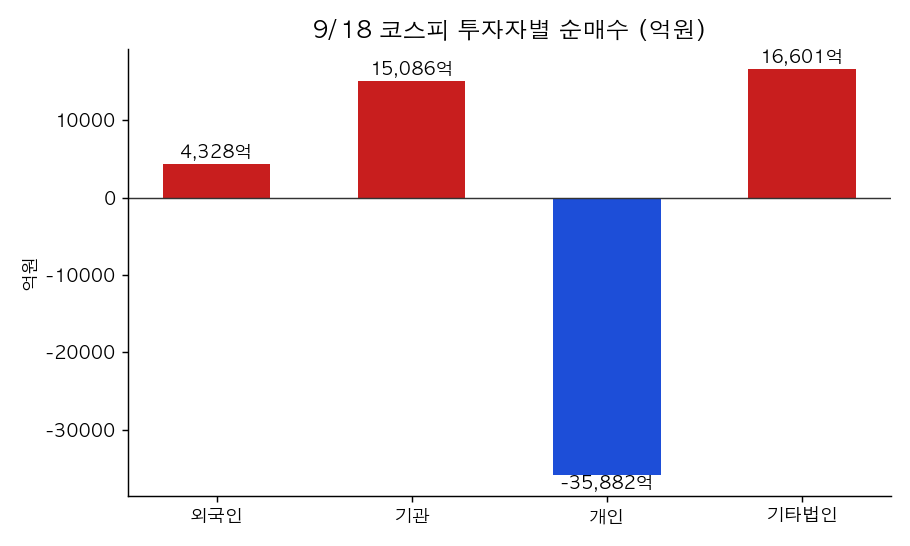
Sept. 18 KOSPI investor flow breakdown. Direct compilation.
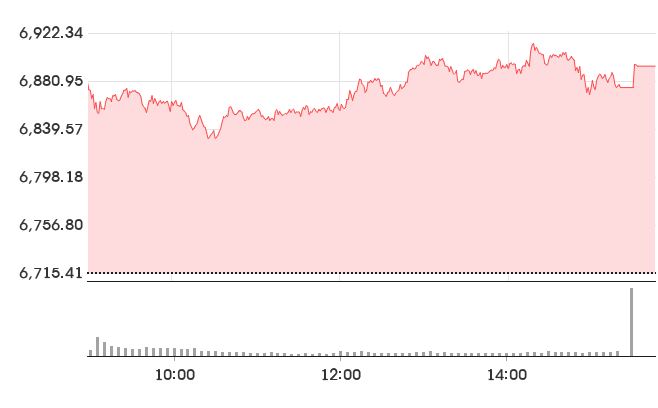
KOSPI daily chart. (Naver Finance, red=up/blue=down)
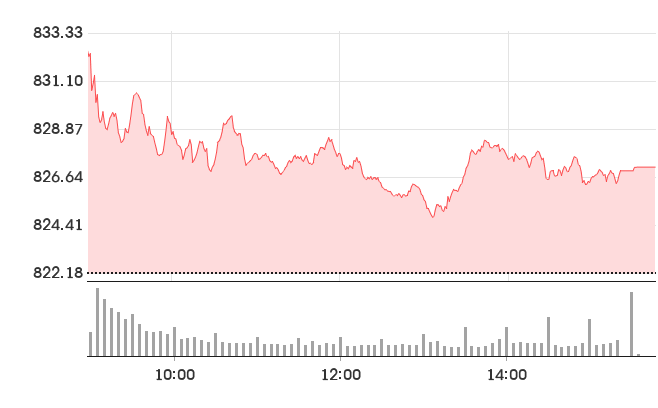
KOSDAQ daily chart. (Naver Finance, red=up/blue=down)
Winners and losers — Semiconductors surge, banks retreat
Overnight, the Philadelphia Semiconductor Index jumped 3.14%, driven by comments from NVIDIA CEO Jensen Huang. He said chip shipments next year would double from this year's levels. Intel reinforced the mood with a forecast of worsening memory bottlenecks in 2027, feeding expectations of tighter supply.
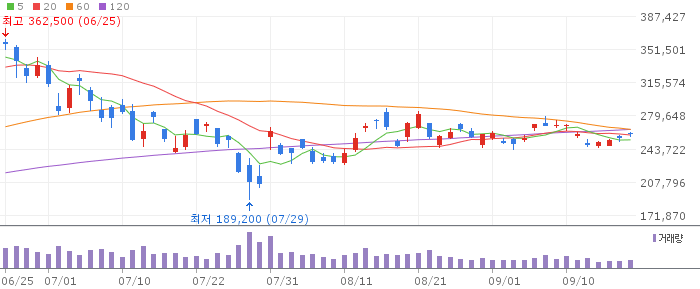
The momentum carried into the Korean market. Samsung Electronics climbed 3.37%, SK Hynix 6.42%. The electrical/electronics sector, loaded with semiconductor stocks, gained 4.46% for the session.
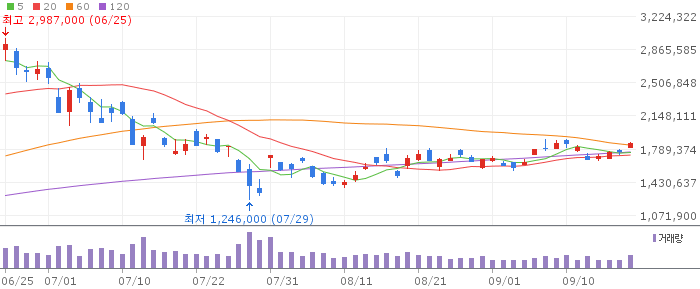
SK Hynix, three-month daily chart. (Naver Finance, red=up/blue=down)
Samsung Electronics, three-month daily chart. (Naver Finance, red=up/blue=down)
Financial stocks moved the opposite way. Hana Financial Group fell 3.20%, Shinhan Financial 2.82%, KB Financial 2.40%. Falling Treasury yields can widen unrealized losses on bonds held by insurers. That narrative weighed on the entire financial sector—insurance, banking, and brokerage combined. On the same day in the same market, electrical/electronics gained 4.46% while financials fell -0.89% to -1.02%.
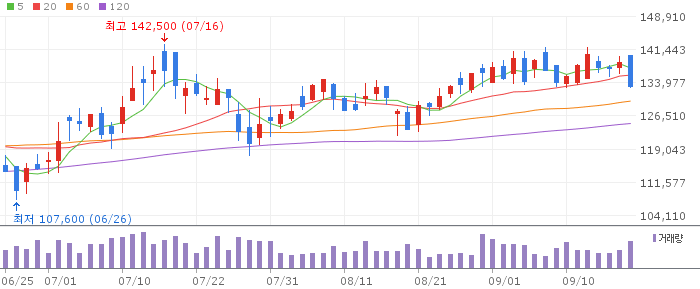
Hana Financial Group, three-month daily chart. (Naver Finance, red=up/blue=down)
Daily limit-up moves: 6 stocks — Power infrastructure and AI buildout emerge as themes
Six stocks hit daily limits. NC&C (+29.91%) benefited from semiconductor strength combined with a major-shareholder-change catalyst. More striking was the power-infrastructure rally: Sundog Electric (+29.96%), Gaon Cable (+25.53%), and Doyang (+29.97%) all surged. The catalyst was a single announcement: Generac, a U.S. power equipment maker, signed a long-term supply agreement with Amazon for backup generators destined for AI data centers.
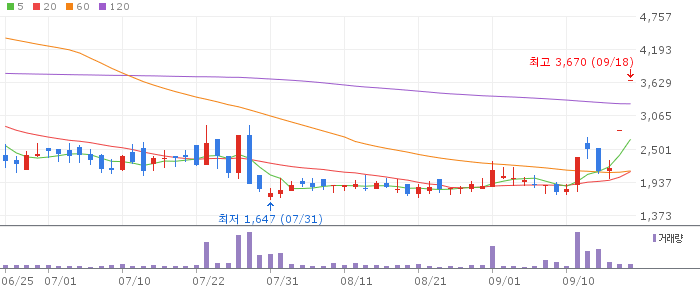
NC&C, three-month daily chart. (Naver Finance, red=up/blue=down)
The thesis: as AI data centers proliferate, power demand rises, and so does demand for reliable supply infrastructure—generators, cable, and wiring. The same dynamic drives fiber-optic and telecom equipment. Korean Optical Telecom rose 13.58% on expectations that data-center buildouts will drive higher fiber-optic demand. A key feature of today's market: semiconductors, power infrastructure, and fiber-optic suppliers all rallied for the same underlying reason—heavy capital spending on AI infrastructure.
Historical context — Today's combination is rare
Looking at KOSPI daily data since 2013—more than 3,000 trading sessions—single-day gains exceeding 2.5% occur in roughly 2% of all sessions. Even those typically follow sharp selloffs or headlines resolving a crisis. A day where 'the Fed raised rates but uncertainty lifts' is an uncommon combination. Today showed that conviction about the path ahead moves markets more than the rate move itself.
Takeaway — What to watch next
Today's gains were driven by two themes: semiconductors and power infrastructure tied to AI buildout. Both draw directly from U.S. big-tech capital plans. Financial stocks, meanwhile, fell as Treasury yields contracted. The next test: whether this momentum is a one-day bounce or carries forward. Tomorrow's foreign-investor flows will offer the first signal.
Semiconductor sector trends are covered in Intel rallies 9.45%, explores Ohio fab partnership with SK Hynix; related Micron developments appear in Micron surges 5%, gains 13 days before earnings.
This article is for informational purposes and does not constitute investment advice or a recommendation to buy or sell any specific stock or sector. Investment decisions and outcomes are the reader's sole responsibility.
#KOSPI #KOSPIIndex #KOSDAQ #SemiconductorStocks #SamsungElectronics #SKHynix #DailyLimitUp #SurgeStocks #ForeignInvestorBuying #InstitutionalBuying #PowerInfrastructureTheme #AIInfrastructure #FedRates #FOMC #TreasuryYields #CrudePrices #MarketClose #KoreaMarketClose #HanaFinancial #ShinhanFinancial #KBFinancial #KoreanOpticalTelecom #NCNC #GaonCable #SundogElectric #JensenHuang #NVIDIA #KOSPIOutlook #StockInvesting #MarketUpdate
댓글
댓글 쓰기