[Korea Market Close] KOSPI Breaks 7,007 as Retail Investors Sell KRW 3 Trillion, Institutions Buy for Fourth Consecutive Day
On September 21, 2026, KOSPI closed at 7,007.72, up 113.49 points or +1.65% from the prior session. Yet retail investors sold KRW 3.068 trillion in shares that same day. Institutional investors did the opposite—and they've now been buyers for four consecutive trading days.
It's not unusual for retail investors to sell on days when the index rises. But when the volume reaches KRW 3 trillion, the pattern warrants attention. Here's what the numbers reveal.
KOSPI Reclaims the 7,000 Level in Six Trading Days
KOSPI opened higher at 6,938.34, reached an intraday peak of 7,027.58, then pulled back below 6,990 before rallying into the close. Final settlement: 7,007.72, reclaiming the 7,000 threshold for the first time since September 10—six trading days earlier.
KOSDAQ moved in sync, closing at 836.27, up 9.15 points or +1.11%. This marks the fifth consecutive day of gains.
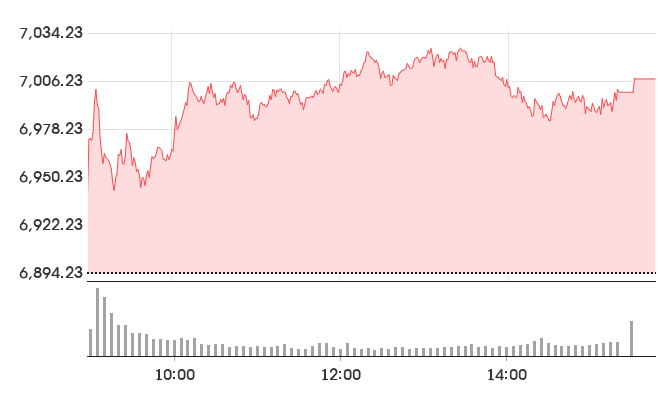
KOSPI daily chart (Naver Finance)
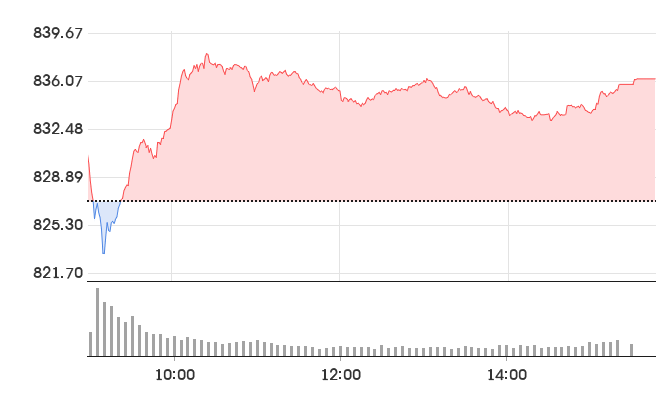
KOSDAQ daily chart (Naver Finance)
While Retail Sold KRW 3 Trillion, Why Institutions Kept Buying
Investor flows told a strikingly different story. Institutional investors posted net buying of KRW 1.4983 trillion, and other corporations bought KRW 1.6582 trillion. Retail investors and foreign investors, by contrast, sold KRW 3.068 trillion and KRW 137.8 billion, respectively.
Institutional investors have now posted net buying for four consecutive trading days, accumulating shares on every rally. Retail investors sold for a second straight day, while foreign investors reversed course after one day, returning to the sell side.
In context: KRW 3 trillion represents a substantial portion of KOSPI's daily turnover—exactly double the institutional net buying of KRW 1.5 trillion. Yet the index still rose. Institutions and other corporations absorbed retail supply and pushed the index higher in the process.
Six days ago, KOSPI touched 7,000 only to fall back. This time, retail investors may have learned from that pattern and sold ahead of the level. Profit-taking at a previously tested resistance point is a familiar pattern in Korean trading. The fact that institutions have bought for four consecutive days, however, signals that at least this group views this move as something more than a temporary bounce.
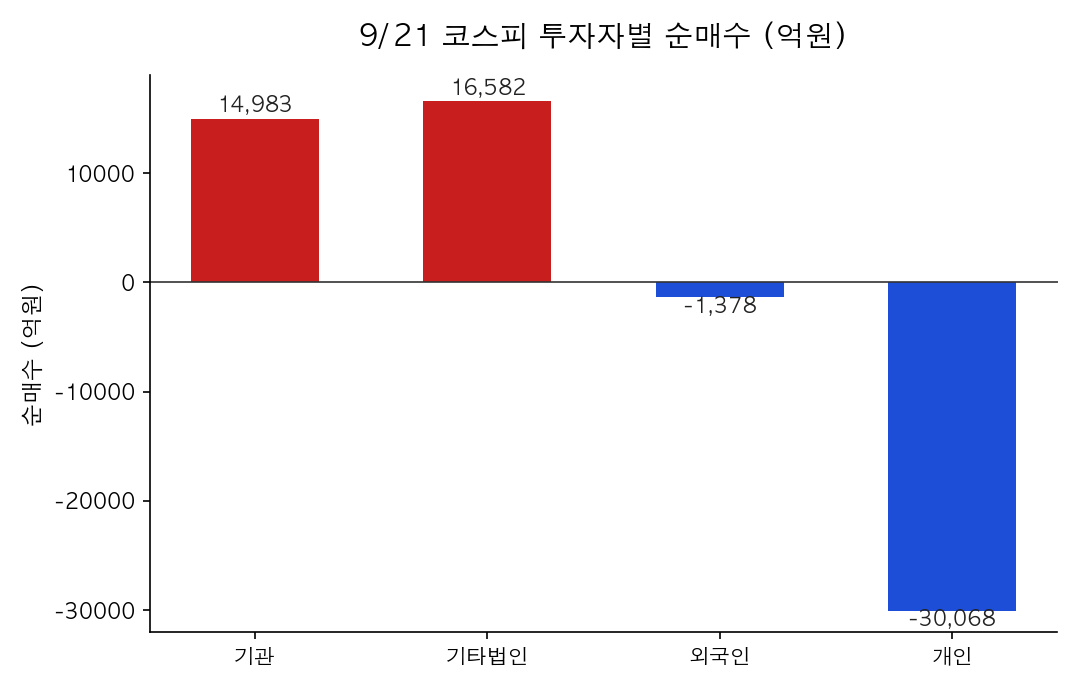
Data compiled and charted by author
Semiconductors Drove the Rally
Over the weekend, the Philadelphia Semiconductor Index jumped 2.78%. This happened despite rising Treasury yields, the possibility of further Fed rate hikes, and a Triple Witching expiration. AI investment enthusiasm carried the day. NVIDIA gained 1.34%, Micron 3.92%, Broadcom 2.97%, and SanDisk surged 10.99%.
That momentum flowed into Korean equities. Samsung Electronics rose 4.98%, SK Hynix 0.59%. Semiconductor-linked blue chips showed broad strength: SK Square up 4.45%, Samsung Electro-Mechanics up 2.95%, Samsung C&T up 4.70%, and SK up 5.50%.
Outlooks also emerged for Samsung Electronics to at least double production of HBM4 and HBM4E-series chips next year compared to 2026.
By sector, Medical/Precision Instruments led with +5.47%, followed by Retail at +2.47% and Electrical/Electronics at +2.39%. Metals fell -1.58%, General Services -1.49%, and Transportation Equipment/Parts -1.48%.
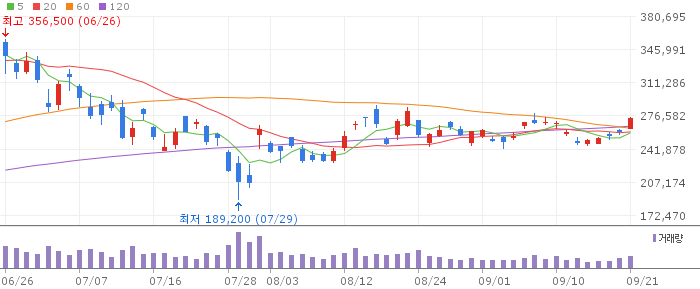
Samsung Electronics daily chart (Naver Finance)
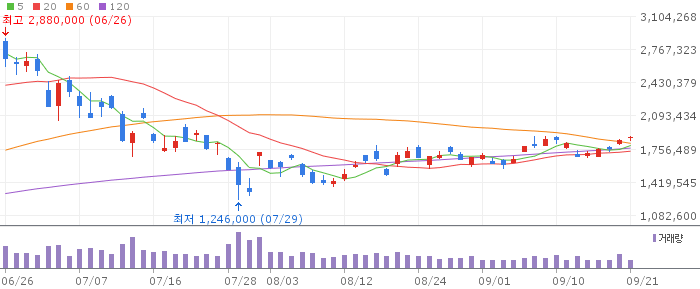
SK Hynix daily chart (Naver Finance)
Record Exports Reported by Customs
The Customs Service report on September 1-20 trade also lifted sentiment. Exports for the 20-day period reached $71.4 billion, up 78.3% year-over-year—a record high. The prior high of $61.7 billion (June 1-20) fell in under three months.
Semiconductor exports surged 259.4% to $34.1 billion compared to a year ago. Semiconductors accounted for 47.8% of total exports, up 24.1 percentage points year-over-year—nearly half of all shipments.
This level of concentration cuts both ways. When the Philadelphia Semiconductor Index rallies, as it did this weekend, KOSPI rises alongside it. But when global semiconductor conditions weaken, KOSPI faces commensurate downside risk. The more export share concentrates in a single sector, the more the index becomes hostage to that sector's news cycle.
Not All Stocks Rose
Not all large-cap issues participated. LG Energy Solution fell the most among KOSPI heavyweights, down -3.30%. HD Hyundai Heavy Industries dropped -2.07%, Hyundai Motor -1.64%, Kia -1.56%, and Samsung SDI -1.48%. Battery, automotive, and shipbuilding sectors lagged distinctly.
T'way Holdings plummeted -14.58% on its first trading day following management stock designation. Aviation stocks broadly underperformed.
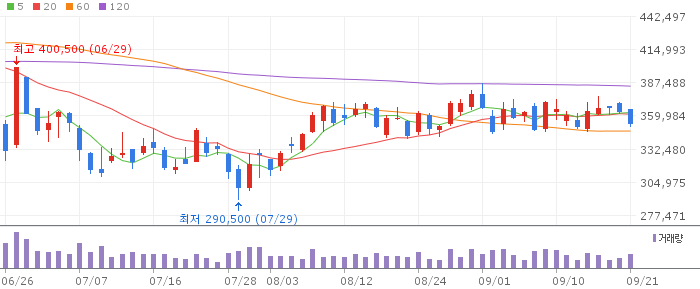
LG Energy Solution daily chart (Naver Finance)
KOSDAQ Highlights: New Listings Stand Out
Neosapiens, which listed on KOSDAQ today, closed well above three times its KRW 10,000 IPO price, posting a +243.00% gain. The AI voice-generation service company operates TypeCast, a TTS-based platform.
Several stocks hit daily-gain limits. Signetics, a semiconductor-related name, posted a limit-up close. Tomato System rose to the daily limit on news of final approval from U.S. insurer CMS. Skylabs closed at its limit following its selection by Time magazine as one of the world's best health-tech companies.
Crypto-related shares also surged. With Bitcoin reclaiming $80,000, Bitplanet posted a limit-up +29.95%, while Bitmax and Woori Technology rose in the 10%+ and 7%+ ranges, respectively.
Bonds and Currency
| Indicator | Level | vs. Prior Day |
|---|---|---|
| KOSPI | 7,007.72 | +1.65% |
| KOSDAQ | 836.27 | +1.11% |
| USD/KRW (3:30 p.m.) | 1,381.0 | -4.5 |
| 3-Year Government Bond Yield | 4.056% | +2.1bp |
| 10-Year Government Bond Yield | 4.457% | -0.9bp |
The USD/KRW rate stood at 1,381.0 at 3:30 p.m., down 4.5 won from the prior session's overnight close. The 3-year government-bond yield edged higher while the 10-year yield ticked lower. Bond markets showed little directional change, drifting quietly.
The Bottom Line
Semiconductors ultimately drove KOSPI higher. Three items converged: the Philadelphia Semiconductor Index's sharp rally, record semiconductor exports, and forecasts for Samsung Electronics to increase HBM production—all on a single day.
Worth noting: this was a day when retail investors sold KRW 3 trillion. The fact that institutions bought for four consecutive days suggests—at minimum from their perspective—that they view this rise as more than a temporary bounce. The next watch point: whether institutional buying extends to a fifth consecutive day and whether retail selling subsides.
For context on the moves following last week's rate announcement, see: KOSPI 6,894: Why Markets Cheered the Fed Rate Hike
For the weekend's U.S. semiconductor strength, see: KOSPI Index, Treasury Yields Top 5% as Semiconductors Rise 2%+
This article is for informational purposes only and does not constitute investment advice or a recommendation to buy or sell any security. Investment decisions and their consequences remain solely the responsibility of the reader.
#KOSPI #KOSPIindex #KOSPIoutlook #KOSDAQ #KOSDAQindex #KoreaMarketClose #marketrecap #closingprices #SamsungElectronicsstock #SKHynixstock #semiconductorsstocks #HBM #PhiladelphiaSemiconductorIndex #foreigninvestorselling #institutionalbuying #retailinvestorselling #investorflows #exportdata #semiconductorexports #USDKRWrate #governmentbondyields #LGEnergySolution #Neosapiens #TomatoSystem #Skylabs #Bitcoin #cryptostocks #stockinvesting #Koreanmarkets #investmentnews
댓글
댓글 쓰기