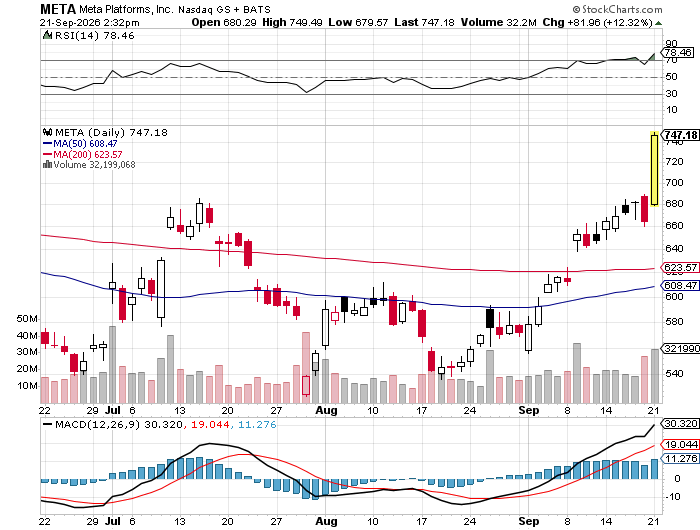
Meta stock surged 12.32% on September 21 (US time) and is now trading at $747.18. The intraday range ran from a low of $679.57 to a high of $749.49—a spread approaching $70. From the prior close of $665.22, the stock has climbed to within striking distance of $750 with trading still in progress.
Volume exceeded 32 million shares, roughly double the recent two-month daily average. When that much buying pressure concentrates on a single day, it signals more than a routine bounce. The market as a whole moved on the same news in the same direction.
Who raised the target 24%?
Wells Fargo is the origin point. Analyst Ken Gaurowski lifted Meta's price target from $640 to $796—a 24% increase—while maintaining an overweight rating. Investing.com and 247wallst.com ran the news in parallel, making this more than a single-source report.
The reasoning rested on narrative rather than numbers. Gaurowski cited early user traction for Meta's personal AI assistant, Muse, following its recent Muse Spark 1.3 model launch, suggesting the company "now has a story to tell." No earnings report. No product launch announcement. A single analyst's revaluation moved a company worth hundreds of trillions of won by over 12% in one trading day.
What is Muse anyway?
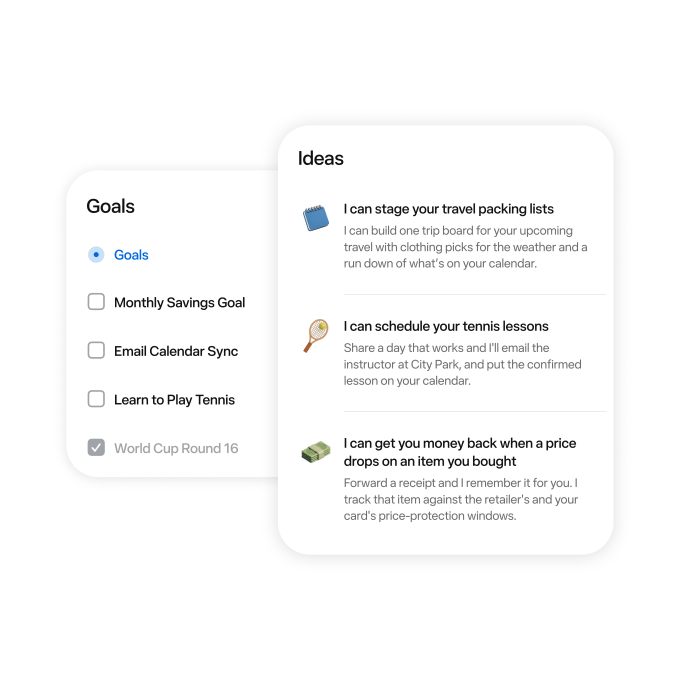
Muse is Meta's personal AI agent, unveiled on September 8. TechCrunch and Axios reported it the same day, emphasizing a distinction from prior chatbots: it doesn't answer questions—it completes tasks. It sends emails, fills out forms, books travel reservations, and continues working after you close the app.
The model presents objective cards for user approval, then executes. The market took note of its rise to the #1 spot in Apple's US App Store. That's a signal this isn't vaporware AI. People are using it.

Timing was strategic—Meta Connect is in two days
The Wells Fargo upgrade arrived at a precise moment: Meta Connect, the company's annual AI event, begins September 23–24. Mark Zuckerberg's keynote is slated for 4 p.m. PT on the 23rd. The market is pricing in announcements on Muse adoption metrics, subscription tiers at $20 and $100 per month, and details on Watermelons, a new large language model.
In other words, today's jump isn't confirmed performance—it's preemptive pricing of expectations tied to an event 48 hours away. If Connect disappoints, that rally could reverse just as fast.

What is Wall Street's broader stance?
Wells Fargo's $796 target sits above today's likely close, leaving room for further upside after today's surge. But that's one firm's view. Whether others follow at a similar pace requires monitoring.
Meta recently experienced recurrent Facebook and Instagram outages. The stock barely reacted. That tells you AI roadmap expectations now dominate the narrative more than service reliability.
What are the risks?
Wells Fargo grounded its $796 target in "early user reception," not revenue. Whether Muse converts that early interest into sustained paid subscriptions remains unproven. An App Store ranking reflects download volume; sustained engagement and monetization are separate questions.
With the stock already up over 12%, valuation risk has risen. The higher today's expectations climb, the steeper the potential letdown if Connect delivers only narrative repetition and no concrete metrics. The catalyst for today's gains and the risk of tomorrow's reversal stem from the same single event.
What to watch
Today's 12.32% surge is expectations-driven, not earnings-driven. Muse's viability as a revenue driver remains unvalidated. An analyst's target shift provided the trigger.
The single metric that matters: On September 23–24, will Zuckerberg present concrete adoption data and subscription conversion figures for Muse at Connect? If concrete numbers emerge, today's enthusiasm becomes grounded. If the narrative repeats without specifics, a meaningful portion of today's gains could evaporate within days.
When one analyst's commentary moves market cap by double-digit percentages in a single session, you're not looking at earnings-based pricing. You're watching a stock priced entirely on what's being announced next.
Investment decisions and their outcomes are your own.
#Meta #META #MetaPlatforms #StockInFocus #USStocks #NASDAQ #AIAgents #Muse #MetaConnect #Zuckerberg #WellsFargo #PriceTarget #AnalystReport #BigTech #AI #USMarkets #GainingStocks #InternationalInvesting #SiliconValley
댓글
댓글 쓰기