Tuesday morning, September 15. On Monday, September 14, the KOSPI closed at 6,684.37, down -3.26% as semiconductor stocks cratered. Wall Street told the same story overnight. The Dow, S&P 500, and Nasdaq all retreated. Big Tech, led by Nvidia, weakened as investors questioned the pace of AI infrastructure spending. Semiconductor conviction in Seoul and New York moved in lockstep.
For readers who slept through the overnight session, this note walks through what happened on Wall Street and what to watch when the Korean market opens.
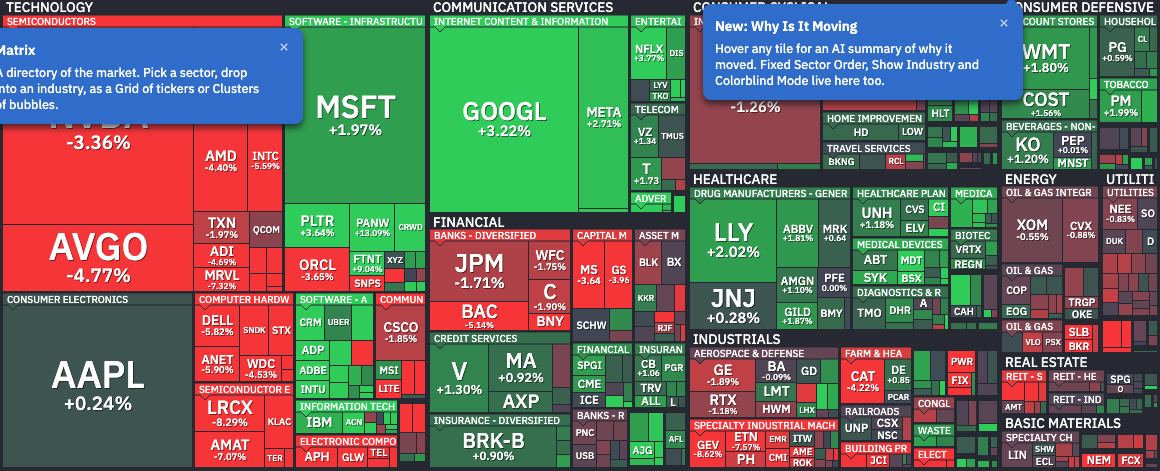
U.S. market heat map (S&P 500)—green up, red down, U.S. market convention · source: finviz
Three major U.S. indices, second day of weakness
The Dow Jones closed at 52,421, down -0.29%. The S&P 500 fell to 7,619, down -0.48%. The Nasdaq Composite dropped to 26,186, down -0.56%. The declines were modest in magnitude, but the pattern matters: this is the second consecutive day of selling after weakness that began late last week.
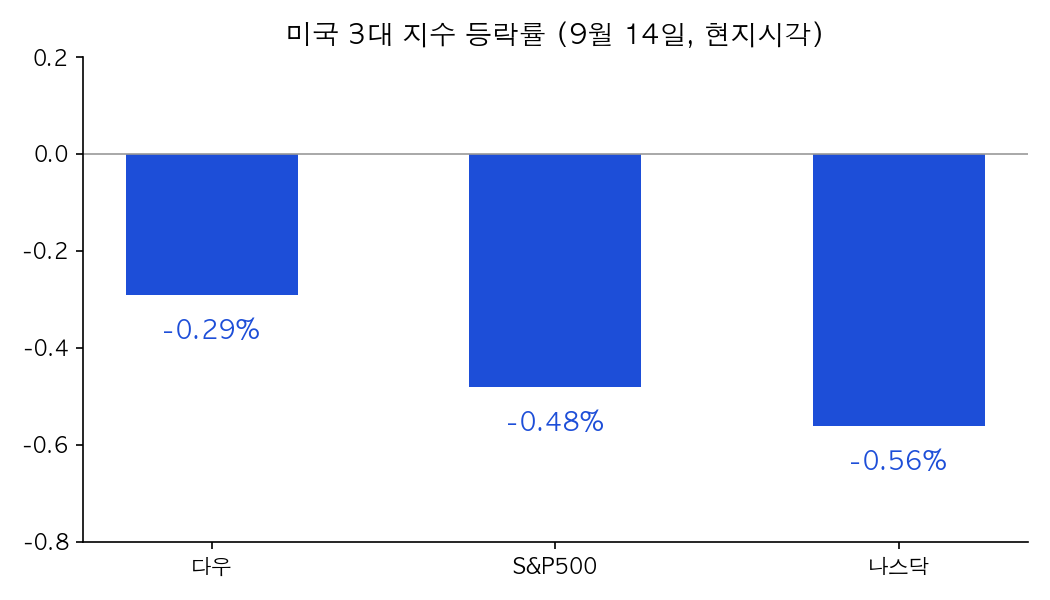
U.S. indices closing levels · September 14, market close
Individual stocks drove the move. AI-related equities came under particular pressure. The question resurfacing: can data-center investment sustain its current pace? That interpretation has not been confirmed as fact—the market is simply repricing on that concern.
Philadelphia Semiconductor Index: a proxy for Korean semiconductor risk
This is what matters for the Korean market. The Philadelphia Semiconductor Index (SOX) came under pressure from the Nvidia weakness overnight. Samsung Electronics and SK Hynix have historically moved in close correlation with U.S. semiconductor equities. Yet on Monday in Seoul, the move came first: Samsung Electronics fell -3.28% and SK Hynix dropped -5.02%, driving the KOSPI decline. Tonight's U.S. semiconductor weakness signals that momentum could extend through today.
That said, the selloff is not uniform. Some analysis suggests flows are rotating away from AI-chip concentration—memory, analog, and networking infrastructure are beginning to attract interest. Within semiconductors, individual stocks are diverging. In Seoul today, memory and foundry could face sustained pressure, while power, substrate, and materials names may prove more resilient.
Bond yields and oil: this time oil moved first
The U.S. 10-year Treasury yield reached 5.0% intraday. August CPI came hotter than consensus. Markets are now pricing a 0.25 percentage-point rate increase at Wednesday's Federal Open Market Committee meeting at 85% probability. That's substantial. The market is bracing for higher rates. Rising yields typically strengthen bonds while weighing on equities and growth stocks.
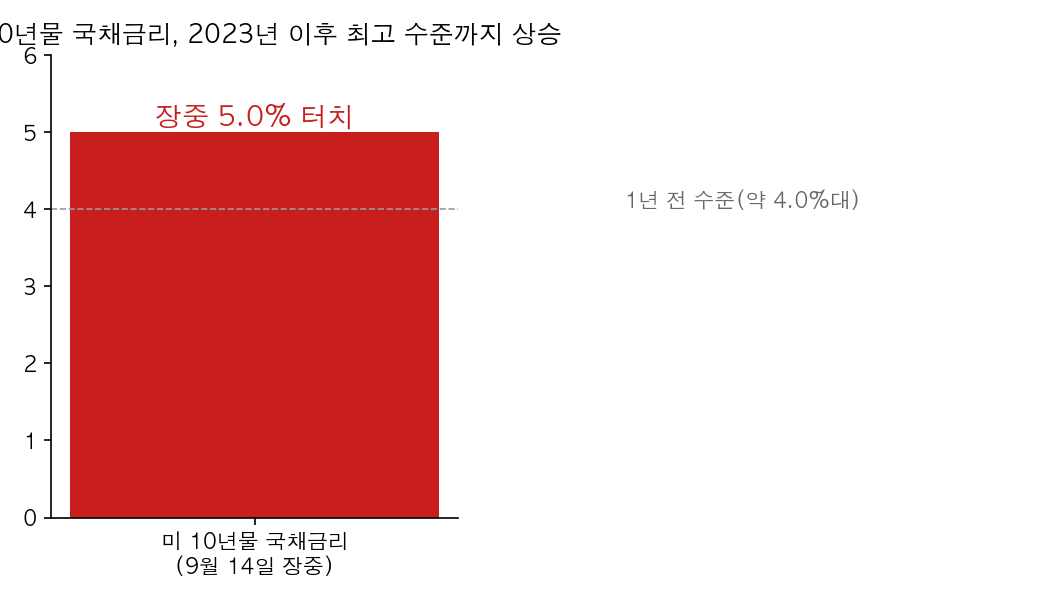
U.S. Treasury yields · September 14 close
But it was oil that moved first. Brent crude has jumped nearly 9% over the past week and rose more than 3% overnight, approaching $106 per barrel. New attacks on vessels near the Strait of Hormuz have reignited geopolitical premium. Saudi Arabia has temporarily halted its east-west pipeline. The structure: geopolitical risk pushes oil higher, which then pulls yields higher.
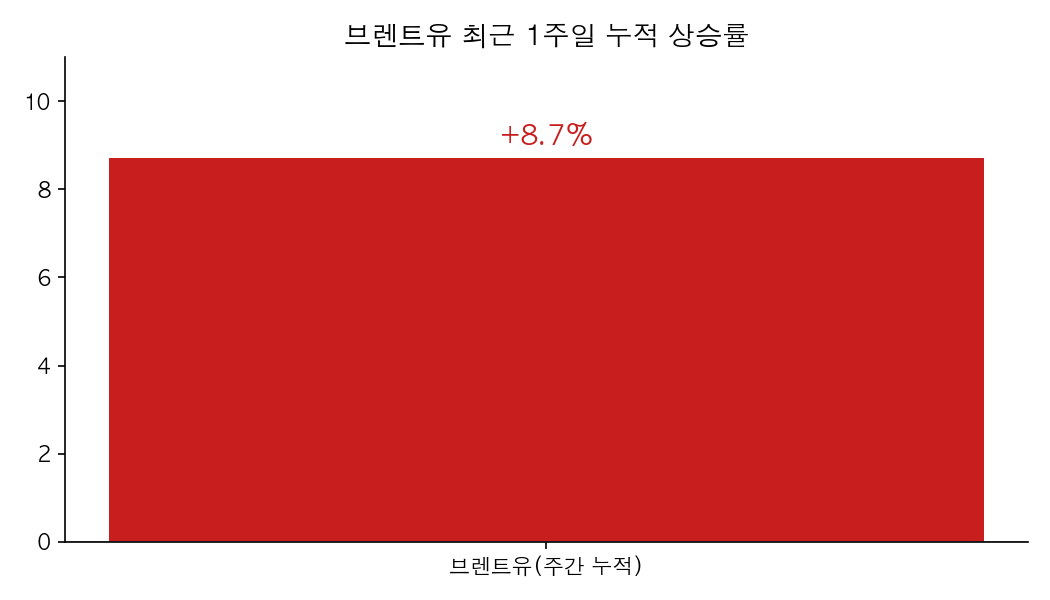
Brent crude, one-week gain
For the Korean market, this combination is headwind. Rising oil lifts import-price pressure. Higher U.S. rates reduce the relative appeal of Korean assets. Foreign investors sold a net KRW 3.2875 trillion on Monday—the fourth consecutive day of foreign selling. Institutional investors also sold KRW 1.1715 trillion. Retail investors stepped in and absorbed most of the flow, buying KRW 2.9722 trillion.
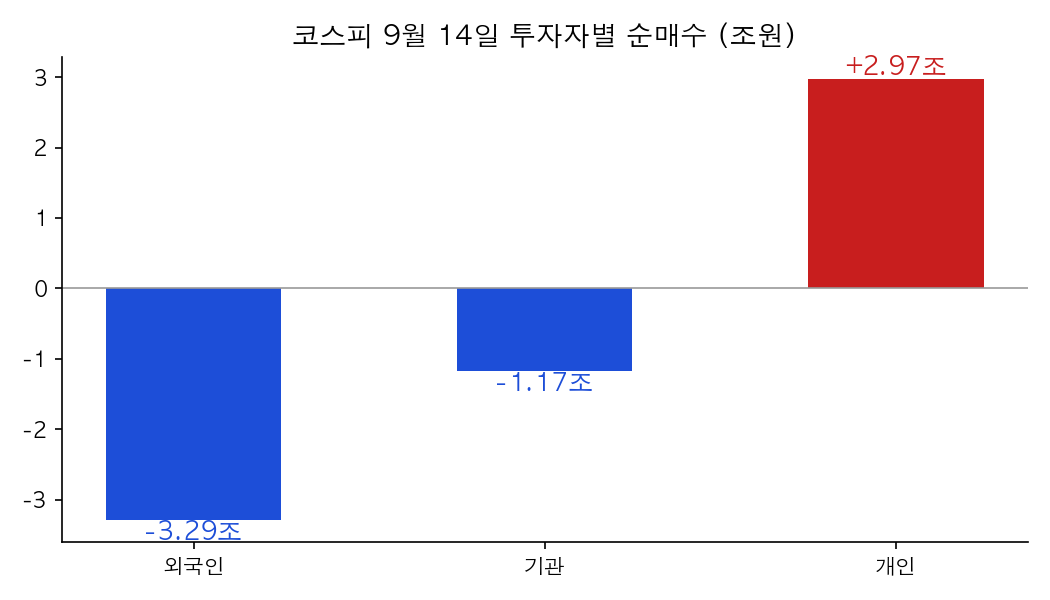
KOSPI investor flows · September 14 (KRW trillions)
Asian markets: KOSPI bore the brunt
Other Asian indices proved more resilient. The Nikkei 225 closed at 63,492.99, down -0.81%. The Shanghai Composite fell to 3,885.33, down -0.07%—minimal damage. The Hang Seng Index actually rose 0.45%. Only KOSPI's decline—-3.26%—stands out. This adjustment concentrated in markets with high semiconductor weighting. Taiwan's Weighted Index, for comparison, carries over 40% TSMC concentration. How Taiwan opens today will also be instructive.
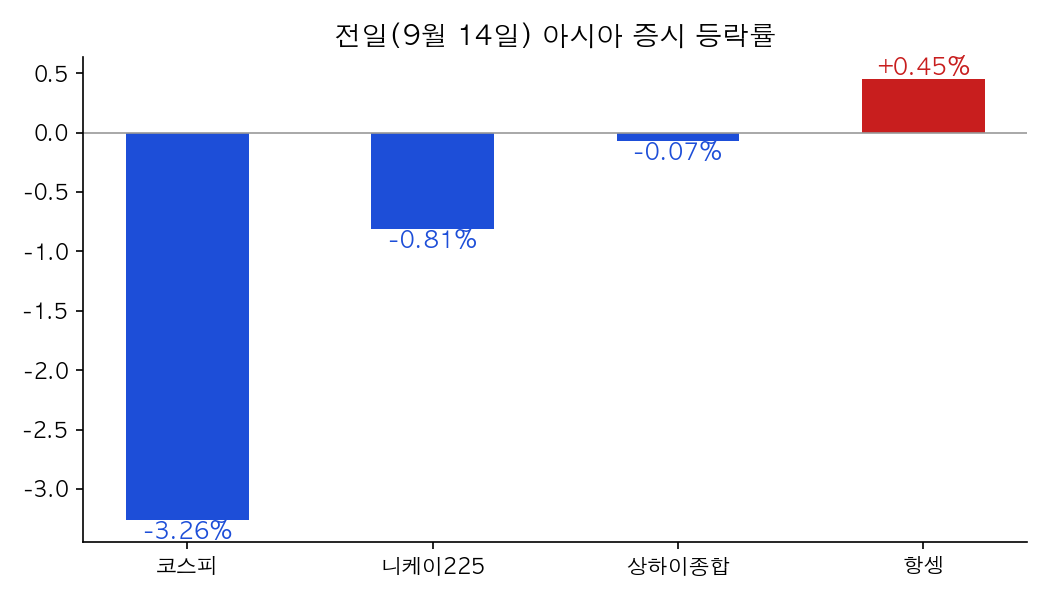
Asian equities · September 14
What to watch today
| Issue | Key Signal |
|---|---|
| Semiconductor positioning | How overnight Nasdaq weakness in AI chips translates to Samsung and SK Hynix opening levels |
| FOMC expectations | Wednesday's rate decision already 85% priced for a 0.25 percentage-point hike |
| Geopolitical risk | Whether Strait of Hormuz conditions deteriorate further today |
| Foreign investor flows | Whether foreign sellers continue their fourth consecutive day of net selling |
In summary: the semiconductor weakness that drove KOSPI lower on Monday also appeared in Wall Street overnight. Overlaid on that are inflation concerns from oil and pre-FOMC rate anxiety. A shift in any one of these three would alter the tone. If all three remain in place, KOSPI likely continues in yesterday's direction. Samsung Electronics and SK Hynix opening levels will be the earliest clue.
This article is provided for informational purposes to support investment research. It does not constitute investment advice or a recommendation to buy or sell any security. Investment decisions and outcomes remain your own responsibility.
#KOSPI #WallStreet #US market #Nasdaq #Dow Jones #S&P500 #Philadelphia Semiconductor Index #Nvidia #Samsung Electronics #SK Hynix #Treasury yields #Brent crude #oil prices #FOMC #Strait of Hormuz #foreign investor flows #semiconductor stocks #Asian markets #Nikkei 225 #Shanghai Composite #Hang Seng #Taiwan market #TSMC #US equities #Korean market #market outlook #daily brief #investment news #geopolitical risk
댓글
댓글 쓰기