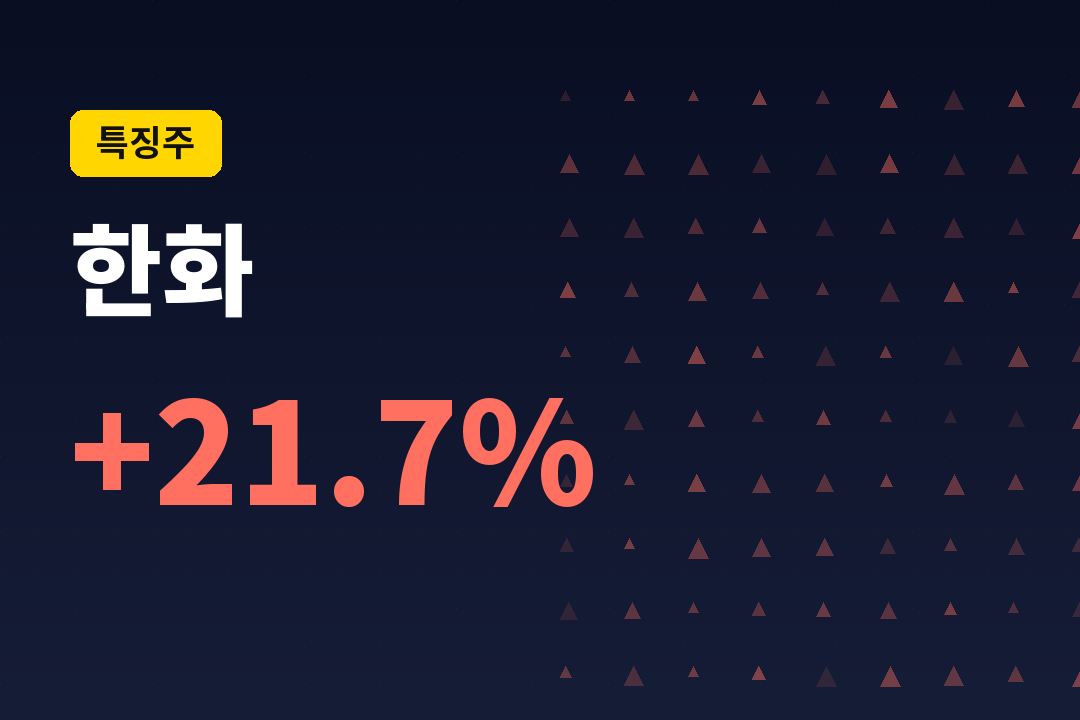
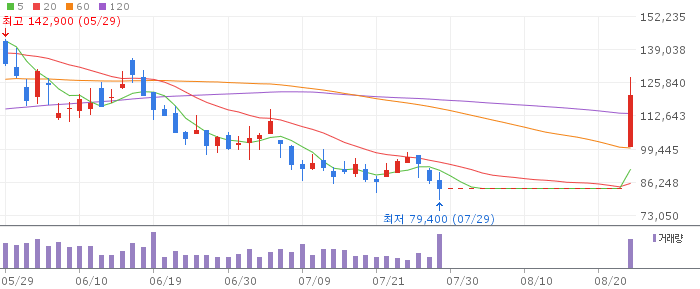
Hanwha shares traded near KRW 122,400 on the morning of August 25, representing a 21.67% gain from the previous close. Yet the broader market moved in the opposite direction: KOSPI fell 1.55% that day. While the index retreated, this single stock soared. The explanation lies not in market conditions but within the company itself.
There's something different about this stock today. Specifically, it is trading for the first time since undergoing a significant corporate restructuring.
Trading halted for nearly a month?
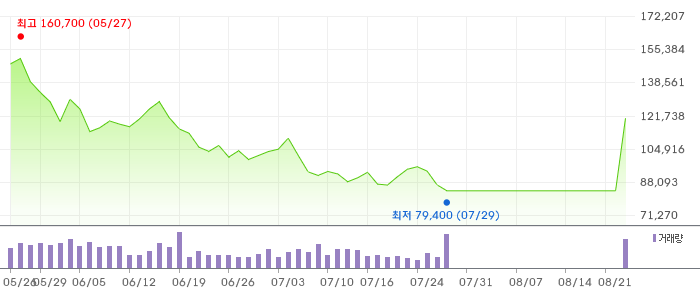
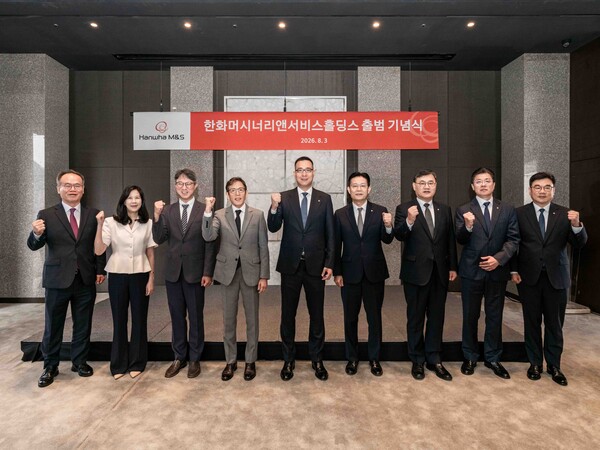
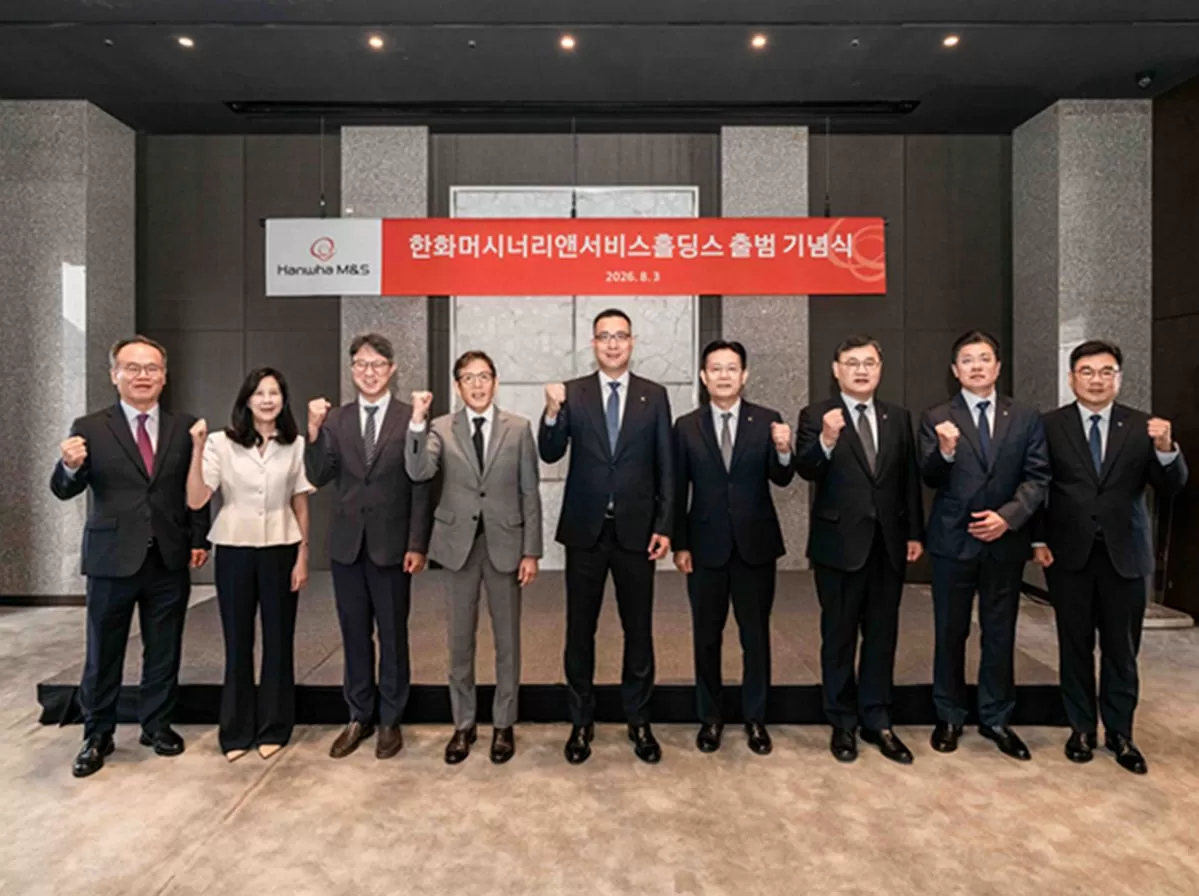
Hanwha faced a trading halt from July 30-August 24 due to a proportional share spin-off. The company divided itself into two entities effective August 1. Today, both portions resumed trading on KOSPI: the surviving entity Hanwha relisted with a changed structure, while the newly created Hanwha Machinery & Service Holdings returned as a separate listing.
The split allocated net assets on a book-value basis: approximately 76% to the surviving entity and 24% to the newly created entity. Hanwha Machinery & Service Holdings received Hanwha Vision, Hanwha SemiTec, Hanwha Momentum, and Hanwha Robotics—the group's technology-focused subsidiaries—along with Hanwha Galleria, Hanwha Hotels & Resorts, and Our Home from its retail and hospitality operations. The surviving Hanwha retained Hanwha Aerospace, Hanwha Ocean, Hanwha Solutions, and Hanwha Life: precisely the defense, shipbuilding, energy, and finance operations that command the market's highest valuations today.
In this type of spin-off, the exchange sets each entity's first-day opening price—the reference price—by dividing the pre-split market cap according to the allocation ratio. This morning's 21.67% surge represents actual opening trading above that calculated starting point. The magnitude suggests the market views the surviving entity's intrinsic value as materially higher than the formula-based reference price implied.
What does the company's recent financial performance show?
Start with the final consolidated results before the split. On August 4, Hanwha disclosed second-quarter preliminary results: revenue of KRW 1.013 trillion and operating profit of KRW 113.3 billion on a standalone basis.
These numbers lack strength. Revenue declined 11.4% year-over-year; operating profit fell 12.6%. Construction operating profit contracted by roughly KRW 58.4 billion (approximately 30%) as the prior year benefited from major project completions—a base effect that doesn't repeat. The global division, which manufactures explosives and nitric acid, reported operating profit of KRW 4.9 billion, down 30%, as rising ammonia prices expanded raw material costs and compressed margins.
The net income story differs. The company posted a KRW 51.0 billion profit, compared to a KRW 32.1 billion loss in the year-earlier quarter. Operating results softened, yet net income swung to black—indicating recovery in non-operating results and equity-method income from affiliates.
In summary: core operations softened while the balance sheet strengthened. This morning's rally is unlikely explained by these earnings; the report is three weeks old and has already been digested by the market. The relisting event and its reference-price mechanics offer a more direct explanation for today's move.
What coincided with the timing?
A generational succession announcement aligned with the split. On August 1, Kim Dong-gwan, eldest son of Chairman Kim Seung-yeon, was promoted to vice chairman—the group's senior operating role. Since most of the surviving entity's business lines (defense, shipbuilding, aerospace, and energy) already report to him, the market reads this as the third-generation succession nearing completion. His brother Kim Dong-won rose to vice chairman, while Kim Dong-seon became president, overseeing the future strategy of the newly listed Hanwha Machinery & Service Holdings.
According to Infosstock data, Hanwha Aerospace, the surviving entity's flagship defense affiliate, also appeared among the day's leading gainers at +1.84%, riding broader strength in defense equities. This was an isolated phenomenon within the Hanwha group; the broader KOSPI fell for the day.
What risks remain?
Several important points warrant attention. First, volatility on the first trading day after a spin-off typically runs high. The reference opening price is mechanically calculated, not market-tested, so trading usually oscillates in the first several sessions before normalizing. Whether the 21.67% gain persists is an open question.
Second, whether the construction and global divisions recover after a single weak quarter is worth monitoring. If ammonia prices remain elevated, cost pressures on explosives and nitric acid production may extend into the following quarter. Third, share transfers and tax treatment between the two entities and the controlling family remain unsettled. Today's opening prices for both entities establish a reference point for any future ownership restructuring—details not yet finalized.

Where does this stock stand right now?
This is day one after nearly a month of halted trading. The market is pricing the surviving entity above its calculated reference opening level, apparently crediting the concentration of Hanwha's premier assets—defense, shipbuilding, energy, and finance—within that entity. The prior quarter's operating results, measured by core business performance, were soft. But today's price movement stems not from earnings but from the relisting event itself.
The next critical observation will be simple: Does this price level hold on day two and day four? Whether the first-day surge reflects a temporary mispricing of the reference price, or whether the market has genuinely embraced a new valuation for the surviving entity, will become clear over the coming days.
One company split into two. One fragment opened up over 21% on its first day. The picture is uncommon. This article is provided for informational purposes; investment decisions and their consequences rest with the individual investor.
#Hanwha #000880 #HanwhaStock #spinoff #relisting #HanwhaMachinery #HanwhaAerospace #HanwhaOcean #HanwhaSolutions #HanwhaLife #defense #KOSPI #stocks #market #surge #succession
댓글
댓글 쓰기