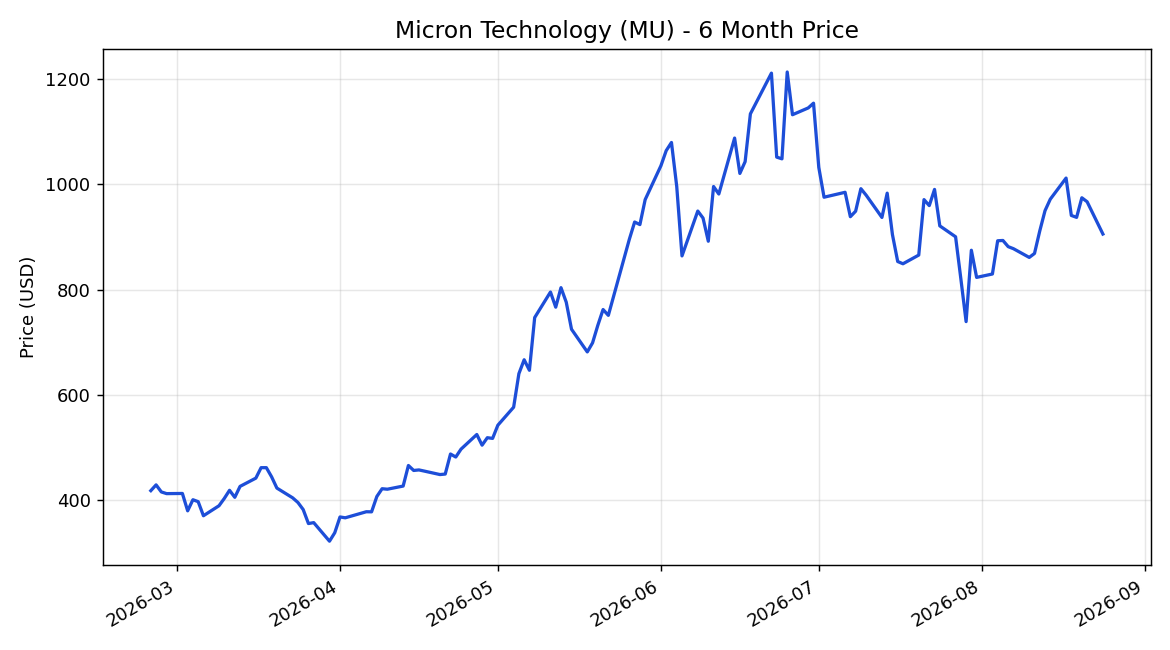
On August 24, Micron traded around $900, down roughly 6% to 7% from the previous close of $963.68. The trading session was still in progress, meaning the final decline could widen or narrow. Over recent days, the stock has oscillated around the $900 level.
A 6.8% single-day move is significant.
Is Micron falling alone?
No. Micron, Samsung Electronics, SK Hynix, and the Roundhill Memory ETF (DRAM) have all fallen more than 20% from recent highs. Across the semiconductor sector, $1.5 trillion in market capitalization has disappeared since June 25.
Today's decline is not unique to Micron. Questions about the sustainability of AI infrastructure spending are weighing on all three memory suppliers, and today adds a Micron-specific headwind.
Today's development: Netlist patent lawsuit
Netlist, a memory module manufacturer, filed patent lawsuits against Micron simultaneously at both the U.S. International Trade Commission (ITC) and federal court. The suits target Micron's server-grade DDR5 RDIMM and MRDIMM products.
Netlist is seeking an exclusion order from the ITC that, if granted, could block the import and sale of these products in the United States. The significance is straightforward: DDR5 RDIMM is Micron's key product for AI servers, which is currently driving growth.
However, ITC proceedings are lengthy, typically taking 1-2 years from investigation launch to final determination. The complaint has just been filed, and it remains unclear whether an exclusion order will actually be issued.
Netlist has battled Samsung before
This is not Netlist's first action. It pursued a similar patent lawsuit against Samsung Electronics starting in 2021, with courts ruling against Samsung in 2023 and again in 2024.
However, the dispute ended not in judgment but in settlement. In early August, Samsung Electronics reached a licensing agreement with Netlist to resolve the matter.
Drawing from the Samsung precedent, such lawsuits do not necessarily result in sales bans. However, licensing fees typically result. How Micron's case will unfold remains to be seen.
Yet the company's products are selling well

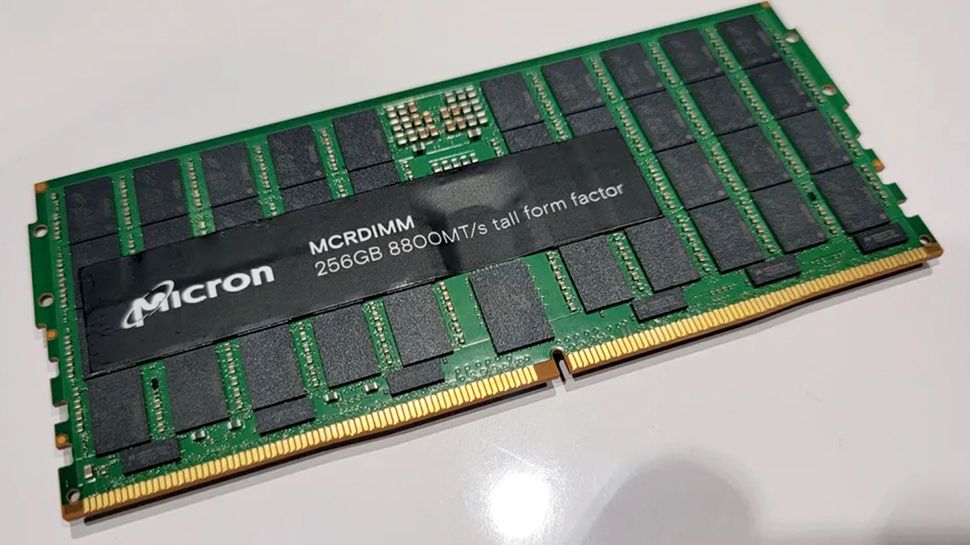
Micron is a U.S. memory chip manufacturer that produces DRAM and NAND flash. Along with Samsung and SK Hynix, the three companies collectively dominate the global DRAM market. Recent quarterly revenue exceeded $41 billion, nearly double the prior quarter, and the company projects next-quarter revenue above $50 billion. Growth is being driven by strong demand for high-capacity memory used in AI servers.
The DDR5 RDIMM and MRDIMM products targeted in today's lawsuit are high-capacity memory modules that shuttle data alongside GPUs—the AI server's processing core. As demand for AI services like chatbots and image generation grows, so does demand for these modules, making the lawsuit's focus particularly acute for Micron.
On the surface, the numbers seem contradictory: revenue is climbing while the stock has swung more than 10% in a month. The likely explanation is that valuation already reflects substantial expectations of earnings growth, leaving the stock sensitive to any adverse news.
Analyst targets haven't moved down yet
The average analyst price target remains $1,515, with the consensus rating at Buy. That's more than 60% above the current price.
The unchanged targets suggest analysts view the lawsuit as unlikely to disrupt Micron's earnings trajectory. However, analyst targets do not change daily, so it may take several days for today's move to be reflected.
The gap between targets and current prices can be read two ways: either the market is still undervaluing Micron, or analyst targets reflect an optimism from months ago that now needs updating. The next earnings report should clarify which interpretation is correct.
The last five trading days, by the numbers
| Date | Close (USD) | Note |
|---|---|---|
| 8/18 | 940.76 | - |
| 8/19 | 937.11 | - |
| 8/20 | 974.33 | Bounce |
| 8/21 | 966.78 | - |
| 8/24 | ~900 | Intraday, sharp decline |
Over the course of a week, the stock has oscillated between the $900s and $1,000s. It's too early to call a definitive direction.

What risks remain?
The ultimate outcome of the Netlist lawsuit remains unknown. ITC exclusion orders are rare, but if granted, would directly hit DDR5 server product revenue. Overlaid on this are broader questions about the sustainability of AI spending across the semiconductor industry, meaning sector-wide volatility would persist even if this individual issue were resolved.
Micron is not Netlist's only target. Netlist also sued Supermicro, HPE, and Lenovo. With the entire server industry implicated, this dispute is unlikely to stay contained as a Micron-specific issue.
Where does Micron stand now?
Micron finds itself in a precarious position: earnings are growing, yet the stock swings nearly 6% on a single lawsuit headline.
Two points merit watching: when the ITC announces whether it will open a formal investigation, and whether Micron maintains its $50 billion revenue guidance in the next earnings call.
A single data point could shift the entire narrative. Whether today's decline will be remembered as tied to the lawsuit alone remains to be seen.
U.S.-listed security. This article is factual analysis, not investment advice. Investing decisions and outcomes are your own responsibility.
#Micron #MU #semiconductors #DRAM #NAND #Netlist #patenttsuit #ITC #DDR5 #AI #memoryChips #SamsungElectronics #SKHynix #Supermicro #HPE #Lenovo #semiconductorsector #Nasdaq #semiconductorlaw
댓글
댓글 쓰기