[Today's Markets] KOSPI Index Plunges 5.8%—The Day Circuit Breakers Triggered and Retail Investors Bought ₩4.6 Trillion
On August 19, 2026, the KOSPI index closed at 6,471.17. In just one day, it fell 398.66 points (−5.80%), and circuit breakers were even triggered mid-session. But the number that stood out most that day wasn't the index decline itself. It was that while foreigners and institutions were selling off together, retail investors alone bought over ₩4.6 trillion worth. Let me trace why these two sides moved in completely opposite directions as the market collapsed.
Why Did the Index Collapse Like That?
The KOSPI started at 6,528.77, already down nearly 5%, and fell as low as 6,400.81 (−6.83%) during the session. Early on, it briefly recovered to 6,614.39, but selling pressure returned and it finally closed at 6,471.17. That day marked the 48th circuit breaker event on the KOSPI, with 25 of those being sell-side triggers. Circuit breakers are safety mechanisms that lock algorithmic trading for 5 minutes when futures prices move sharply in a short timeframe—the fact they were triggered shows just how steep the decline was.
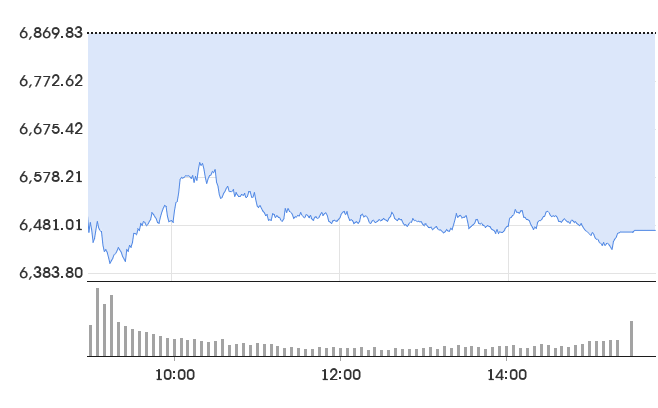
KOSPI Index Daily Chart (Naver Finance)
The direct trigger was a sharp spike in global government bond yields. The U.S. 30-year Treasury yield surged to 5.34% intraday, reaching a 19-year high since 2007, while the 10-year climbed above 4.7%—the highest level since January 2025. Japan's 10-year yield hit a 30-year peak, and German and French yields rose to levels not seen since 2008–2011. Rising bond yields mean even safe-haven bonds are losing value. When that overlaps with inflation concerns, it flips a switch in investor psychology: dump risky assets like stocks first, ask questions later. On top of that, Pennsylvania's governor signed an executive order requiring environmental and community approval for new data center construction, raising fears that the pace of AI data center investment could slow. Slower data centers mean slower semiconductor demand—a calculation that immediately triggered selling in Samsung Electronics and SK Hynix.
Sellers and Buyers Split
Looking at KOSPI stock flows, foreigners sold ₩3.5 trillion and institutions sold ₩1.32 trillion. Foreigners posted net selling for the first time in 6 trading days, and institutions for three consecutive days. On the flip side, retail investors bought ₩4.64 trillion, marking their second straight day of net purchases. By daily purchase volume, that's a substantial figure.
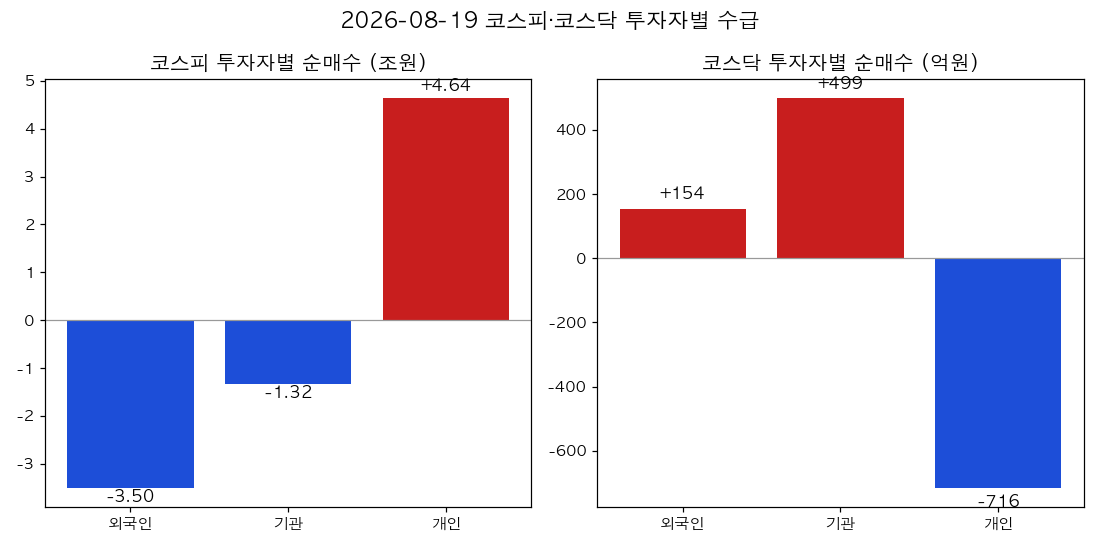
Compiled and created by author
At first glance, this looks like "retail investors seized the bargain," but the real question is the flip side: why did foreigners and institutions dump nearly ₩4.8 trillion in a single day? Given that today's crash was driven by broad selling across the entire semiconductor value chain, it appears foreigners and institutions reacted immediately to the macro story of surging Treasury yields by cutting exposure. Retail investors, by contrast, treated the index falling below −5% as a buying opportunity. Same day, same headlines—two groups arrived at completely opposite conclusions.
The KOSDAQ tells an even more striking story. While the KOSPI fell 5.80%, the KOSDAQ held up relatively better at 824.46 (−1.17%). But here, the flows ran the opposite direction from the KOSPI. Foreigners posted net buys of ₩15.4 billion and institutions net buys of ₩49.9 billion, while retail investors actually sold ₩71.6 billion net. On the KOSPI, retail was buying while foreigners and institutions were selling; on the KOSDAQ, foreigners and institutions bought while retail sold. The same participants on the same day reached opposite conclusions depending on which universe they were looking at. Large-cap semiconductor and power equipment stocks concentrated on the KOSPI took a direct hit from rate and data center concerns, but KOSDAQ names with fewer overlapping headwinds were seen as value-play targets.
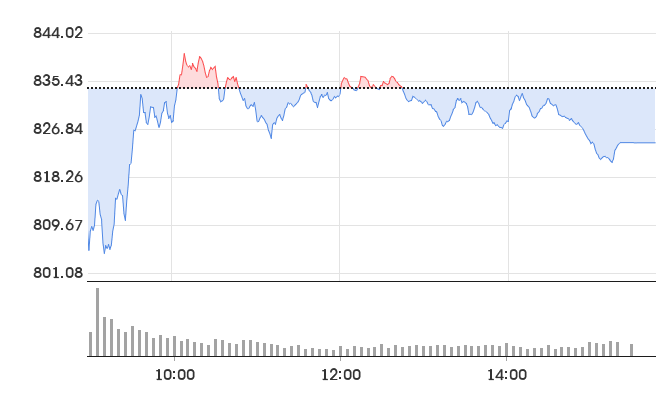
KOSDAQ Index Daily Chart (Naver Finance)
Semiconductors and Power Equipment Hit Hardest
By sector, Electrical/Electronics (−7.68%), Manufacturing (−6.36%), and Insurance (−5.89%) took the biggest hits. Among individual stocks, SK Hynix crashed −9.75%, Samsung Electronics fell −7.82%, while SK Square (−11.54%) and Samsung Life (−11.11%) dropped double digits. Power equipment names like Korea Electric Power (−5.37%), HD Hyundai Electric (−4.20%), and LS Electric (−3.35%) also fell in tandem—the data center delay concern rippled beyond semiconductors to the utilities that power those centers.
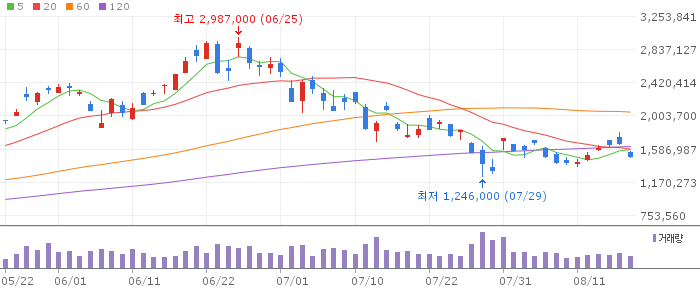
SK Hynix, Last 3 Months Daily (Naver Finance; Red = up, Blue = down)
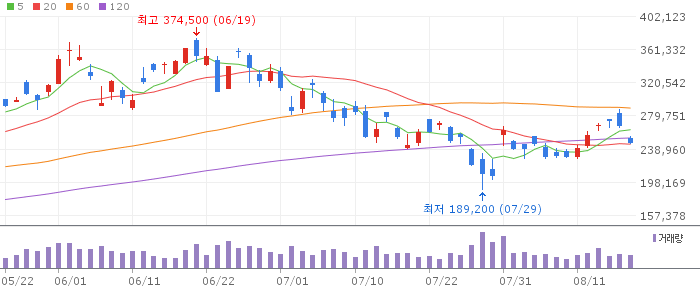
Samsung Electronics, Last 3 Months Daily (Naver Finance; Red = up, Blue = down)
Overnight, the Philadelphia Semiconductor Index tanked 4.98%, and that decline flowed straight through. The sharp selloff in U.S. fiber-optic names like Fabrinet (−19.38%), Coherent (−12.75%), and Corning (−7.68%) dragged down Korean fiber-optic themes. By contrast, Hanwha Aerospace (+ 2.71%) shot up on news of a contract to supply K9 self-propelled howitzer prototypes to the U.S. Army—defying the overall market decline. It was a day that showed how, 70 years after the Korean War, South Korea has become a nation that exports fully-fledged weapons systems to America rather than only receiving military aid, and how defense exports are taking root as another pillar to reduce dependence on semiconductors.
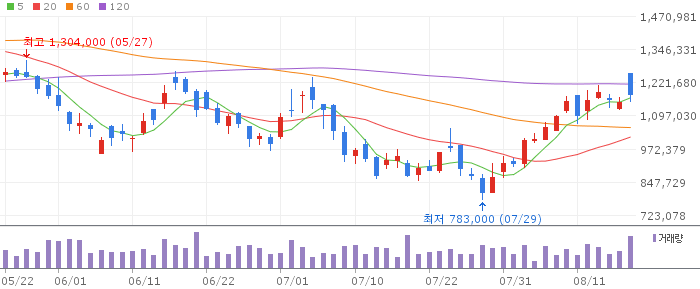
Hanwha Aerospace, Last 3 Months Daily (Naver Finance; Red = up, Blue = down)
Stocks That Rose Regardless of the Index
Even as the index collapsed, there were upper-limit gainers. Bionia (+29.99%) hit the ceiling as reports emerged that its stress-induced hair loss clinical trials showed improvements in hair thickness, combined with record Q2 revenue. Hancom (+29.94%) surged on news that one of five MLCC material types moved into mass production shipment stages, while Hwaseung Precision (+29.79%) jumped on expectations that it can supply parts to Boston Dynamics' humanoid robot 'Atlas.'
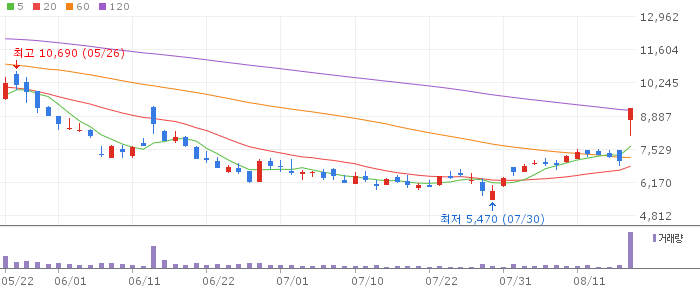
Bionia, Last 3 Months Daily (Naver Finance; Red = up, Blue = down)
Adding fuel was a Wall Street Journal report that President Trump asked his staff to pursue a summit with Chairman Kim Jong Un as early as this fall, which lifted inter-Korean trade, fertilizer, and fashion-related themes. Indiaf (+29.85%), Good People (+29.84%), and Ananti (+18.89%) jumped on these tailwinds. It's a reminder that even on down days for the index, individual stocks with solid catalysts move to their own beat.
What To Watch Going Forward
Today's sell-off didn't originate from Korea—it came from U.S. Treasury yields. So what to watch tomorrow hinges more on the U.S. bond market than domestic factors. Whether the 30-year yield climbs further from 5.34% or reverses will likely decide whether semiconductors and power equipment bounce back. At the same time, keep an eye on whether retail investors who bought ₩4.6 trillion today hold that conviction tomorrow or switch sides to align with foreigners and institutions. Because this structure quickly shows who got it wrong.
For context, yesterday the KOSPI climbed to 7,216 intraday on Micron earnings, then pulled back to 6,869 (see prior post). Two straight days of U.S. rate and semiconductor moves rattling the domestic market. For more details on Bionia, which hit the upper limit today, check my earlier piece.
This post is provided for informational purposes and does not constitute a recommendation to buy or sell any specific stock. Investment decisions and outcomes are your own responsibility.
#KOSPIIndex #KOSPIPlunge #KOSDAQIndex #CircuitBreaker #GovernmentBondYield #USTrasuryYield #SemiconductorStocks #SKHynix #SamsungElectronics #HanwhaAerospace #Bionia #UpperLimitGainers #InterKoreanTrade #DataCenter #PhiladelphiaSemiconductorIndex #ForeignNetSelling #InstitutionalNetSelling #RetailNetBuying #TodaysMarkets #MarketClose #KOSPIOutlook #SemiconductorSentiment #USDollarKoreanWon #GovernmentBondRate #ThemeStocks #SurgeStocks #KOSPIMarketConditions #KOSDAQMarketConditions #MarketIssues #ClosingUpdate
댓글
댓글 쓰기