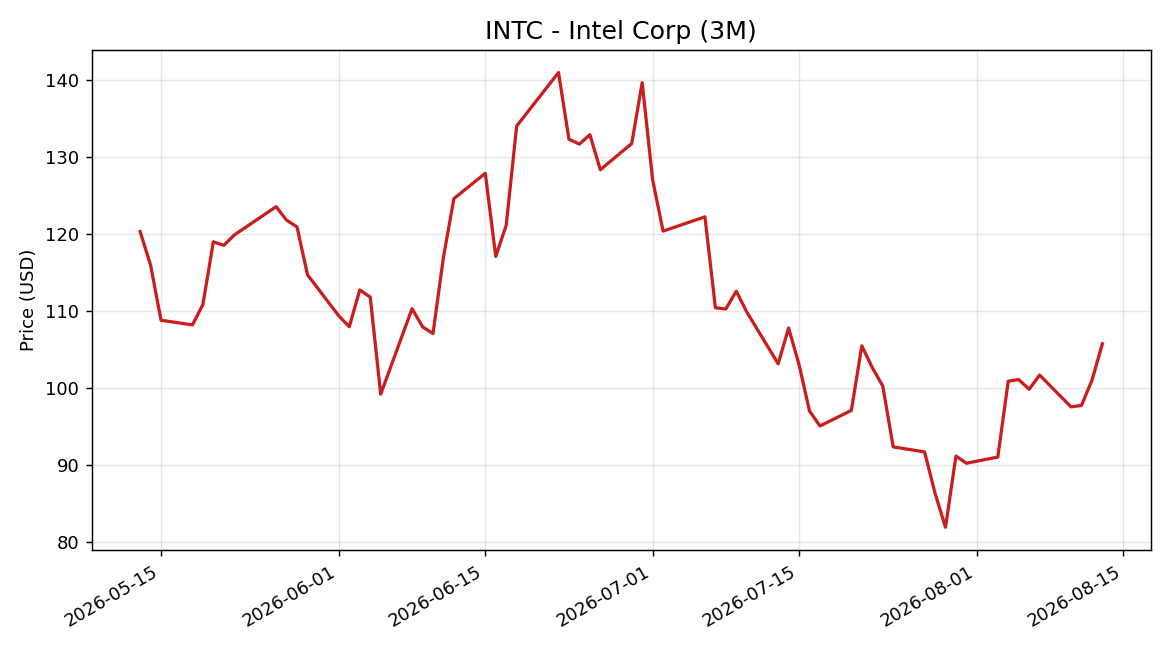
Today (August 13 local time), Intel stock jumped 4.89%, climbing toward the high end of $105. What's fascinating is that just four days ago, this same stock was in the headlines for the exact opposite reason. On August 10, when the company announced a $15 billion share offering, fears of dilution sent it plummeting -4.78%. But now that the capital raise has actually wrapped up successfully, Intel has rallied nearly 5% instead. Same event, completely opposite reactions.
The feared raise—when the numbers came in
When the offering was announced on the 10th, it was pegged at $15 billion. But when it closed on the 12th, the final size came in at $20 billion (roughly ₩27 trillion)—even bigger. The pricing was set at $95 per share, but with demand running five times the target, they decided to expand the allocation. The market read this not as "too much stock flooding out" but as "institutional buyers were lined up to buy it." The stock closed at $100.95, up 3.3% in a single day on the 12th, setting up the momentum that carried through to today's $105 range. What really gave investors comfort is that this capital raise essentially locked in Intel's planned $20 billion in equipment investment for the year—all at once.
More than just the capital raise
There's another catalyst layered on top of this. Google announced it would expand Intel Xeon processors across its cloud data centers over multiple years and co-develop custom semiconductors (IPUs) to handle networking and security tasks. Meanwhile, Elon Musk's consortium of Tesla, SpaceX, and xAI—the "TeraFab" chip project—has also tapped Intel as a foundry partner. Both moves are continuing to fuel investor enthusiasm. That said, TeraFab isn't a done deal yet; SpaceX disclosed in their filing that no formal contract has been signed, so it's still at the early cooperation stage.
So what is Intel becoming?
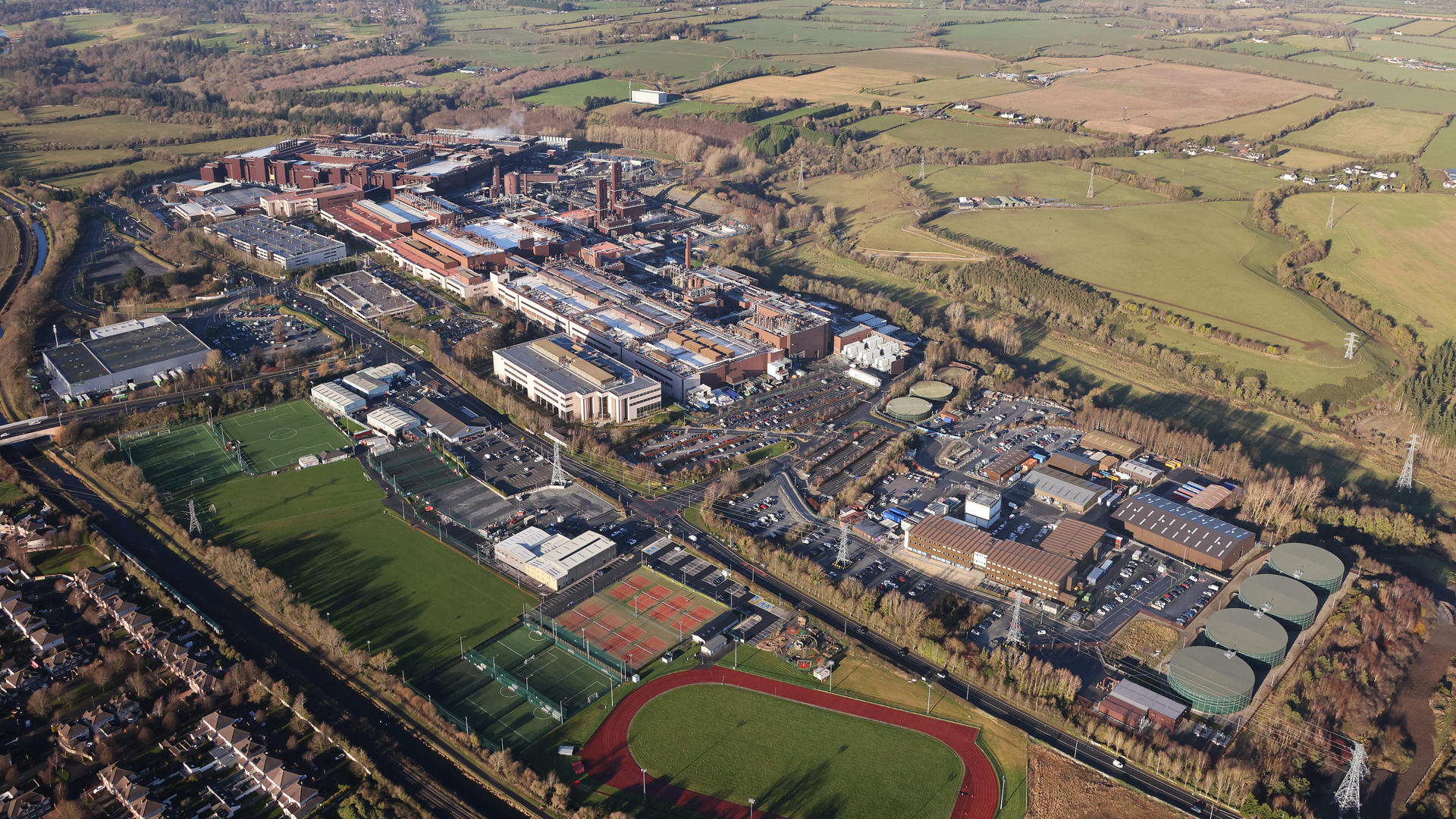
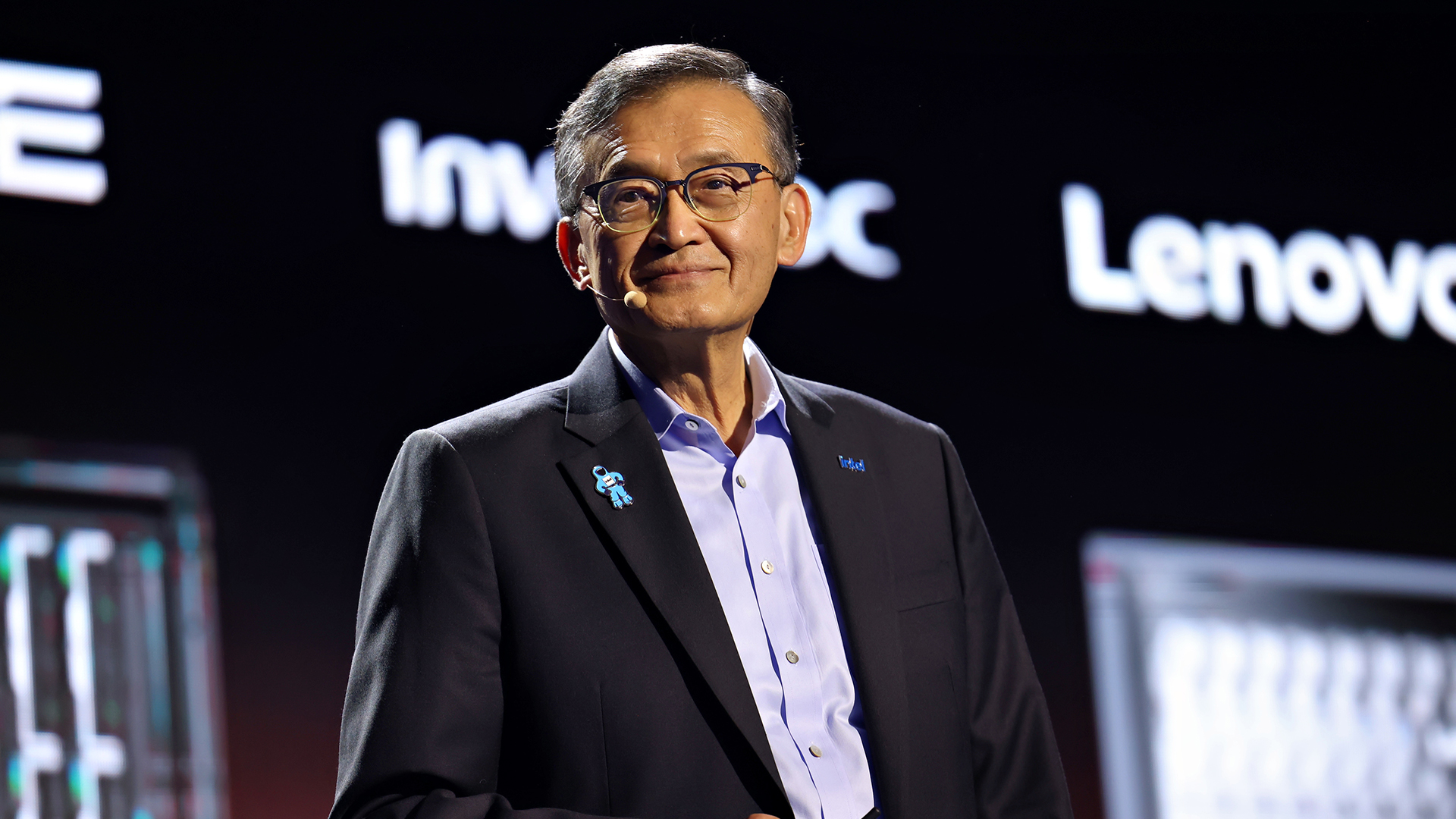
Under new CEO Lip-Bu Tan, Intel is shifting from a PC and server CPU company to a foundry business. Back in April, it repurchased a 49% stake in its Irish Fab 34 plant from private equity firm Apollo for $14.2 billion, bringing it back to 100% ownership—a signal that the company wanted to take back control of foundry margins. Now that announcements of major customers like Google and TeraFab are coming through, the old worry of "we built the factories but have no one to fill them" is finally starting to ease.
The earnings are solid—the real test is speed
Q2 revenue grew 25% year-over-year, with data center and AI revenue surging 59%. In the week following earnings, Wall Street revised up its Intel profit estimates by 26.9%—the biggest upward move of any major global company that week. But here's the thing: these results came after Intel has already climbed over 170% this year. So the market's message is basically "you've proven your earnings; now prove your speed"—meaning capital and customers. That's why the market has been so sensitive to capital raise and partnership news.

Where's the valuation right now?
Bank of America maintains a Buy rating with a $160 target price, while Baird raised its target to $125. Both are higher than today's close, so it's hard to argue the stock is overvalued right now. That said, the relative strength index (RSI) has climbed above 75, putting us in overbought territory technically—a short-term pullback wouldn't be surprising. But here's the thing: a high price target and higher near-term volatility aren't contradictory. They can both be true at the same time.
Compared to the competition
On the same day, AMD, NVIDIA, and Broadcom didn't show anywhere near Intel's kind of movement. That tells us today's surge is not a broad semiconductor rally, but rather Intel-specific, driven by the company's successful capital raise and partnership expansion. If the whole sector was rallying together, we'd need to look at interest rates and macro factors first. But this is an Intel story. Yes, Taiwan's TSMC still dominates the foundry business by far, but Intel has advantages that don't show up in raw revenue comparisons: domestic production (a geopolitical edge) and U.S. government backing.
So where does Intel stand now?
Investors who dumped shares four days ago on dilution fears are buying them back today because of successful capital raises and expanded partnerships. It's a rare example of how the exact same news can be interpreted completely differently depending on timing. The real question boils down to one thing: will the partnerships with TeraFab and Google actually show up as revenue in the next earnings report? If they do, today's rally is just the beginning of a revaluation. If they don't materialize soon, the RSI at 75 might be warning us of a correction first.
This is a U.S.-listed stock, and this article is factual analysis, not a buy or sell recommendation. Investment decisions and outcomes are your own.
#Intel #INTC #USStocks #Nasdaq #Semiconductors #Foundry #AIChips #CapitalRaise #GooglePartnership #TeraFab #LipBuTan #USMarkets #FeaturedStock #SemiconductorStocks #TechStocks #StockInvesting #SurgeStocks #IntelStock #DataCenter #XeonProcessor
댓글
댓글 쓰기