Good morning, August 20, 2026. Yesterday (August 19), the KOSPI dropped 398.66 points (-5.80%) in a single day, closing at 6,471.17, with a sell-side circuit breaker even triggered during the session. But here's the irony—the very market that caused all this, US stocks, staged a simultaneous rally that night (August 19 local time). The Dow, Nasdaq, and S&P 500 all bounced back hard when the US Treasury Department announced it would expand its long-term Treasury buyback program. The relentless rate hike pressure that had been suffocating markets finally eased. Today, we'll be watching closely to see if the domestic market can recoup yesterday's losses in full.
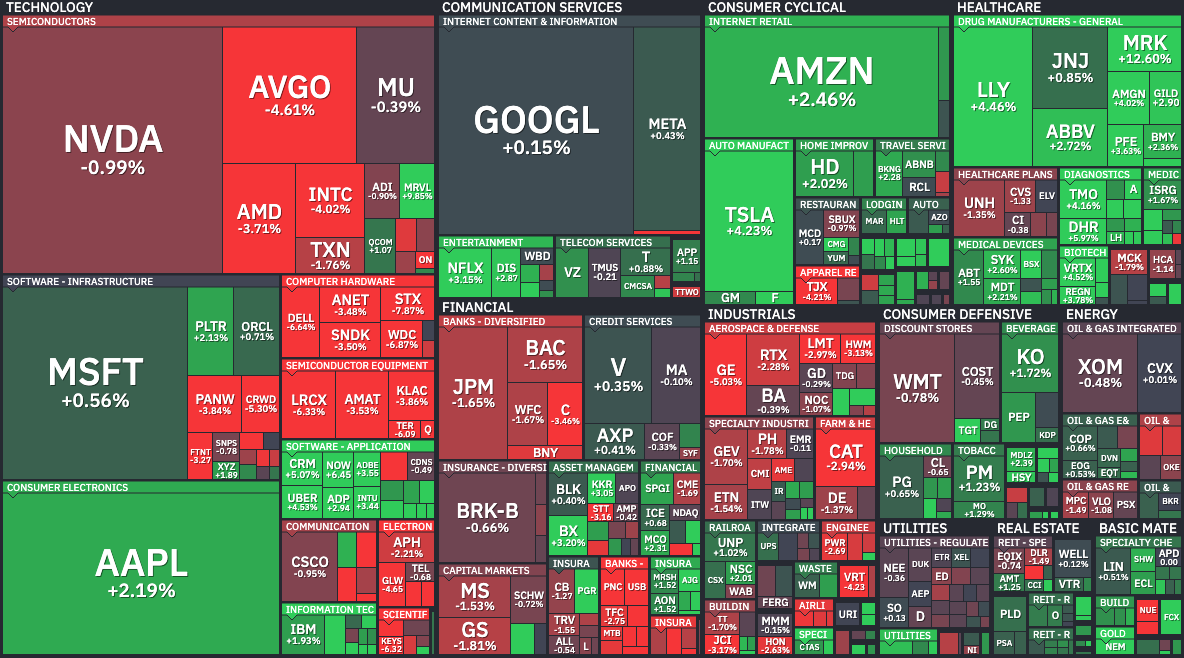
US market map last night (S&P500 heatmap) · Green=gains/Red=losses (finviz US style)
All three major US indices staged a comeback after four trading days
On August 19 (local time), the New York market halted its three-day slide and rallied across the board. The Dow Jones Industrial Average closed up 119.65 points (+0.22%) at 53,463.05. The S&P 500 rose 0.21% to 7,707.98. The Nasdaq Composite gained 0.16% to close at 26,331.09.
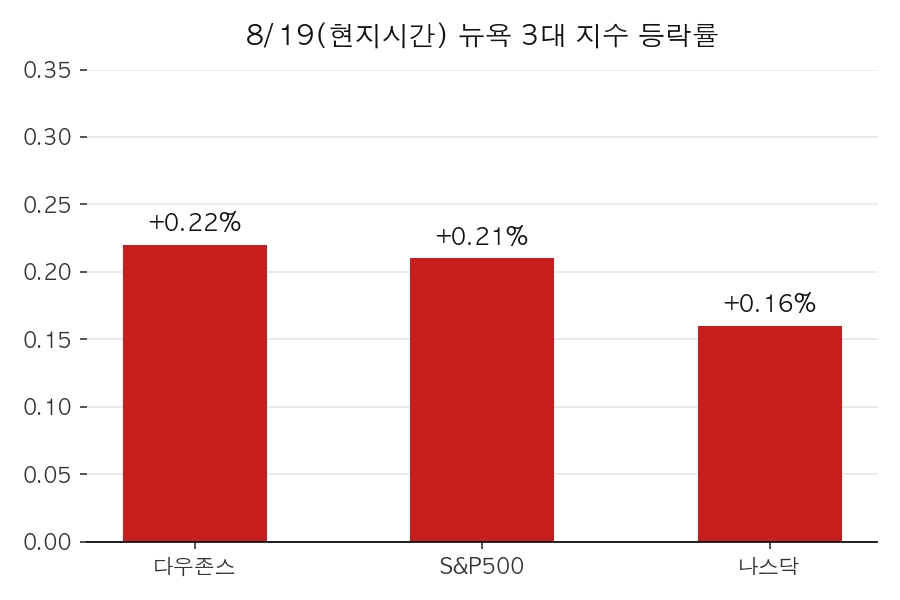
8/19 (local time) Performance of three major US indices · Rally after three trading days
The catalyst was the US Treasury Department. Treasury announced it would at least double its buyback program for long-term Treasuries (10-30 year maturities), purchasing up to $4 billion through November 4. The news immediately pushed back on the 30-year yield, which had been climbing all week and had just touched a 19-year high since 2007. The 10-year yield dropped 5bps to 4.65%, while the 30-year fell 9bps to 5.19%.
What drove the rally wasn't semiconductors or tech—it was healthcare. Moderna's personalized mRNA melanoma vaccine, developed with Merck, showed improved recurrence and metastasis rates in Phase 3 trials, sending Moderna stock soaring 132.7% in a single day. The entire S&P 500 healthcare sector climbed 2.9% to a new all-time high. Tech stocks, meanwhile, failed to keep pace with the index gains, which is actually an important clue for today's domestic semiconductor moves.
The Philadelphia Semiconductor Index was ground zero for the impact on Korean semiconductor stocks
The direct cause of yesterday's 5.80% KOSPI plunge was the semiconductor selloff in New York the day before (August 18). The Philadelphia Semiconductor Index (SOX) fell 628.55 points (-4.98%) in a single day, closing at 11,992.46, with all 30 components posting losses. No name was spared—Micron (-7.02%), TSMC (-4.07%), AMD (-4.27%), Nvidia (-2.34%), and Intel (-6.58%) all got hammered.
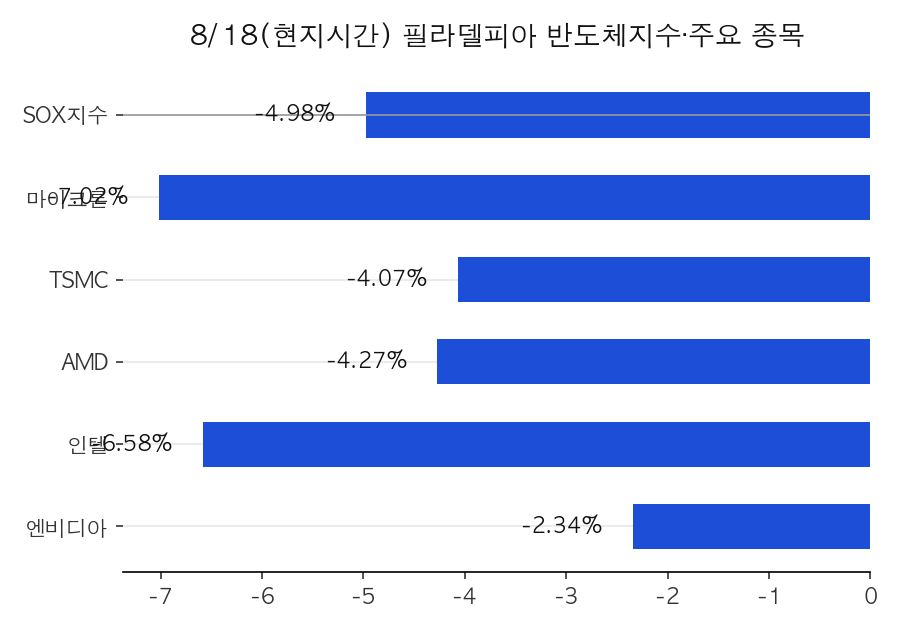
8/18 (local time) Philadelphia Semiconductor Index and major components performance · All 30 constituents declined
The shock hit the domestic market instantly. Samsung Electronics plunged over 7%, SK Hynix dropped more than 9%, accounting for most of the KOSPI's losses. With rising Treasury yields piling on, plus growing concerns about US data center construction delays, semiconductor investor sentiment took a major hit. On KOSDAQ, semiconductor equipment and materials stocks like Jusung Engineering (-4.29%), Woonik IPS (-2.76%), and Hana Micron (-6.63%) all fell in sympathy.
But here's the thing—when US markets rebounded last night (August 19), semiconductors and tech didn't lead the charge. Local media described it as the index rising "despite tech weakness." So while the rate shock has eased for now, the semiconductor sector itself hasn't shown a recovery in investor sentiment yet. That's why today's big question is whether Korea's semiconductor leaders can claw back any of yesterday's losses.
Rates, currencies, and oil: the dividing line between yesterday and today
| Indicator | 8/18 Situation | 8/19 Situation |
|---|---|---|
| US 10-Year Yield | Touched 4.76%+ intraday (19-year high territory) | Fell to 4.65% |
| US 30-Year Yield | Hit 5.34% intraday (highest since 2007) | Fell to 5.19% |
| Dollar Index | Held firm on Iran risk | Fluctuating near multi-month lows |
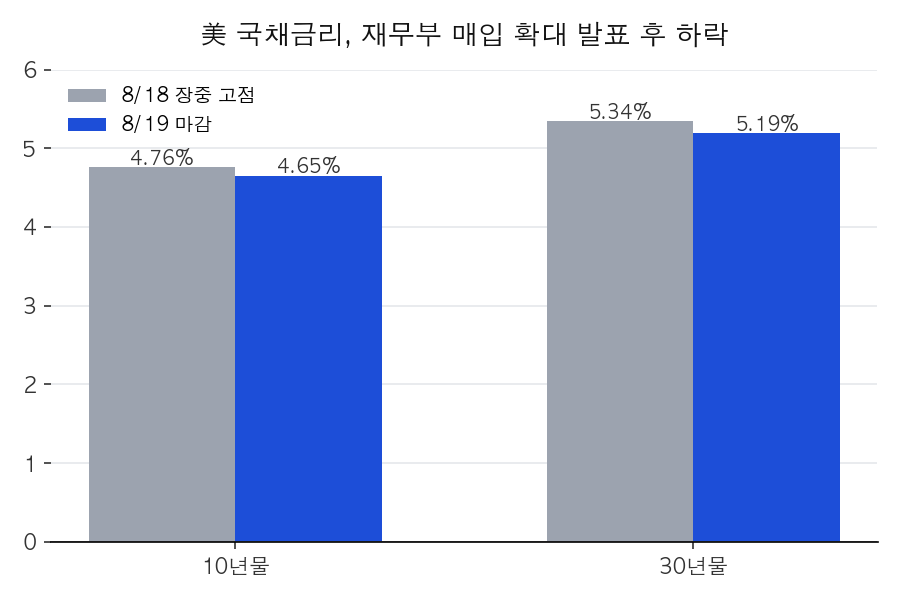
US Treasury yields have fallen from the 8/18 intraday peak after Treasury's buyback expansion announcement
Since rising Treasury yields were the core reason behind the KOSPI's plunge over the past few days, last night's Treasury announcement easing rate pressure could be a tailwind for today's market. That said, oil prices remain stuck near three-week highs (WTI around $84 a barrel) on Middle East tensions around the Strait of Hormuz, so inflation concerns haven't fully eased. The won-dollar rate also crashed to 1,397 during yesterday's KOSPI selloff as Fed rate hike bets weakened and selling pressure mounted. We'll need to watch how foreign investor flows move today. Since the Treasury buyback expansion runs through November 4, it remains a variable that could continue shaping long-term rate dynamics.
Yesterday, Asian markets all felt the same semiconductor shock
Yesterday (August 19), Asian markets moved in the same direction as KOSPI. Japan's Nikkei plunged 3.16% as semiconductor and AI stocks took heavy selling, with Kioxia (-12.60%) and SoftBank Group (-10.34%) hit especially hard. China's Shanghai Composite fell 2.40%. Taiwan's weighted index dropped 1.30% as major tech names like TSMC (-1.26%) weakened. Across Asia, it was a day when the same pressures (surging global rates and semiconductor valuation stress) shook every market at once—and the KOSPI's drop was the steepest of all.
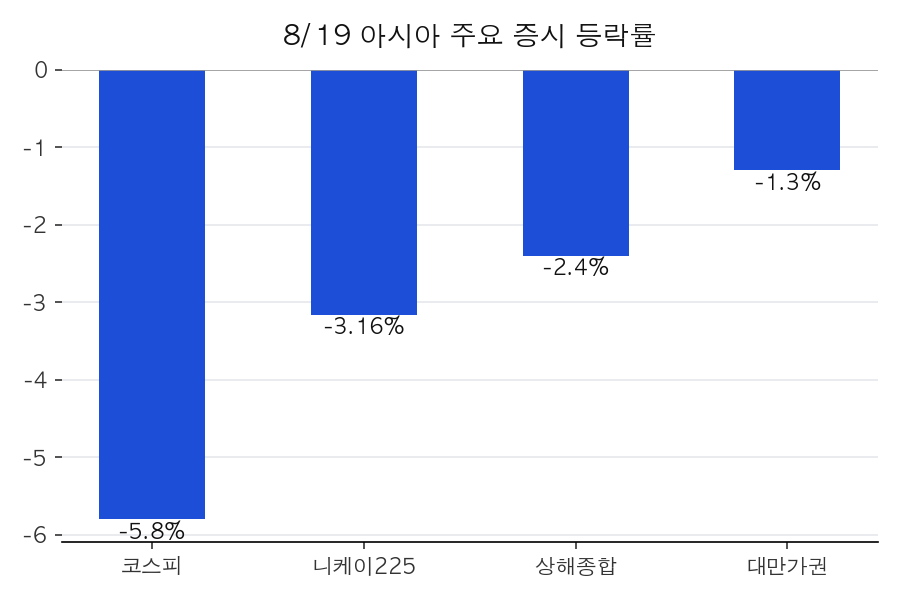
8/19 Asian major indices performance · KOSPI saw the steepest decline
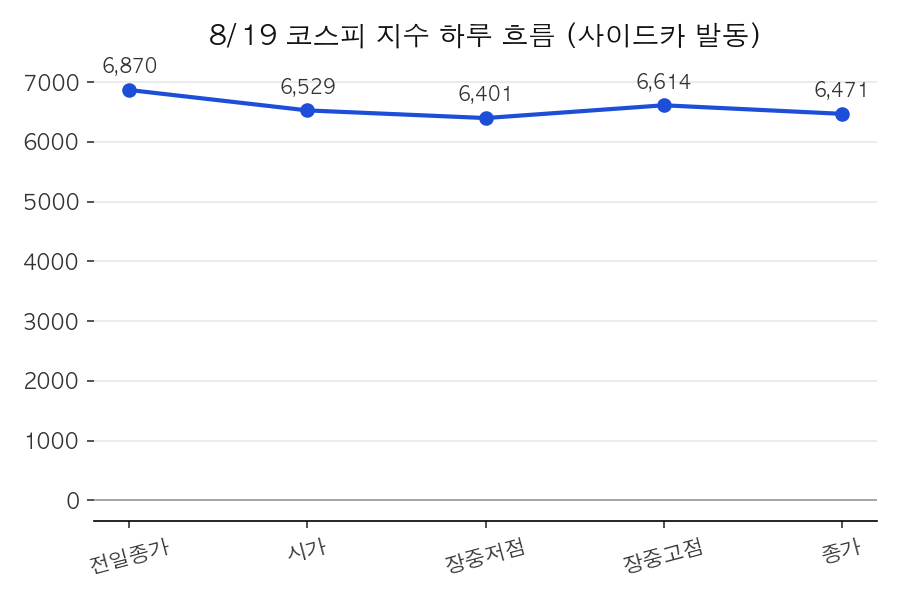
8/19 KOSPI intraday flow · Fell as much as -6.83% before recovering some ground
Here's what to watch in today's domestic market
First, even with yesterday's 5.80% plunge and circuit breaker trigger, retail investors jumped in with over 4.6 trillion won in net buying, showing appetite for the dip. Foreigners and institutions, meanwhile, sold together. Today, whether foreign investors continue selling or reverse course will be a key gauge of whether this bounce sticks.
Second, while easing Treasury yields overnight is a plus for Korean semiconductor stocks, US semiconductor stocks themselves didn't drive the index higher. We'll see if Samsung Electronics and SK Hynix can recoup any of yesterday's losses, or if today's bounce stays muted.
Third, markets are focused on the July FOMC minutes being released early this morning Korea time. Depending on the Fed officials' tone on rate hikes, volatility could spike again after the market opens this afternoon, so we'll want to watch the market's reaction to the minutes release.
Fourth, Middle East developments are another variable. The US-Iran ceasefire agreement has expired without extension, keeping geopolitical tension around the Strait of Hormuz elevated. This could continue pressuring oil prices and driving safe-haven demand.
Bottom line
The force that pushed KOSPI down yesterday (surging Treasury yields) is catching its breath after last night's Treasury buyback expansion. But because semiconductors didn't lead the rebound, it's still an open question whether Korea's chip leaders will carry today's momentum forward. Given that we just had a circuit-breaker day, be ready for above-average volatility at the open. That's my take.
This article is provided for informational purposes to assist investment decisions and does not recommend buying or selling any specific stock. Investment decisions and their outcomes are your responsibility.
#KOSPIIndex #USMarkets #USClosing #NasdaqIndex #DowJones #S&P500 #PhiladelphiaSemiconductorIndex #SOXIndex #SemiconductorStocks #Samsung #SKHynix #TreasuryYields #USBondYields #CircuitBreaker #WonDollarRate #CrudeOil #WTI #FOMC #Moderna #TSMC #Micron #Nvidia #AMD #NikkeiIndex #ShanghaiComposite #TaiwanWeightedIndex #ForeignInvestorFlow #KOSPIOutlook #MarketOutlook #TodaysMarket #MorningBriefing
댓글
댓글 쓰기