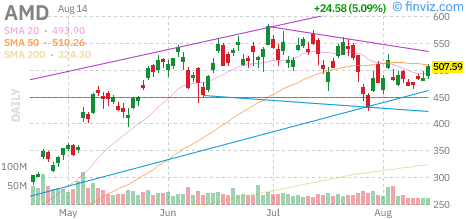
Today, AMD stock surged 5.13% on U.S. markets, climbing to approximately $507.81. Following last week's issuance of $4.75 billion in corporate bonds that confirmed strong market demand, expectations around AI infrastructure investments are now in their second day of momentum. On the surface, it seems odd—the company just took on debt, yet the stock went up. Why did that happen?
Taking on Debt, Yet Stock Rises—Here's Why
On August 13th, AMD issued a total of $4.75 billion in investment-grade corporate bonds, split across four tranches ranging from 3-year to 10-year maturities. The offering included $1.25 billion of 4.6% bonds maturing in 2029, $1.5 billion of 5.0% bonds maturing in 2031, and $1 billion each of 5.25% bonds maturing in 2033 and 5.5% bonds maturing in 2036. It's the company's largest corporate bond issuance to date.
Usually, when a company increases debt, it weighs on the stock. But this time, it went the opposite direction. Market demand was so strong that AMD priced the bonds 25 basis points lower than initially suggested, and the spread over Treasuries narrowed to just 90 basis points. This signals that investors are willing to bet on AMD's repayment capacity and future growth even at those lower rates, and that's exactly what you want to see. While the company stated the proceeds would be used for general corporate purposes without being tied to any specific project, many interpret the timing as a clear signal of expansion in AI data centers.
Helios Racks Are Actually Shipping Now
Coinciding with the bond news, investors are back to focusing on AMD's new AI rack system, 'Helios.' Helios bundles 72 Instinct MI455X GPUs and 18 sixth-gen EPYC 'Venice' CPUs into a single rack, with volume shipments set to begin at the end of Q3. Each rack delivers 2.9 exaflops on FP4 and includes 31TB of HBM4 memory. AMD claims up to 15% performance advantage and 50% more memory capacity compared to Nvidia's competing rack.
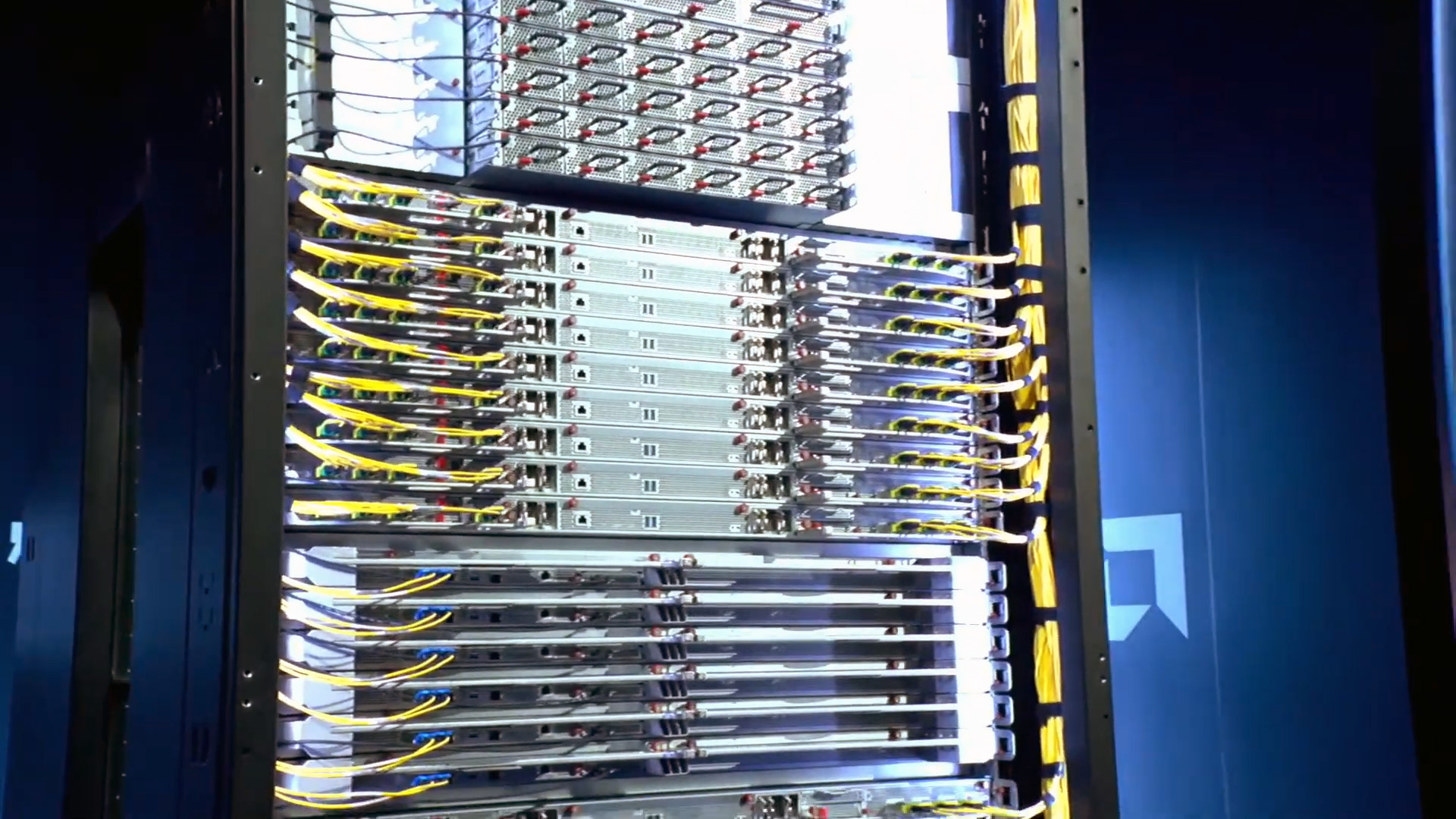
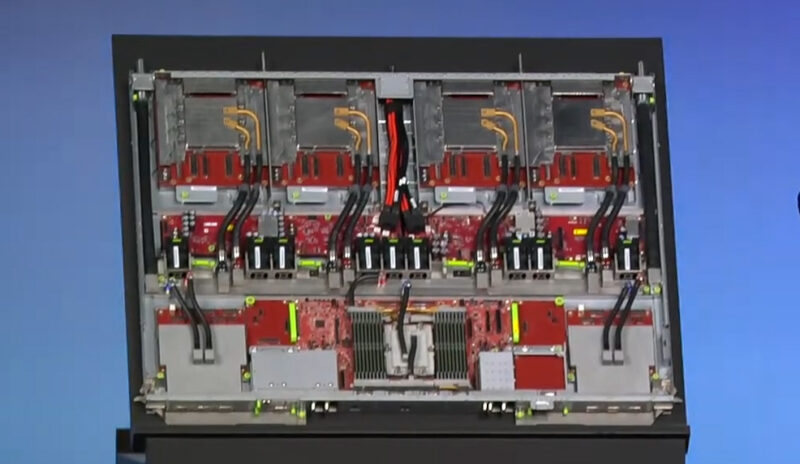
What really matters is that this isn't just a roadmap announcement—it's actually moving into mass production and shipment. What was at the prototype stage just last month is now headed for Q3-end volume shipments, and that's the moment when AMD sheds the "all talk, no AI chips" label. On top of that, management recently reaffirmed their outlook that data center revenues will continue accelerating as adoption of server-grade EPYC processors and AI accelerators expands. That's what pushed investor sentiment even higher.
Compare This to Nvidia, and the Pattern Becomes Clear
Nvidia, the leader in AI chips, has also been driving its stock higher with its own data center investments and major contracts. But AMD's bond issuance stands out for directly confirming market demand. Nvidia doesn't really need to borrow, thanks to massive cash flows, while AMD needs capital for Helios mass production and competing in foundry expansion. Yet the market responded with favorable rates anyway—and that's clear evidence that confidence in the number-two player has risen significantly.
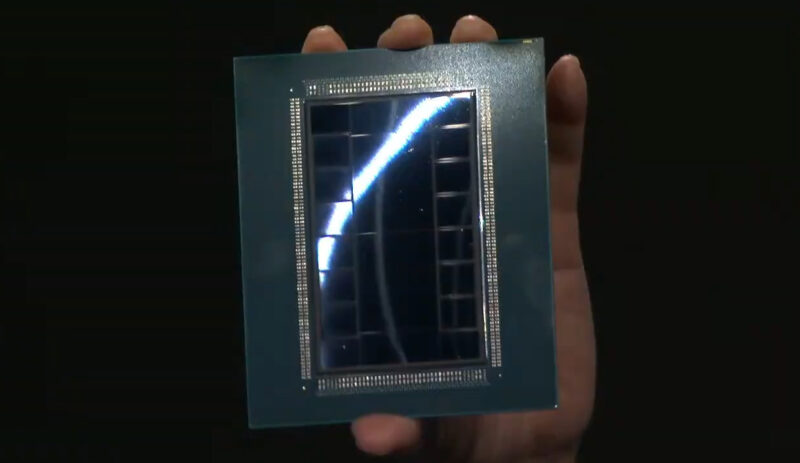
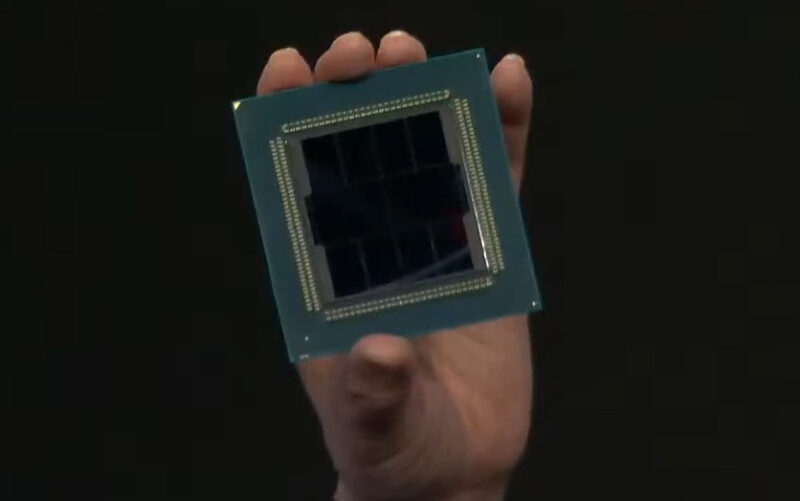
Still, it's not all sunshine. The bond issuance has significantly increased AMD's debt load, and there's concern that margins could be squeezed in the near term as AI products scale. Recent reports also show AMD lost out to Nvidia in competing for GPU supplies to SpaceX, so the real test is whether Helios converts into actual large customer orders.
How Are Wall Street Analysts Viewing This?
| Category | Price Target | Notes |
|---|---|---|
| Average | ~$599.88 | Consensus Buy |
| Highest | $1,250 | Some Bullish Analysts |
| Lowest | $320 | Competition Intensifying, Valuation Concerns |
The fact that the average price target still exceeds today's level means the market doesn't yet see $507 as overvalued. But the massive spread—from $320 to $1,250—shows how divided analysts are on the competitive landscape for AI chips. On a 52-week basis, the stock has ranged from $149.22 to $584.73, so at $507, there's still some room to the high end, but it's already more than tripled from the low.
So, Where Does This Stock Stand Now?
AMD just signaled to the market, "We'll borrow if we have to, but we won't fall behind in the AI race," and the market responded with low rates. With the bond success and Helios production both hitting in the same week, the company is now moving from roadmap promises into actual revenue.
There's one thing to watch going forward: how many major customer orders actually materialize once Helios ships at the end of Q3. The announcements have been flashy, but now comes the moment to prove it with real numbers. And that comes while carrying the burden of higher debt and margin pressure. Rather than getting caught up in today's surge, the smart move is to watch next quarter's earnings and see how much data center revenue actually pops.
This is a U.S.-listed stock, and this article is factual analysis, not a buy or sell recommendation. Investment decisions and outcomes are your own responsibility.
#AMD #AMDStock #USStocks #Nasdaq #SemiconductorStocks #AIChips #Nvidia #Helios #InstinctGPU #EPYC #CorporateBonds #DataCenters #AIInfrastructure #USMarkets #HighlightedStocks #SurgeStocks #Semiconductors #ServerChips #RIZZU #TechStocks
댓글
댓글 쓰기