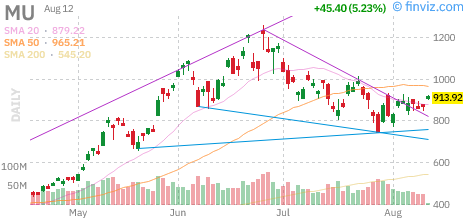
Micron (MU) shares surged 5.48% today on U.S. markets, climbing to around $916. Over the past month, we've watched it climb back over $900 from the late-800s range. But here's the thing—this rally wasn't driven by Micron's own news. Instead, it was the day when rivals proved with hard numbers just how scarce the very products Micron is selling actually are.
Why Did It Jump Today — The Memory Sector Testified for Micron
Micron's gains over the past few weeks weren't from its own earnings—they came from a perfect storm of strong peer results and analyst target hikes. Samsung, for example, just reported Q2 earnings where DRAM and NAND sales hit all-time highs, with operating profit coming in at ₩89.5 trillion, beating the market's estimate of ₩88.13 trillion. For Micron—essentially the only major U.S. memory player competing head-to-head with Samsung and SK Hynix—strong results from rivals read as proof that "the AI-driven memory supercycle isn't over yet."
And then analyst price targets started flying higher. Citi raised guidance from $840 to $1,200. Morgan Stanley went from $1,050 to $1,200. Mizuho is at $1,375, Arete at $1,500, and Itau BBA threw out $1,697. The thesis is consistent across the board—DRAM and HBM supplies through 2026 are already largely sold out.
The Numbers Tell the Supercycle Story — Not "Can't Sell," but "Can't Make Enough"
According to TrendForce, DRAM contract prices jumped 93–98% in Q1 this year versus the prior quarter, with another 58–63% jump in Q2. HBM (high-bandwidth memory) for AI servers gobbles up 3–4 times the wafer capacity per GB compared to standard DRAM. Micron CEO Sanjay Mehrotra made it clear: "Our 2025 and 2026 HBM production capacity is already fully booked." SK Hynix confirmed the same—DRAM, NAND, and HBM supply is essentially sold out through next year.
The demand side? That's all Nvidia GPUs. The H100 used HBM3 with 80GB, but the latest B300 demands 12-stacked HBM3E—288GB. As the memory footprint per GPU ballooned generation after generation, Micron recently notified customers it's raising prices 20–30%. In other words, "people will still buy at higher prices," which is why the market treats this as good news.
A $25 Billion Bet — What Micron Is Actually Building in Hiroshima and Boise
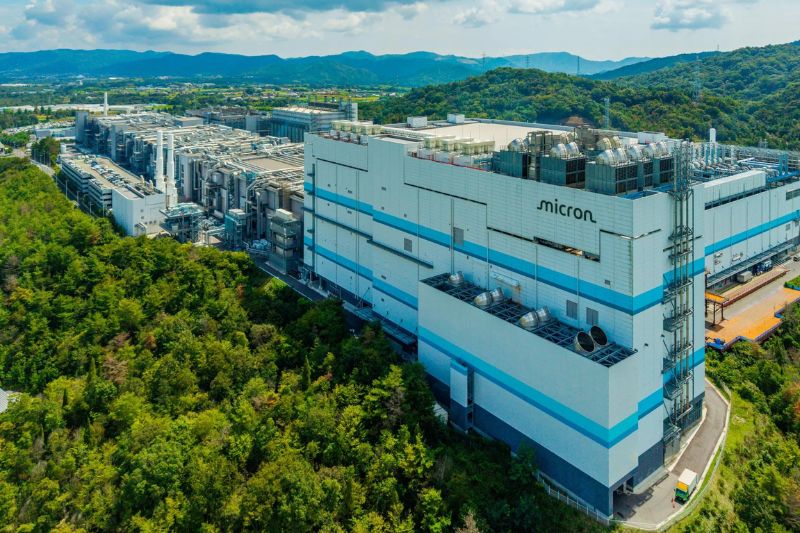
Micron isn't treating this boom as a temporary event. Back in July, it broke ground on a ¥1.5 trillion (about $9.3 billion) expansion at its Hiroshima, Japan plant for HBM and next-gen DRAM lines. CEO Mehrotra highlighted at the ceremony: "Micron's very first HBM production wafers came out of this Hiroshima facility." Mass production is targeted for H2 2028. On top of that, Micron has unveiled a separate $250 billion fab expansion and R&D plan in the U.S.—a signal they're betting on a structural shortage, not just a passing wave.
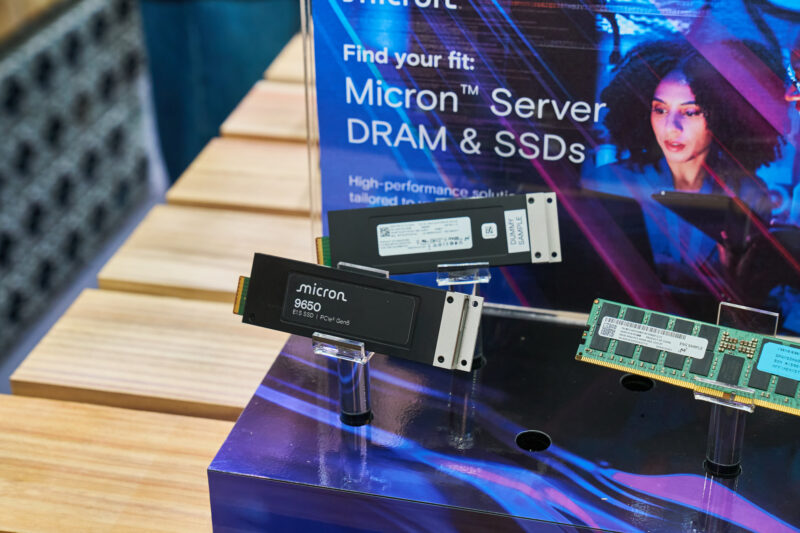
On the product front, there's a new weapon too. On August 4th, Micron teamed up with Microchip Technology to showcase the world's first PCIe Gen 6–spec datacenter SSD—the '9650' model—in an AI and datacenter storage architecture. The company says it delivers sequential read speeds of 28GB/sec—double the prior generation—with random read performance improved by up to 67%. If HBM is the memory compute battle, this is Micron signaling it's also playing offense in the AI datacenter storage market.
But Hasn't It Gone Too Far Already? — Valuation and the "Peak Warning"
Micron has climbed nearly 300% year-to-date and is up 700–1,000% over a year. Its 52-week high is $1,255, set on June 25th—so current prices are still 27% or more below that peak. Sure, some voices worry about valuation. Benzinga recently highlighted an analyst warning that "Micron's memory boom is heading toward its peak." That said, all 41 analysts covering the stock maintain buy ratings, and the average price target is $1,502—still above where it trades today. Next earnings are due September 22nd.
So, This Stock Right Now
Today's surge isn't just Micron's story. It's the result of what all three memory giants—Samsung, SK Hynix, and Micron—proved together about the sector. Backed by that conviction, the company is pouring hundreds of billions into Hiroshima and the U.S., and it's pushing prices higher. There's only one thing to watch going forward—September 22nd earnings. Do those 20–30% price hikes show up as real margin expansion? If the numbers beat, the supercycle narrative gets another boost. If they miss, pullback pressure could build. For now, one thing is clear—the market still has this company's back.
Micron is U.S.-listed. This is factual analysis, not buy or sell advice. Investment decisions and outcomes are your own.
#Micron #MU #USStocks #Semiconductors #MemoryChips #DRAM #HBM #AIMemory #MemorySupercycle #Nasdaq #USMarkets #SemiStocks #AISemiconductors #Samsung #SKHynix #Nvidia #Surging #InternationalStocks #RetailInvestor #SemiconductorSupercycle
댓글
댓글 쓰기